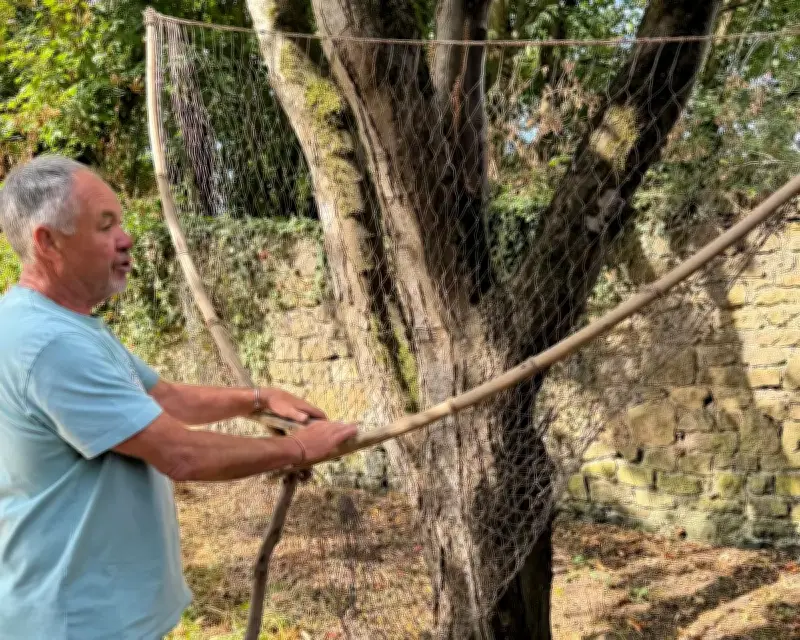
Martin Morgan, secretary of the Black Rock Lave Net Fishery and one of only a few remaining lave net fishermen, is despondent about the fishery's future. The season finished in August, and he says they are "hanging on to this ancient fishery and all it represents with our fingertips".
A centuries-old craft
The craft has been practised here since the 1600s, but with declining stocks, tightening legislation and a lack of young people to take skills forward, it has dropped 80% since 2020. No salmon have been caught since 2019.
Martin, whose great-grandfather started the fishery over 100 years ago, has known these grounds between the two Severn crossings since childhood. He has fished the Grandstand, the Hole and the Gruggy, all using the traditional method of lave nets.
The lave net method
Outside the fishery's museum, Martin shows a lave net: a foldable Y-shaped frame with a horseshoe-shaped net strung between the arms. The fisherman uses the rock staff (handle) to feel his way into the channel, then opens the arms (or rimes), constructed from pollarded willow, using a yoke made of pine. Putting the net down into the ebbing tide, the fisherman threads his fingers into the mesh, feeling for vibrations of trapped mullet, flounder or salmon.
Regulation concerns
Martin feels that increasingly severe Natural Resources Wales regulation is throttling a sustainable practice and is aimed at the wrong target. He adds that salmon numbers here won't rebound "until our rivers become a place where these fish can thrive".
Out on the Severn, the silt from time to time reveals putchers, cones woven from hazel and willow – remnants of how salmon used to be caught. The traffic roars above as the churning waters flow below, and Martin's sadness at this ending is painful to witness.