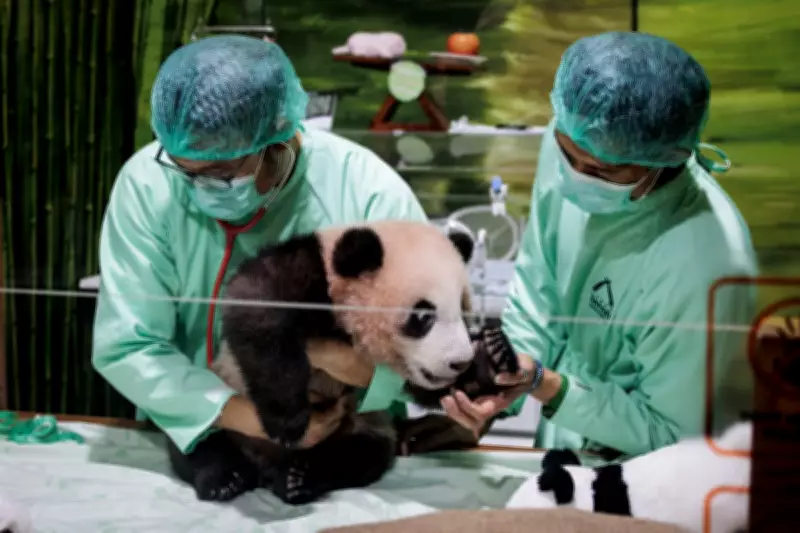
Indonesia's first giant panda cub, affectionately nicknamed "Rio," is thriving and preparing for his historic public debut later this month, according to officials at the Taman Safari Indonesia zoo in Bogor, West Java.
Healthy Development and Milestones
At 169 days old, Rio weighs approximately 10 kilograms, can walk independently, climb, and has begun sampling bamboo shoots. Veterinarians have confirmed his healthy development, noting active senses and faster-than-average growth, particularly in his teeth.
"Rio is in excellent health. His growth rate is remarkable, and he is showing all the signs of a strong, curious cub," said Dr. Diah Savitri, a senior veterinarian at the zoo.

Birth and Conservation Significance
Rio was born on 27 November to mother Hu Chun and father Cai Tao, who arrived in Indonesia in 2017 as part of a 10-year conservation partnership with China. His birth is a significant conservation success, providing new genetic data and highlighting the challenges of breeding endangered giant pandas.
"This is a monumental achievement for Indonesia and for global panda conservation efforts," said Dr. Tony Sumampau, director of Taman Safari Indonesia. "The successful birth and rearing of Rio demonstrate the effectiveness of international cooperation in protecting endangered species."
Public Debut and Future Plans
Rio is scheduled to make his public debut later this month, with the exact date to be announced soon. Visitors will be able to see him in a specially designed enclosure that mimics his natural habitat.
The zoo plans to continue monitoring Rio's development closely, with hopes that he will contribute to further breeding programs in the future. His birth has already attracted significant attention from panda enthusiasts worldwide.
"We are excited to share Rio with the public. He is a symbol of hope for the conservation of giant pandas," added Dr. Sumampau.
The giant panda is classified as vulnerable by the International Union for Conservation of Nature (IUCN), with an estimated 1,800 individuals left in the wild. Captive breeding programs like this one play a crucial role in ensuring the species' survival.