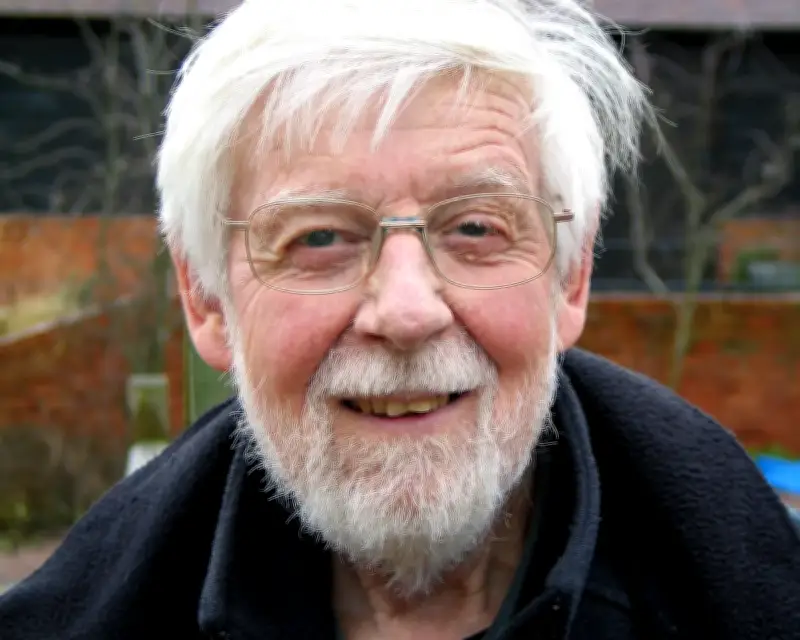
Harry Green, a self-taught naturalist whose encyclopedic knowledge of British wildlife was built on a lifetime in the field, has died aged 92. Though born and brought up in Oxfordshire, he spent his entire adult life in his adopted county of Worcestershire.
A lifetime of field observations
Harry remembered being kept awake during the second world war by calling corncrakes in the meadows near his home. Later, he strove against the odds to save Britain's last colony of marsh warblers near Pershore. These, and the corncrakes, eventually vanished, but other species such as hobbies, little egrets and Cetti's warblers did arrive and thrive.
As a keen entomologist and expert ornithologist, Harry became obsessed with a rare Worcestershire speciality, the land caddis. He organised expeditions to map the range and numbers of a creature whose larvae he irreverently referred to as "animated All-Bran".

From lime trees to administrative duties
He was also fascinated by the county's lime trees, which he memorably called "great humming towers of bees", as key indicators of ancient woodland. He once conducted an aerial survey of them by persuading a friend to take him up in a light aircraft.
Away from fieldwork and his full-time job as a pathologist, Harry devoted much time to administrative duties. He was chairman of the British Trust for Ornithology from 1988 until 1991, and served on the council of the Worcestershire Wildlife Trust for a record-breaking 56 years. In 2001 he was appointed MBE, and in 2008 he received the Christopher Cadbury medal from the Royal Society of Wildlife Trusts.
Early life and career
Harry was born in Oxford, the son of George Green, a dentist and part-time farmer who died when Harry was a boy. His widowed mother, Doris (nee Summers), took work at Sibford school, a Quaker school near Banbury, where Harry became a pupil. His interest in ornithology and the natural world was ignited by his biology teacher. In 1950 he joined the pathology lab at Worcester Royal Infirmary, returning there after national service in the RAF Institute of Pathology and Tropical Medicine, and rising to head the lab until his retirement in 1996.
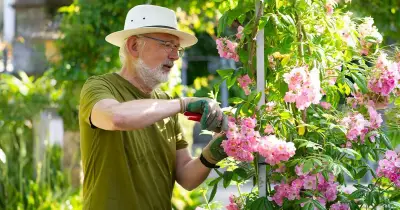
White-whiskered, genial and avuncular, Harry inspired generations of younger naturalists to take up the conservation cause. The radio presenter Brett Westwood recalls Harry delving into old fruit trees in search of noble chafer beetle droppings, reflecting his passion for Worcestershire's precious old orchards.
Later years and legacy
In retirement, Harry became a prolific author and broadcaster, appearing on BBC local radio and occasionally Radio 4 to promote the importance of local conservation efforts. In 2015 he co-edited The Nature of Wyre, a comprehensive account of the fauna and flora of the Wyre forest, while in 2022 he published his magnum opus, Shrawley Wood, a monumental work he wrote and co-edited along with a wealth of contributors.
He is survived by his wife, Jenny (nee Briggs), whom he met at the infirmary where she worked as a nurse and married in 1958, and by their son, David, a daughter, Rachel, and grandsons, Jake and Ruben, in all of whom he instilled a love of the natural world.