More than 1,000 tree whips have been planted on land in Gower where large-scale illegal felling took place, and thousands more will be put in the ground this winter.
The 43-acre site, called Cartersford, is now owned by the Gower Society and managed as a nature reserve by The Wildlife Trust of South and West Wales. Volunteers have been busy over the past 12 months removing an invasive plant called Himalayan balsam and helping install fencing as well as planting young trees, although some losses are expected due to the summer drought.
Restoration work under way
Rubble has been removed from a field, crushed, and then incorporated back into the soil, which has since become grassed over. Tree stumps left in what was a pond at the site at Lower Fairwood will be removed and the pond restored.

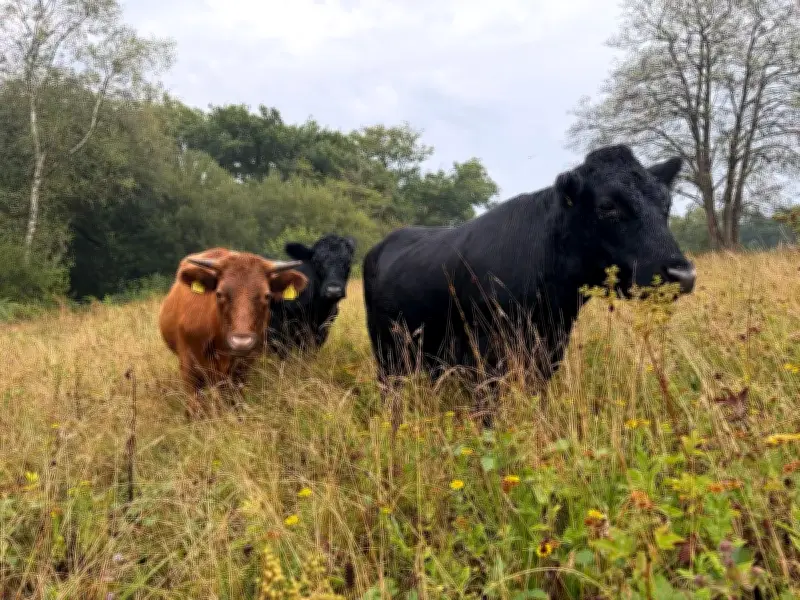
The reserve has meadow and grassland habitat while cattle co-owned by site manager Paul Thornton visit from time to time and graze. “Cattle-grazing is really important for species-rich grasslands,” said Mr Thornton. “They maintain the diversity of the sward structure (grassland area) and wildflowers.” Their warm bodies and dung, he added, attracted invertebrates.
Illegal felling background
The site’s former owner, pensioner Thomas Jeffrey Lane, was prosecuted by Natural Resources Wales (NRW) and fined for cutting down around 2,000 trees at the protected woodland in 2019 without the appropriate licence and then failing to restock them.
A court heard he’d bought the land for his daughter to run a pony-trekking and alpaca-walking business. He claimed the trees were rotting and dangerous. An NRW officer said at the time it was one of the worst cases of illegal tree-felling the organisation had investigated in 30 years.
Aerial photos provided by the Gower Society at the time showed the land before the trees were chopped down and after. The society later bought the site and leased it to the trust last year.
Future planting and wildlife
The fencing – supplied by a local business – is keeping sheep out and cattle in and protecting the tree whips in newly-created corridors. Some of the native trees were provided by local nurseries. Mr Thornton said 1,400 have been planted and a further 6,000 or so will be added in the coming months.
There is evidence of otters at a stream bordering the land, plant species are being recorded, and volunteers are carrying out dormouse surveys. It’s hoped the project will improve habitat connectivity in the wider area. Money to help the restoration has come via the Welsh Government’s local places for nature challenge fund.
Mr Thornton said he managed around 30 Wildlife Trust of South and West Wales sites in Swansea and Neath Port Talbot and two in north Carmarthenshire. The former tree surgeon and charcoal-maker is constantly learning about Cartersford, which isn’t open to the public. “The other sites I know quite well – this one is throwing up new things all the time,” he said.
Heather Falconer began volunteering for the trust when work began at Cartersford, which is close to where she lives. “I’ve learned a lot – I’ve found out about different habitats, how to make fences, and a method of planting trees so they can survive drought,” she said. “The other people who work here are really nice. I definitely feel a connection to the land. You notice the changes and see wildlife coming in - it's very rewarding.”