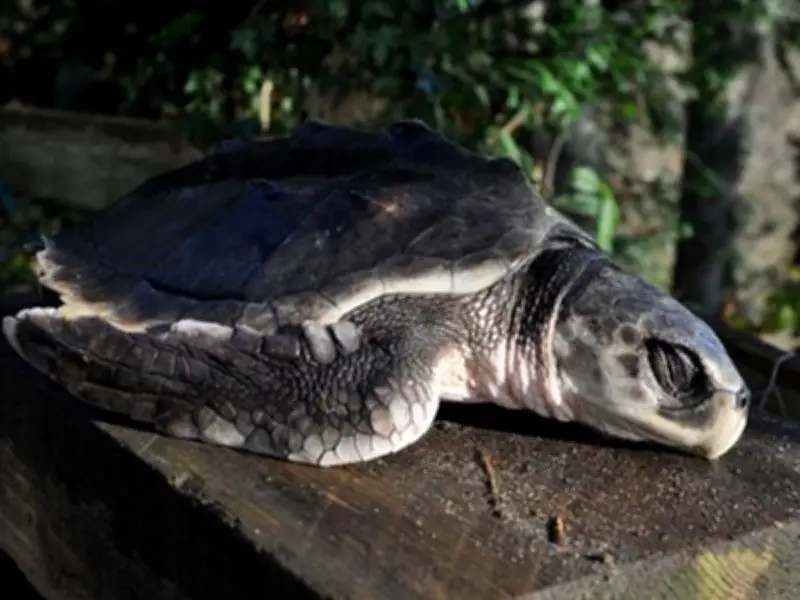
A critically endangered turtle that washed up in Wales is to be flown thousands of miles to the Gulf of Mexico to be released into warmer waters.
The Kemp's Ridley turtle, named Rhossi, was found stranded on Rhosneigr, Anglesey, on December 13, 2023. Since then, it has been cared for by the Anglesey Sea Zoo, but now it will be moved to its native habitat.
One of the world's rarest turtles
The Kemp's Ridley turtle is one of the world's rarest breeds and is classified as "critically endangered" on the International Union for Conservation of Nature (IUCN) Red List. The global population is estimated at around 22,000 mature individuals.
The IUCN hopes that an increase in strandings of the species in the UK in recent years reflects the recovery of the vulnerable breed.
Brexit impact on turtle repatriation
According to the UK and Irish Marine Turtles Organisation, the UK leaving the EU has made it more difficult to return stranded turtles to warmer waters. Before Brexit, surviving loggerhead turtles were flown directly to Gran Canaria by sympathetic airlines for release, free of charge.
Now, fees are required at each stage. This came to a head in 2024 when six loggerhead turtles needed to be released from the UK. They eventually had to be released near the Azores after travelling with the Royal Navy.
Plans for a UK turtle rescue facility
Anglesey Sea Zoo is currently raising funds to build what it hopes will be "the first dedicated turtle rescue facility in the UK".
To date, six of the seven species of marine turtle have been recorded in UK and Irish waters. The loggerhead turtle is the most frequently recorded species in the UK, despite not tolerating cold waters. Loggerheads often become cold-stunned and may appear dead if found on the beach.
Members of the public are urged not to return them to the sea but to seek professional help to ensure they can make a full recovery.
Leatherback turtles in UK waters
The leatherback turtle, another frequent visitor, can raise its body temperature to cope with colder seas and is rarely found stranded. Instead, their most common cause of death in the UK is drowning from entanglement in rope or fishing gear.
In 1997, a female leatherback turtle that had travelled from South America to Pembrey, Carmarthenshire, was found dead and entangled in pot-rope. Leatherbacks are believed to make the long journey to feed on UK jellyfish each year.
What to do if you find a turtle
Anyone who finds a marine turtle on a beach is urged to contact the appropriate person for their area as soon as possible. In England, Wales and Scotland, people should contact the RSPCA on 0300 1234999 or the BDMLR on 01825 765546 for live strandings. Turtle records should also be reported to the Marine Environmental Monitoring on 01239 683033 or by emailing info@strandings.com.
Even if a turtle is dead, the relevant organisations should still be contacted to determine the cause of death and for data purposes.