Prolonged dry weather in Carmarthenshire has uncovered a hidden chapter of wartime history at Dinefwr Estate, near Llandeilo. Aerial imagery has revealed the outlines of former Nissen huts that once stood within the historic park.
Wartime and post-war roles
The temporary structures served important functions during and after the Second World War, first as a hospital and later as a prisoner of war camp. In the years following the war, the huts were converted into homes for local families when housing was in short supply across Britain. The settlement became known locally as Tin Town.
Variations in grass growth caused by the drought have exposed the footprints of the huts, which are normally invisible at ground level. The recently-captured aerial image provides a striking glimpse into a largely forgotten element of Dinefwr's history.

Archaeologist's perspective
David Thomas, archaeologist for National Trust Cymru, said: “Many people are familiar with Dinefwr's nationally-important parkland and medieval history but these marks highlight a much more recent chapter in the site's story.
“The huts served a range of important functions from a wartime hospital and prisoner of war camp to much-needed housing for local families in the years after the war.
“Discoveries like this help us better understand how people adapted to the challenges of wartime and post-war life in rural Wales.”
About Dinefwr Estate
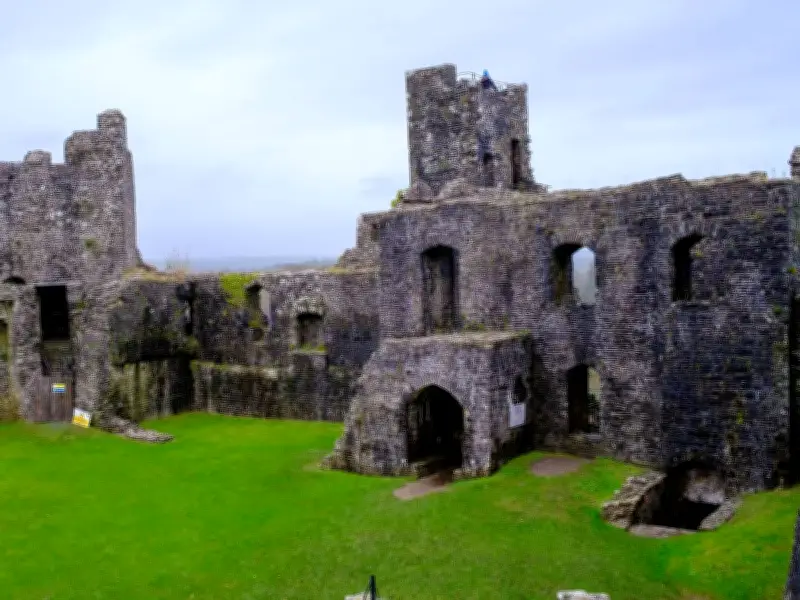
The Dinefwr Estate, run by the National Trust, is a national nature reserve and home to Newton House, a historic mansion that was a family home for more than 300 years to descendants of The Lord Rhys, the powerful Prince of the Welsh Kingdom of the Deheubarth. The grounds include castle ruins, a fairy village, and a medieval deer park roamed by fallow deer.
The 850-acre estate lies on the outskirts of Llandeilo and is steeped in Welsh history. The surrounding Carmarthenshire countryside is perfect for walks and exploring, and there is also a fountain garden. The estate woodland contains some of the oldest trees in Britain, with more than 300 oak trees, some more than 400 years old.