Nature needs to be “right next to where people live”, conservationists have said, as communities push for more wildlife-rich green spaces. Research has revealed many people lack parks, woodlands or wetlands within a 15-minute walk from home, even though time in nature boosts health and wellbeing and natural spaces help tackle extreme weather, climate change and wildlife loss.
Government urged to improve access
The Wildlife Trusts have urged the Government to improve people’s access to nature as a priority, while a coalition of groups led by the Horticultural Trades Association and the Gardens Trust have called for trees, plants, gardens and parks to be recognised as “essential infrastructure” with long-term investment.
On the ground, sites across the country from Greater Manchester to London are showing what can be done to boost access to valuable, wildlife-rich, green spaces close to people’s homes and communities.
Cutacre: from coal mine to wildlife haven
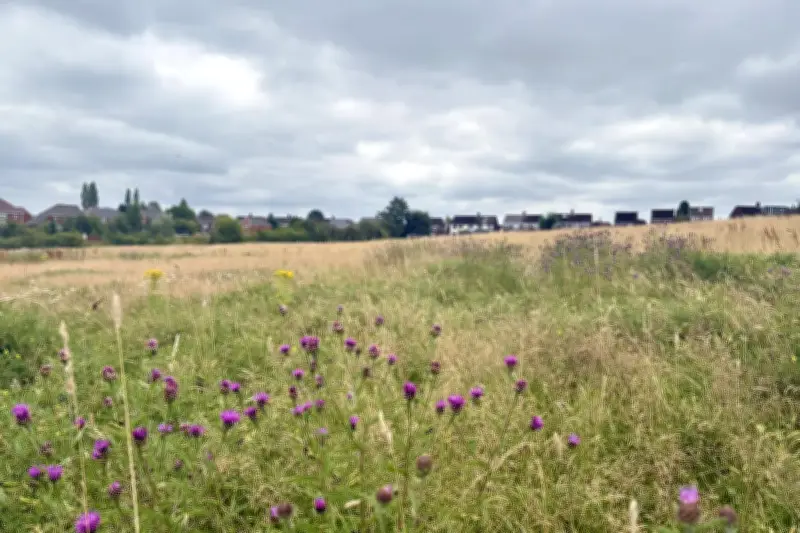
At Cutacre, Lancashire Wildlife Trust has transformed land on a former open cast coal mine on the edge of Salford, creating diverse meadows and grazing areas with longhorn cattle as well as redigging ponds and planting trees and hedges. Meadows have been boosted by plug plants of local wild species grown with Cheshire Wildlife Trust, including dyer’s greenweed – a species that has been reintroduced to Greater Manchester after becoming functionally extinct in the area.
The site has threatened grey partridges, lapwings, skylarks, grasshopper warblers and willow tits and there are reedy, wetland areas which in the winter are “stuffed full of snipe”. The reserve is also home to reed buntings, weasels and kestrels, and butterflies flitting through the meadows in summer.
Much of the landscape is being managed as lowland meadow for a “biodiversity net gain” scheme, selling credits to support wildlife restoration to developers needing to meet requirements to increase nature overall as part of their developments.
However, the point of reserves such as Cutacre is being close to local people, says the trust’s nature reserves senior officer Stephen Cartwright. The site is edged by a housing estate, with more new houses going up nearby, and it is close to deprived parts of Salford as well as near Bolton, Wigan and Manchester.
There is an industrial site with warehouses, and a scrapyard next door, but although it is very urban, “you can get a sense of being out of it when you’re here”, Mr Cartwright said. And he said: “If you’re a child growing up in a school over there, the majority of them won’t travel to nature reserves, we need to bring reserves to them, we need the places right next to where people live, that are scrappy bits of land.”
“If you want nature there, it needs to be behind the industrial estate and the houses,” he told the Press Association. Lancashire Wildlife Trust’s Alan Wright added: “We want to engage people in nature and the best way to do it is do things next to where they live. This is a perfect example.”
The community is closely involved in the site, including schoolchildren, local residents who come out to check on the cattle every day and around 90 volunteers of all ages and walks of life.
Lordship Rec: community-led transformation
More than 150 miles south, in north London, it is the community themselves who have led work to transform a neglected urban park into a thriving green space for people and nature. Lordship Recreation Ground in Haringey is Tottenham’s biggest park, sitting in a heavily urban area of the capital with high levels of deprivation, next to the Broadwater Farm estate.
When the Friends of Lordship Rec community group formed in 2001, the park was a “neglected, unsafe eyesore”, according to the group’s chairman David Morris. The buildings were derelict, there was no biodiversity in what was a very traditional, tightly mown recreation ground, and the council was considering cutting down the woodland to stop antisocial behaviour, he said.
Now, as the group celebrates its 25th anniversary – and with the help of £7 million in lottery and other funding – it has a community-run hub, play areas, sports facilities, meadows, woodland, orchard and food growing garden. A channel restoring a section of one of London’s buried rivers runs between willows and wildflower meadows rich in butterflies and other insects, paths lead through the woodland for runners and dog walkers, and the former boating lake is now managed as a nature feature.
The friends group co-manages the park with Haringey Council, leading on a “phenomenal” transformation in biodiversity which has seen it designated as a site of importance for nature conservation at a borough level, Mr Morris said. And biodiversity is good for people, he said.
“Being in nature has an amazing positive effect, immediate effect,” he said. “And it helps in terms of attracting people into the green space to enjoy the other facilities. But also obviously it’s good for wildlife in all its forms.”
He added: “Also in the light of the climate crisis, particularly as we’ve experienced this summer with the heat, the more vegetation, greenery and biodiversity, the cooler it makes it. It’s an area that people can go to.”
Community empowerment is at the heart of the group’s approach, so that local people feel not just a sense of ownership, but also the option to be actively involved in looking after the space, and in the wider area, he said. Dozens of regular volunteers take part in caring for the park, and there are bat walks, a birders’ group, and “bioblitzes” with local school pupils to “excite and educate young children with the joys of nature”.
Mr Morris, who is also chairman of the National Federation of Parks and Green Spaces, the umbrella organisation for the 7,000 friends of parks groups around the country, said there was a lot of enthusiasm for developing biodiversity in all public green spaces where possible. And he said the Government should be increasing money to local authorities and ensuring parks are properly funded. “Every neighbourhood should have access to a public green space,” he said.
A Defra spokesperson said: “This Government is focused on the things that matter most to the British public, including restoring nature so that we have pride in local communities and access to green spaces. We are increasing access to nature and the countryside, delivering nine new National River Walks, including the Mersey Way and coastal path, both of which pass through urban areas.”