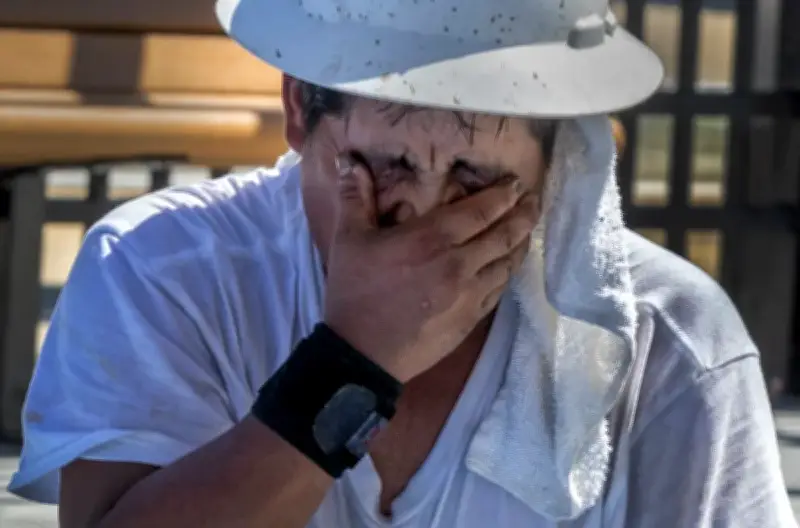
Workers are on the frontlines of a heat crisis as the US experiences its hottest summer on record, with the Trump administration and Republicans in Congress rolling back federal rules meant to protect workers from heat injury and illnesses.
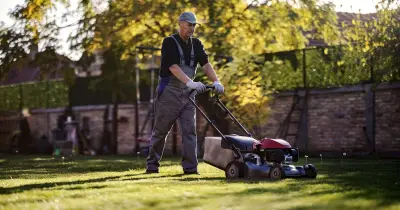
Esther Minton, a member of the Sheet Metal Workers Local Union 28 in New York City, wears a long-sleeved shirt to work when it's 90F on a hot summer day. "Working outside, you don't have cover. There's nowhere for you to really go if you're on a roof or if you're on the side of a building," Minton said. "Having the sun beaming on your skin all day long, you'll never make it through, so what you wear makes a difference."
Workers describe brutal conditions
Working outside during the summer means learning to stay hydrated, dealing with port-a-potties that get hotter than outside temperatures, and handling heated copper metals exposed to direct sunlight. "Before the day is over, by the time you're at break at lunchtime – say 12pm, when the sun is really out and doing its thing – you are drained," Minton said. "Your body fights hardcore to stay cool, your body fights hard to not be dehydrated."
Donald Nesbit, executive vice-president of Local 372 and former school cafeteria worker, recalled working in an old school building every summer in a kitchen basement preparing meals for students. "It was torture. We clocked temperatures at 130F to 140F in school kitchens during these summer conditions," Nesbit said during a Climate Week roundtable. "If we were to lock our animals in a car with those same conditions, we would be arrested, right? And yet, workers are working in those conditions, right, so there [have] to be protections. We have to push as a society to make protections better."
Federal and state rollbacks
In January 2025, the White House indefinitely froze Biden-era heat safety regulations that would have mandated water, shade, breaks, training and prevention plans for workers. House Republicans have also been pushing legislation that would prohibit the Department of Labor from enacting any workplace protections for heat exposure. Republicans in Florida and Texas have passed similar legislation prohibiting local city and county governments from passing heat protections.
Big business groups and lobbyists, including from the agricultural and construction industries, have strongly opposed heat protection standards, claiming employers already do what would be mandated and that the rule would be a burden on employers. Workers at a recent Climate Week roundtable in New York City strongly disagreed that employers are doing enough.
Calls for federal heat standard
Currently, only seven states have enforceable heat prevention standards in place for workers. A December 2025 study published in the journal Health Affairs found California's outdoor heat protections had resulted in at least a 33% reduction in heat-related workplace fatalities since 2010.
"We need a federal heat standard in this country," said Julie Su, deputy mayor of New York City for economic justice and former secretary of labor under Biden. In June, Su and Zohran Mamdani, New York City mayor, issued heat protections for New York City workers, citing the White House's pullback. "We had one proposed and the administration is not moving on it. There are also lots of states that have a standard, and New York does not have one," Su said. "In the city, we are doing everything we can with the powers that we have."
The Occupational Safety and Health Administration (Osha) estimates over 550 US workers die and nearly 28,000 are injured annually from heat exposure. Heat has caused more than 2,300 deaths in the US in 2023 and 2024 combined, the highest numbers in 45 years of records, according to the Centers for Disease Control and Prevention. A spokesperson for the Department of Labor said in an email: "OSHA is currently reviewing comments from the public hearings on the proposed rule 'Heat Injury and Illness Prevention in Outdoor and Indoor Work Settings.' OSHA provides compliance assistance to employers regarding potential workplace hazards, including guidance on how to keep employees safe in the heat."