
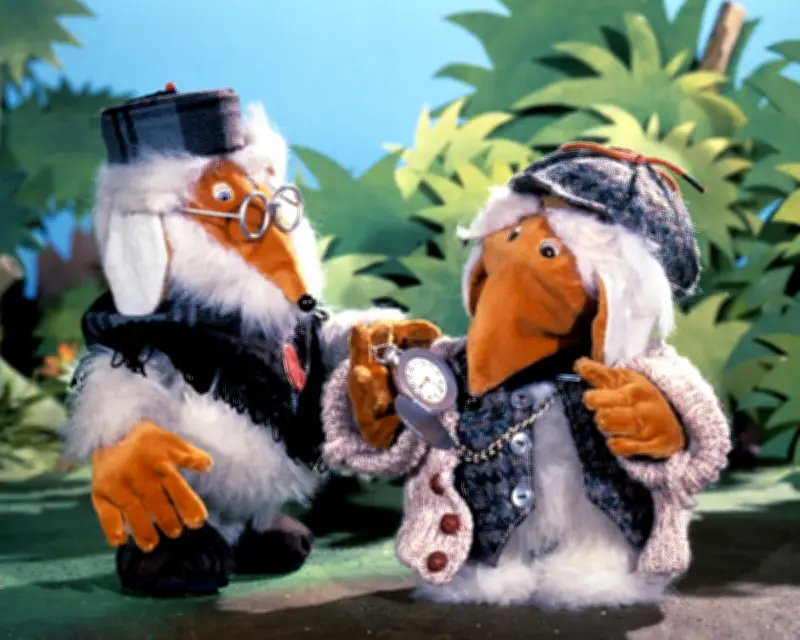
At the height of Womble-mania in the mid-70s, Elisabeth Beresford, creator of the snout-nosed, litter-collecting sensations, laid down three strict ground rules for anyone appearing in costume as her characters: no smoking; no drinking; and absolutely no taking your head off in public.
The latter was a real problem: in 1974 a cabaret club in Liverpool was forced to sack the entire cast of Wombles – the cast provided by theatre impresario and future Everton FC chairman Bill Kenwright, no less – after a disastrous opening night performance of their Christmas panto that featured inaudible singing, under-rehearsed dance routines, Wombles that looked “too thin” and, most unforgivably, one of the cast members removing their head in the theatre wings “in full view of the children”, according to the club’s director. Things got worse at another shambolic Wombles performance in Belfast, which was cut short after less than an hour, after booing, catcalls and furious mothers storming the stage, brandishing handbags and umbrellas.
Such was the devotion for Great Uncle Bulgaria, Tobermory and the rest. The Wombles were a genuine cultural phenomenon for a time. Their adventures on Wimbledon Common were chronicled in Beresford's book series, which fed into their own stop-motion animation TV show narrated by Bernard Cribbins. They were also plastered over all manner of merchandise, from flannels to hot-water bottles, and were a fixture in the singles chart, courtesy of the costumed supergroup fronted by Mike Batt (who, sensibly, always made sure to keep his Womble head firmly on).
Why are we talking about the Wombles in 2026?
Well, because Beresford's creations are receiving one of their occasional updates, with another production company hoping to restore the characters to their 70s peak. The last attempt was in 2016 when a CGI series (CGI? Sacrilege!) featuring Ray Winstone was canned before a single episode aired. This latest reboot promises to turn the Wombles into a “multi-platform international franchise”, beginning with a YouTube channel that will show old episodes and new shorts, and will launch this summer. It’s an ambitious plan for a cast of characters that few under the age of 25 are likely to be familiar with: the last time the Wombles were regularly on British screens was for a brief revival in the mid-90s, though they have periodically popped up in charity campaigns. Can they be successfully resurrected?
It’s hard not to be sceptical. The Wombles originally arrived at a perfect moment in the early 70s, just as the environmentalist movement was starting to find favour in Britain. Litter had become an everyday blight on the nation’s streets as disposable products became prevalent, necessitating an urgent shift in public attitudes. There was the stick, of course – the Dangerous Litter Act 1971 set a fine of £100 for anyone who was caught dropping rubbish – but the carrot of something softer was required. In this climate the Wombles and their call to “make good use of bad rubbish” chimed perfectly, inspiring children across the country to embark on mass litter-picking sessions.
Such a show seems a harder sell today. Environmental issues have become contested terrain, subsumed into our wider, ceaseless culture war. It’s easy to imagine the Wombles being greeted less cheerfully in this climate than in the 70s: certain tabloids declaring that the creatures have “gone woke”; conspiracy theories about the series being pro-Ulez propaganda spread across Facebook groups and on rightwing news networks and so forth. And that’s before getting into the issue of reviving a half-century-old kids TV product in a drastically different, far more fragmented entertainment landscape.
Mind you, the same could have been said about another recently revived TV relic from another age. Paddington, in book form at least, was even older but just look at him now: a planet conquering, highly merchandisable instrument of soft power. And Paddington’s gentle pro-immigration message was arguably an even tougher sell than that of the Wombles (even more so today, and yet, the franchise keeps selling). So there’s hope for our rubbish-amassing friends yet, I’d say – provided everyone keeps calm and doesn’t lose their heads.




