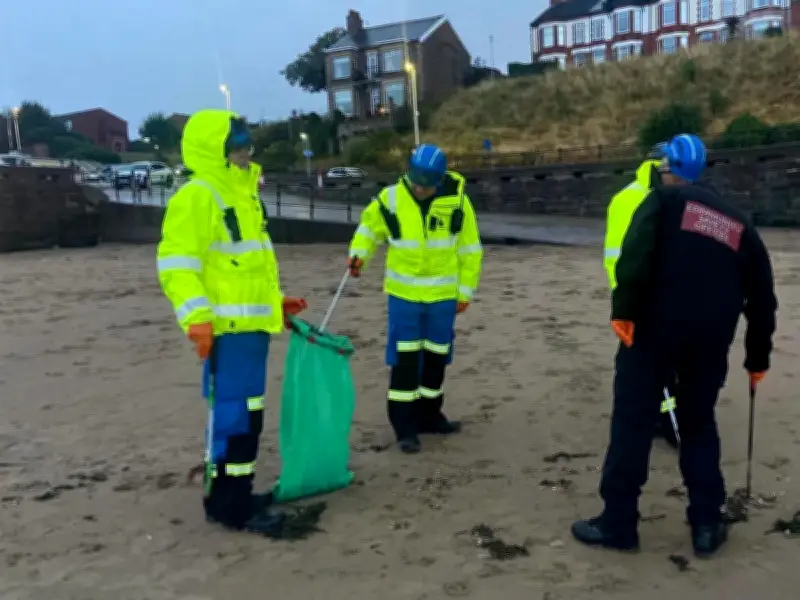
Clumps of a sticky grey substance, believed to be palm oil, have washed up on a Wirral beach. The substance was reported on the sands at Egremont on Thursday, August 20, prompting serious warnings from the coastguard.
Palm Oil Origins and Risks
Palm oil is a type of oil from palm trees, commonly used in cooking, soap and biofuels. According to Wyre Council, which covers the coast of Thornton-Cleveleys and Fleetwood in Lancashire just north of Merseyside, there have been several cargo incidents off the North West coast over recent decades resulting in tonnes of palm oil remaining in the wreckages.
Additionally, under the current regulations, ships are allowed to clean their tanks after delivering palm oil to the UK by dumping a limited amount of residue at sea, provided they do so more than 12 miles from the shore.

Dangers to Dogs and Public Advice
Palm oil debris is harmless to humans, but is highly toxic to dogs and other animals if eaten, causing sickness, diarrhoea, dehydration and sometimes severe pancreatitis. Unfortunately, dogs are also strongly attracted to the smell of palm oil. Wirral coastguard has advised people to take extra care when walking their dogs on the beach over the next few days.
They said: "Wirral Coastguard Rescue Team was tasked this evening to investigate reports of suspected palm oil washed up on the beach at Egremont. Coastguard Rescue Officers attended and located a number of lumps of the substance along the beach. Working alongside Wirral Council Community Safety Officers, some of the larger pieces were bagged and removed from the beach for collection and disposal by the Council."
What Is Palm Oil and Safety Measures
"What is palm oil? Palm oil is a vegetable oil widely used in food, cosmetics and many everyday products. Large quantities are transported by sea and, on occasion, solidified fatty or oily substances can wash ashore as white, cream or yellow waxy lumps. Although palm oil itself is widely used in food, material that has been at sea and washed ashore should not be considered safe to eat. It may be contaminated and can make dogs seriously unwell if eaten. Dogs can also be attracted to the smell and may try to eat it."
"Please take extra care when walking dogs on the beach over the next couple of days. Further pieces may still be present or could wash ashore with subsequent tides. Keep dogs and children away from any unusual waxy or oily substances and avoid handling them with bare hands. In an emergency at the coast, call 999 and ask for the Coastguard."
Additional Beach Hazard at New Brighton
Another warning was issued yesterday after a deep hole was found on the beach at New Brighton. A significant amount of sand near Harrison Drive and Kings Parade was washed away on Wednesday, August 19, by water flowing from an outfall, putting beachgoers at risk. Posting pictures of the sinkhole on social media, Wirral Coastguard Rescue Team warned: "These photographs, taken yesterday near Harrison Drive/Kings Parade, New Brighton, show how water flowing from the outfall has washed away a significant amount of sand, creating a deep, steep-sided hole with unstable sand around it. With further heavy rain since these photographs were taken, conditions could have changed again and the holes may now be deeper or more unstable. Warning signs are in place advising of deep water and unstable sand, but from beach level it isn't always obvious just how deep these areas can become."