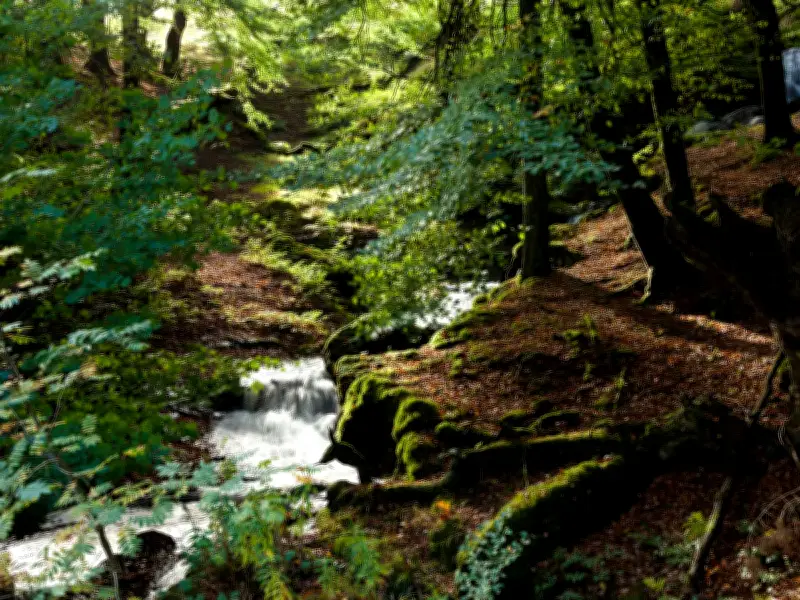
Wales is home to four Celtic rainforests, which are among the last remaining examples of these rare habitats in Europe. Known alternatively as Atlantic or temperate forests, they are exceptionally rare environments ideal for uncommon plants, lichens, and woodland fungi to flourish.
Threats to the rainforests
According to Eryri national park, Celtic rainforests are thought to be facing greater danger than tropical rainforests. Efforts are now being undertaken to preserve, restore, and safeguard these locations.
On its website, Celtic Rainforests Wales states: "Over the centuries the Celtic rainforest has deteriorated due to issues ranging from the planting of conifers, the invasion of species such as rhododendron ponticum, to grazing by sheep and deer."

The decline has put stress on precious flora, especially lichens such as pyrenula hibernica and tree lungwort, birds including the pied flycatcher, redstart and wood warbler, and mammals including the lesser horseshoe bat, otter, and dormouse.
Restoration project
Celtic Rainforests Wales has joined forces with other organisations on a project to clear four Celtic rainforest areas of "invasive" species and explore improved management methods, such as altering grazing practices in the woods.
These woodland sites are located in Eryri in Gwynedd, Coed Cwm Einion in Ceredigion, Cwm Doethie-Mynydd Mallaen spanning Ceredigion and Carmarthenshire, and Coed Cwm Elan in Powys.
The four locations
Celtic rainforests are situated near the coast, making Eryri an ideal habitat for uncommon plants, lichens, and woodland fungi. A prime example is the woodland of Coed Felenrhyd and Llennyrch near Maentwrog, which sits above the Vale of Ffestiniog and lies close to the waterfalls of Afon Prysor.
According to the Woodland Trust, lichens, mosses, and liverworts flourish in the moist atmosphere along the wood's streams and rocky ravines. The gorge supports 25 species of nationally-scarce mosses and liverworts and at least 42 nationally-scarce species of lichens. The site also features in one of the branches of the Mabinogi, where Pryderi, Lord of Dyfed, challenged Gwydion the wizard to single combat.
Coed Cwm Einion, situated close to the village of Furnace in north Ceredigion, holds the designation of a special area of conservation within the Dyfi Unesco Biosphere Reserve. Spanning 20.92 hectares, it is regarded as a remarkable hub for biodiversity. According to Matthew Yeomans, author of Return to My Trees: Notes from the Welsh Woodlands, it is home to 150 moss and liverwort species as well as 177 species of lichen.
Cwm Doethie–Mynydd Mallaen holds the dual status of a site of special scientific interest and a special area of conservation. Nestled at the heart of the Cambrian Mountains, it is home to the RSPB Gwenffrwd-Dinas reserve, which encompasses more than 600 hectares of upland, lowland farmland, and Atlantic Oak Woodland. Visitors arriving in May will be greeted by a carpet of bluebells beneath the trees or a covering of lichens draped across trunks and branches.
According to Celtic Rainforests Wales, the Elan Valley Woodlands in Powys represents one of several sites of ancient sessile oak wood in mid Wales. Some 4,000 years ago this woodland was blanketed in oak, birch, and hazel before being gradually cleared for agriculture. Spanning 100 hectares, the broadleaved woodlands are all designated as sites of special scientific interest and classified as "semi-natural ancient woodlands". Visitors may spot the pied flycatcher, redstart, tawny owl, and spotted flycatchers amongst the trees, but as with most Celtic rainforests, it is the mosses, lichens, ferns, and fungi that represent the most significant wildlife within these ancient woodlands.