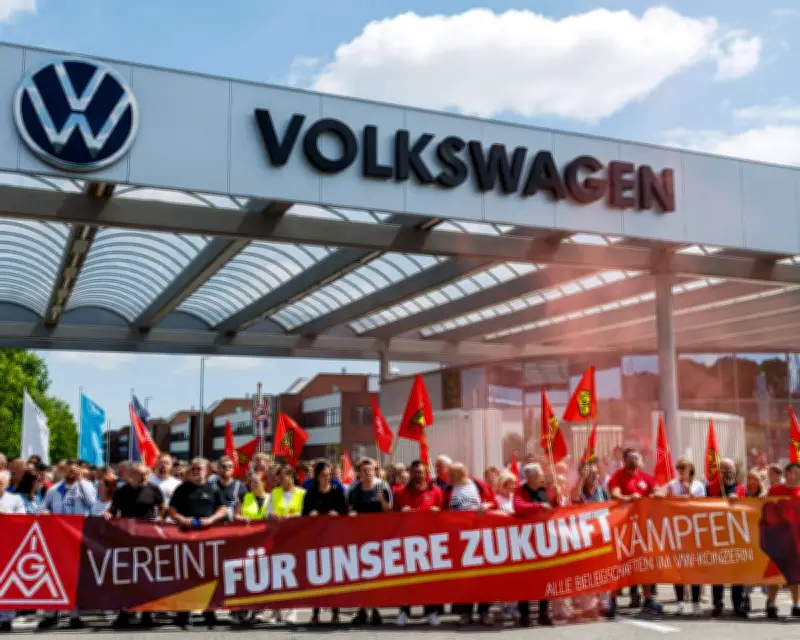
Volkswagen, once the proud symbol of German industrial might, is facing an existential crisis that serves as a stark warning for both Germany and the European Union. The company's struggles with the transition to electric vehicles, combined with massive cost-cutting measures, reflect deeper structural problems in Europe's largest economy.
Deepening Crisis at Europe's Largest Carmaker
Volkswagen has announced plans to close at least three German factories and cut thousands of jobs, marking a historic low for a company that has long been a pillar of the country's manufacturing sector. The automaker is grappling with high production costs, slowing demand for EVs, and fierce competition from Chinese rivals like BYD. According to analysts, VW's operating profit margin fell to just 2.3% in the first half of 2024, far below its long-term target of 6.5%.
The crisis is not just about one company. Volkswagen's problems are symptomatic of broader challenges facing German industry: high energy prices, a shortage of skilled workers, excessive bureaucracy, and a slow embrace of digitalization. The Ifo Institute reported that Germany's industrial output in 2024 was still 7% below pre-pandemic levels, highlighting a structural malaise.
Warning for the European Union
The EU must also heed this wake-up call. The bloc's ambitious Green Deal and ban on new petrol car sales from 2035 are forcing a rapid transition, but without adequate support for industry. European automakers are losing ground to Chinese competitors who benefit from government subsidies and a more integrated supply chain. As one EU official noted, "We risk swapping dependence on Russian gas for dependence on Chinese batteries."
The Volkswagen crisis underscores the need for a coherent European industrial policy that combines climate goals with competitiveness. Without urgent action, the EU could see a hollowing out of its manufacturing base, with devastating consequences for jobs and economic security.