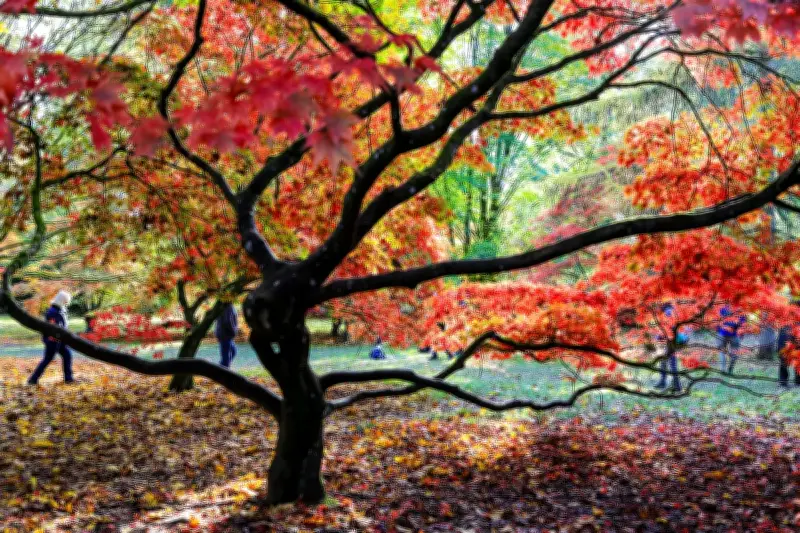
The effects of a hot, dry summer could see a vibrant but unpredictable display of autumn colour along with plants flowering out of season, the National Trust has said.
Despite signs of a “false autumn”, in which drought-stressed tree leaves turn brown and drop early, the ingredients are still there for a colourful season – particularly if the coming weeks bring cooler, settled weather – with the summer sunshine producing strong colour in the healthy foliage that remains. But it is likely to be more varied than usual, the charity said.
And with some plants responding to recent rain after the hot, dry summer, with fresh growth or a second flowering out of season, there may even be spots where maples are in autumn colour alongside rhododendrons in bloom.
Climate change making seasons unpredictable
Luke Barley, senior national specialist in trees and woodland at the National Trust, said: “The hot, sunny summer could still provide some of the ingredients for wonderful autumn colour, but the drought means the picture is likely to be more varied than usual.
“The coming weeks will be crucial. Autumn colour always depends on a combination of factors, but after such an extraordinary summer the usual signals are much harder to read.
“Climate change is making our seasons more unpredictable and we’re going to learn more this year about the impact of drought on autumn colour.”
Trees may also have to contend with the impacts of the current super-strength El Nino, which could bring wetter, stormier weather to the UK – as milder conditions could cause them to hold on to their leaves longer and make them more vulnerable to high winds, the National Trust said.
Regional variations in displays
In Stourhead, Wiltshire, famed for its autumn displays, established trees have fared relatively well through the drought and promise good seasonal colour, while in Bodnant, North Wales, some birches and maples have dropped leaves early but a “spectacular” autumn is still anticipated.
Meanwhile, the head gardener at Gibside, near Newcastle, Cail Stewart, is predicting a “rich tapestry of colour”, with reds potentially dominating displays as a result of high levels of pigment anthocyanin that helps leaves filter intense light.
When autumn arrives looks set to vary significantly from place to place, too, the National Trust said. Gardeners at Cotohele in Cornwall are expecting it three to four weeks later than usual, as its North American ash – one of the first trees to turn, sometimes as early as August – began showing hints of its pink-purple colour only in the third week of September.
Late or early season in different gardens
Head gardener Dave Bouch said: “Thanks to the high sunshine hours, a lot of sugar should have built up in the remaining leaves, meaning good autumn colour.
“I think it will be a great autumn in Cornwall, but a late one, with colour peaking from mid-October to mid-November.”
But at Mount Stewart in County Down, Northern Ireland, senior gardener Andy Dainty believes the season is three to four weeks ahead of normal, with morning mist, dew, hawthorn and sloe berries already highlighting the arrival of autumn.
Gardeners across the National Trust’s 260 gardens have also reported plants responding to the year’s extremes, with some going into “stasis” over the hot, dry summer, and now putting on fresh growth or a second bloom of flowers in response to the wetter weather.
Bodnant’s head gardener Ned Lomax added: “Many plants went into stasis over summer. If mild and wet conditions persist now, they might take advantage of the late opportunity to put on a growth spurt and to flower.
“We could get a second flush from our herbaceous plants, out-of-season flowering and unusual combinations, like rhododendrons in flower and maples in autumn colour at the same time.”
Conkers may be scarce, pumpkins thriving
One of the key signs of autumn – the conker – may be in short supply, with garden and outdoors manager at Dyrham Park, South Gloucestershire, Piers Horry warning drought-stressed horse chestnuts have dropped their seeds early, with a less abundant, noticeably smaller, crop.
He said: “For generations, collecting conkers has been one of those familiar signs that autumn has arrived, but anyone looking for a particularly large, prize specimen this year may have to search a little harder.”
But, as Halloween looms, there is better news for pumpkins, which have grown well at several gardens including Wimpole, Cambridgeshire, and Sizergh in Cumbria, despite the challenging summer, the National Trust said.