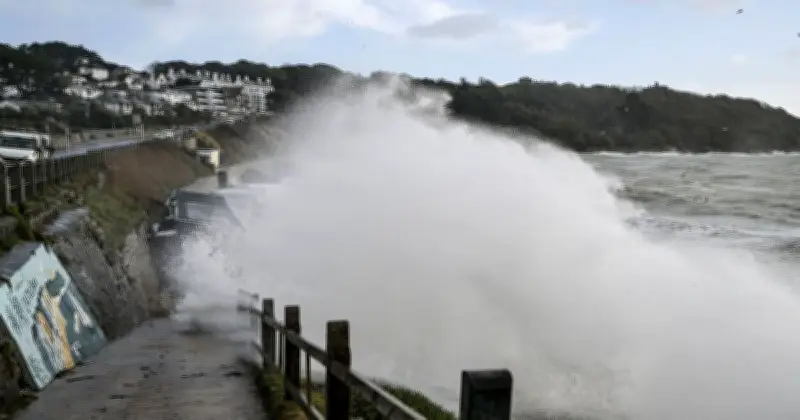
An “unprecedented” El Niño weather event is looming, with the phenomenon likely to be the strongest “in 500 or even 1,000 years”, experts have warned. It is forecast to bring more storms and heavy rain to the UK this autumn and winter, with conditions expected to be the strongest in living memory.
What is El Niño and why is this event different?
El Niño is a climate pattern that describes the unusual warming of surface waters in the central and eastern tropical Pacific Ocean. The phenomenon is declared when sea temperatures in the tropical eastern Pacific rise 0.5C above the long-term average.
Sea temperatures could exceed by more than 3C in the coming months, making this year’s weather event “the largest since the 19th century”, according to the Met Office.

Forecasts and expert warnings
Dr Zeke Hausfather, a climate scientist at Berkeley Earth, a US research group, says various other climate groups have projected that sea temperatures could reach 4C above average. If that came to pass, “It’s not beyond the realm of possibility to say this might be the strongest El Niño event in 500 or even 1,000 years,” Hausfather said.
Its potential to push up global temperatures increases the likelihood of unusual weather patterns in the UK too. El Niño is likely to bring milder, wetter conditions across parts of northern Europe as it influences broader global weather patterns. The climate pattern could put the UK at greater risk of a wet, stormy autumn.
Met Office and other expert reactions
“We should be clear that this is an unprecedented event”, said Prof Adam Scaife, head of long-range forecasting at the UK Met Office. “I have never seen an El Niño signal this intense in our forecasts.”
He added: “A typical El Nino leads to an equatorial Pacific sea-surface temperature rise of between one to 2C, with 2C being a really big event. This implies that if the forecast is accurate – and other forecast systems show similar extreme values – then 2026 will far exceed our recent experience of El Nino and its worldwide climate influences.”
In addition to the effects of human-induced climate change, the Met Office has warned that 2027 is “very likely” to be the hottest year on record.
Global and UK impacts
El Niño’s impact is already being felt across the world, with India having received 12% less rainfall than average so far this monsoon season and suppressing the Atlantic hurricane season.
Professor Stephen Belcher, chief of science and technology at the Met Office, said: “This summer we have experienced heatwaves across Europe reminding us of the effects of climate change, this large El Niño s a reminder that natural variations in the climate system are also at play, adding to the stresses of climate change.”
Almost three-quarters of England and the whole of Wales are now in drought conditions after the nation recorded its driest July since records began in 1836.