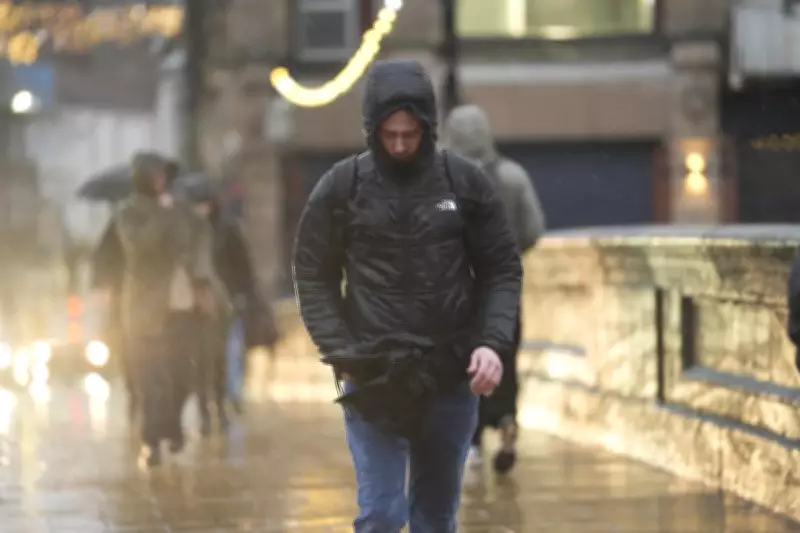
The United Kingdom is grappling with severe and unpredictable weather patterns, as extreme swings from drought to persistent rainfall have left countless families battling devastating floods while farmers confront yet another disastrous year in their fields. According to the Met Office, this winter season will be indelibly marked by what officials describe as "relentless rain," with provisional data indicating that numerous regions across the nation endured exceptionally wet conditions throughout the season.
A Dramatic Climatic Reversal
This represents a stark and dramatic reversal from the previous year, 2025, which witnessed record-breaking dry and warm weather triggering widespread drought conditions. That prolonged dry spell resulted in hosepipe bans and inflicted significant damage upon agricultural sectors and local wildlife populations. Remarkably, the final areas of England still contending with drought only transitioned into recovery status this past January, solely due to the onset of wetter weather—though this precipitation has, in turn, precipitated repeated flood warnings for communities in various parts of the country.
Met Office Analysis of the Rainfall
Mike Kendon, a senior scientist at the Met Office, emphasised that while this winter did not shatter any national rainfall records, it will be remembered for its "relentless rain as much as its intensity." He elaborated, stating, "A near-continuous run of Atlantic systems over the past three months has brought persistent rain, damaging storms and few dry spells." The statistical breakdown reveals a complex national picture: England experienced a substantial 35% more rainfall than the long-term average, Wales saw a 14% increase, and Northern Ireland recorded 25% more. Conversely, Scotland's levels were 16% below average. Notably, Devon and Cornwall endured their second wettest winter on record, while southern England faced its seventh wettest, though other regions reported less rainfall than usual.

Farmers Bear the Brunt of Volatility
Agricultural communities report that the extreme weather fluctuations over the last two years—oscillating between severe droughts and intense flooding—have severely impacted their financial stability and mental wellbeing, as crop yields suffer from these erratic and volatile rain patterns. Rob Addicott, a mixed farmer operating primarily in arable sectors just south of Bath, described the swing in conditions as "awful for us." He expressed deep concern, noting, "I think the worrying thing for me as a farmer is the frequency of these extreme weather events, whether it’s hot or wet."
Addicott explained that while the current year has been manageable, the preceding two years necessitated re-establishing failed crops due to poor autumn and winter weather. "It has a financial cost and also has the cost to your mental health every day, when you go out and see fields that are underwater rather than growing something," he lamented. This volatility has fundamentally disrupted traditional farming planning, with Addicott adding, "Gone are the days when you plant a crop in the autumn and just take the winter off." He characterised the last two years as a "write-off" in terms of agricultural income, stating, "We’ve just been treading water. Fortunately, we’re a diversified business, so we’ve got other streams of income, but it doesn’t change the fact that it is a strain on finances, a strain on mental health."
Dairy Farming Under Severe Pressure
Mark Humphry, a dairy farmer based in the mid-catchment area north of Ilminster in Somerset, reported that his farm has lost approximately 30 acres of grass and anticipates making no profit this year. He detailed that two fields have produced no yields since October 2023 because the summer drought delayed seed germination until September, and subsequent flooding has prevented proper crop establishment. "(It was a) terrible drought last summer for us," Humphry recalled, noting they had no viable growth to feed their cattle throughout summer and winter.

Their herd of 650 cows is now sustained with externally sourced feed, incurring an estimated £30,000 in additional costs last summer alone. Humphry warned, "I don’t believe that last winter was a one-off. It might become a two-in-five-year occurrence. We’re going to have to adapt, aren’t we? And that’s going to be expensive." With mounting competing pressures on UK land—from agriculture and housing to nature conservation and infrastructure—he highlighted a critical concern for food security: "In terms of food security for us, we will probably need more acres to grow the same amount of food."
Broader Implications and Future Challenges
The compounding effects of these weather extremes underscore a growing national crisis, affecting not only rural agricultural livelihoods but also urban and suburban households contending with property damage and displacement from flooding. The Met Office's findings signal a troubling trend of climatic instability, prompting urgent questions about long-term resilience, infrastructure adaptation, and support mechanisms for those most vulnerable to these environmental shifts. As communities and industries alike navigate this challenging landscape, the call for comprehensive strategies to mitigate and adapt to such volatile weather patterns becomes increasingly imperative.