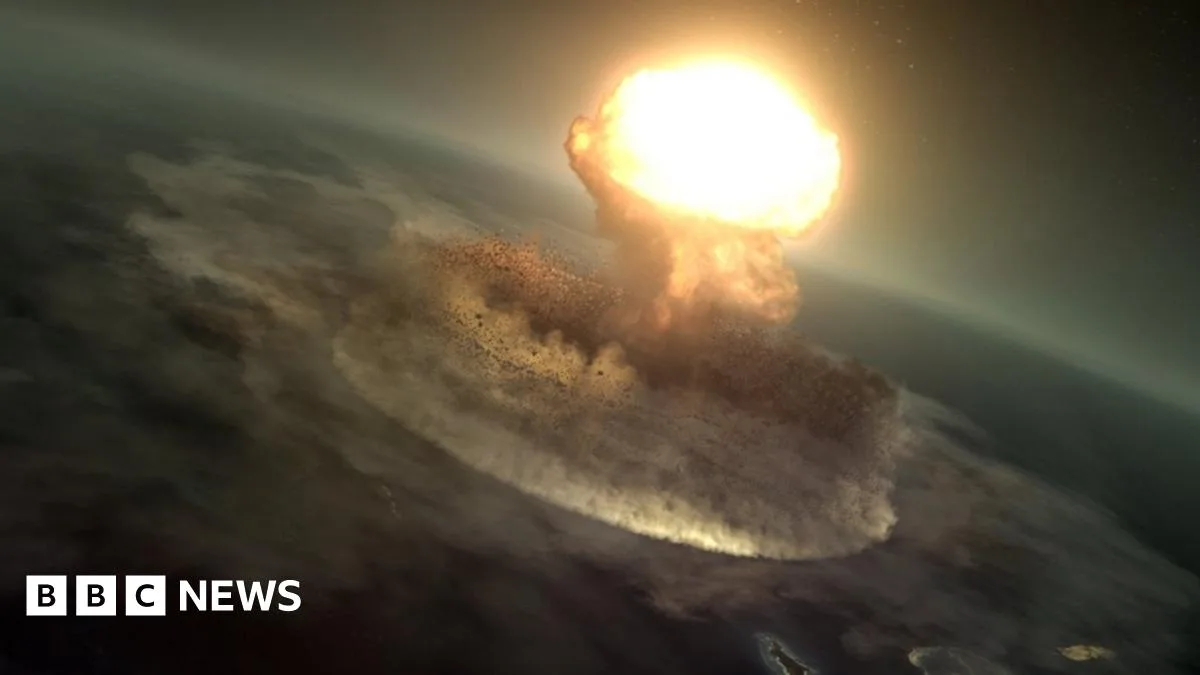
Scientists have reconstructed the climate catastrophe that followed the asteroid impact 66 million years ago, which wiped out three-quarters of plant and animal species, including the dinosaurs. New research, published in the journal Geophysical Research Letters, provides a clearer picture of the event's aftermath.
The study, led by Professor Joanna Morgan of Imperial College London, suggests the impact threw over 300 billion tonnes of sulphur into the atmosphere. This would have caused average global temperatures to drop below freezing for several years, with ocean temperatures affected for centuries. The abrupt climatic shift explains why so many species struggled to survive.
Professor Morgan, co-lead investigator on the 2016 drilling project into the Chicxulub Crater under the Gulf of Mexico, and her team analysed rock samples to determine the impact's precise effects. The asteroid, roughly 12 km wide and moving at about 18 km/s, struck from the north-east at an oblique 60-degree angle. It vaporised thousands of billions of tonnes of rock, releasing 325 gigatonnes of sulphur and 425 gigatonnes of carbon dioxide.
While the carbon dioxide would eventually cause long-term warming, the immediate effect of sulphur, soot, and dust was severe cooling. An earlier model by Julia Brugger of the University of Potsdam, using conservative sulphur estimates, found global temperatures could drop by at least 26°C, with subzero conditions lasting three to 16 years. Professor Morgan noted that the new, more accurate figures suggest an even more extreme cooling.
The Chicxulub Crater, now buried under sediments and limestone, was formed by an astonishing event. The initial hole was 30 km deep and 80-100 km across, which collapsed and rebounded, creating a 200 km-wide crater. This violent reconfiguration of the Earth's crust triggered the fifth great mass extinction.