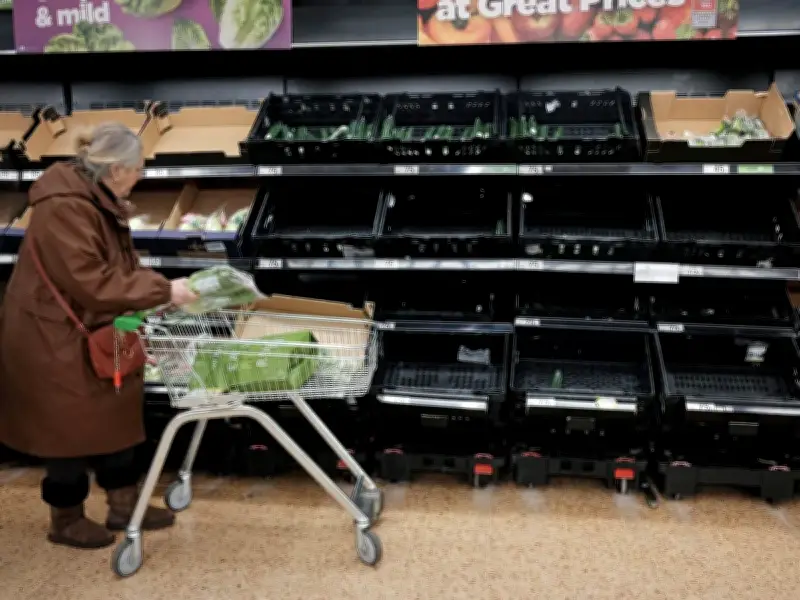
A group of 150 experts and others has urged Prime Minister Andy Burnham to set up a network of food storage sites to ensure families have enough to eat in the event of a national emergency. They warned the country had “no plan” for feeding the nation if there was a major crisis, whether due to climate change, a devastating cyber attack or even war.
The letter, signed by academics, businesses, civil leaders, and campaigners, has been sent ahead of today’s call for evidence deadline on updating the Civil Contingencies Act 2004. The signatories argue the Act fails to treat the food supply as a national security issue, despite mounting warnings from within and outside the sector.
Experts warn of 'sleepwalking' into crisis
Top academic Professor Tim Lang, one of the leading signatories, warns the country risked “sleepwalking” into a crisis unless action is taken immediately. Without proper planning, he said there was the risk of riots and widespread civil unrest.
They argue that, for those who can afford it, there is ready access to food, even though it is highly concentrated in the hands of a relatively small number of producers and retailers, and is reliant on imports. However, they warned the UK was entering “a new era in which food supplies will be disrupted, public expectations may not be met and food can be weaponised”.
Recommendations for food storage and resilience
Among their recommendations is the creation of national, regional, local and community food storage schemes, rather than leaving households to stockpile food. Britain had a network of such sites after the Second World War, but these began to be wound down after the country joined the EU and were eventually scrapped altogether in the 1990s.
Professor Lang, a leading expert in food policy at City St George’s, University of London, and lead author of the National Preparedness Commission’s Just in Case report, warned the government needed to prepare as it might for war. “Everyone in the food system knows that shocks are coming and we are not preparing for them like other countries are doing,” he said. For example, Switzerland has three months’ worth of essentials foodstuffs stockpiled, he said.
Government response and next steps
The UK’s Prepare website suggests households having enough non-perishable food that doesn’t need cooking, such as ready-to-eat tinned meat, fruit or vegetables, for an emergency lasting “a few days”. Professor Lang called the advice “hopeless” given many people do not have enough to eat already, let alone stockpile food. “This is ludicrous,” he said. “You can’t have resilience to individual households are the sole last line of defence.” He said a “just in time” system exposed the UK to even greater risk.
The danger was highlighted last year when Marks & Spencer and the Co-op were targeted by cyber criminals, resulting in a hit to supplies to both. “Britain has got this hyper-efficient, super-concentrated food system and every insider knows it,” he said. “The danger is Britain sleepwalks into multiple crises. The worst case scenario, as food insiders say, is riots, it is deep anxiety, it is community against community, it's social division.”
Among the letter’s other recommendations is for a new system of local “food resilience committees”, tasked with preventing and mitigating food supply disruptions at the local level. It also suggests renaming the Department for Environment, Food and Rural Affairs but ditching the last part in favour of “food security”.
Professor Paul Behrens, from the University of Oxford, said: “The Government’s own national security assessment says the UK ‘does not have enough land to feed its population and rear livestock: a wholesale change in consumer diets would be required’. That is Whitehall’s own analysis but there is still very little action on this. Food resilience, healthy diet, and environmental benefits all point the same direction: grow more of the vegetables, fruit and pulses people actually need, closer to home.”
Carina Millstone, executive director at the charity Foodrise, said: “Amidst severe geopolitical tensions and the fast worsening climate and environmental crises, food corporations have led us to an impasse that threatens the UK’s food and farming. The signatories to this letter call for leadership from the Prime Minister to boost the nation’s food resilience and security without delay.”
A government spokesperson said: “Food security is national security which is why we're ensuring food supply is fully incorporated into our emergency preparedness planning. We are taking action now to deal with the impacts of extreme weather - one of the Prime Minister's first visits was meeting farmers hit by recent drought, announcing a £65million package to boost resilience. We’re also going further to address the risks of climate change, including a new taskforce to strengthen climate security and working with farmers and industry to build supply chains that can withstand future shocks.”
The Cabinet Office announced plans in July for a campaign to raise awareness of the simple steps households can take to keep themselves safe in everyday emergencies, bringing the UK into line with European countries which run similar campaigns already, with more information expected.