British people have been urged to have enough food and water on hand to survive a few days without power or water, as the UN said the El Niño climate phenomenon was “supersizing before our eyes”, exacerbating extreme weather events worldwide.
Forecasters say they are braced for the biggest El Niño in 1,000 years, bringing wildfires and floods to parts of the world, and the threat of a wet, stormy winter for the UK. As the British government plans a campaign urging citizens to prepare for national emergencies, Angela Eagle told the Guardian the likelihood of a wild winter showed the importance of having supplies at home.
Environment secretary warns of record El Niño
The environment secretary said: “We’re about to experience probably the largest El Niño that has ever been seen, and that will lead to drier summers, wetter winters, with more extreme storms in this country.

“It will do a lot more damage in Asia with flooding, and therefore I think that we need to take it seriously.
“If you’ve got a store of a bit of food that can keep you going for a while before the emergency services can get to you, you’re going to be a lot better off than if you haven’t. So some of it is that kind of preparation for just being a bit more resilient.”
Ocean temperatures and forecasts
El Niño is a natural climate cycle where wind changes over the Pacific lead to rising ocean temperatures and the transfer of huge amounts of heat to the atmosphere. The most recent data, from Monday, shows the temperature of the ocean at the heart of El Niño at 2.6C above the 30-year average. That is already close to the highest anomaly ever recorded in the satellite data era, 3.1C in 2015, with months to go before the peak is expected.
That peak is forecast to reach about 4C in November, according to the average of 14 different models. Zeke Hausfather, a climate analyst, said data from analysis of corals, tree rings and historical documents suggested no El Niño had reached this level in the last millennium. Any temperature anomaly above 0.5C is classed as an El Niño.
Global impacts and UN warnings
The El Niño is likely to be the largest in at least 1,000 years and will pile extra heat into an atmosphere where temperatures are already rising rapidly due to global heating. The combination means 2027 is set to “blow apart” the record and be the hottest year ever recorded.
António Guterres, the UN secretary general, said: “El Niño is being supersized before our eyes. The science leaves no room for doubt: the planet is in uncharted waters, and those waters are heating up. The world is in the danger zone of extreme weather. The race now is between rising risks and our commitment to take climate action and protect people. We must win that race.”
Celeste Saulo, secretary general of the UN’s World Meteorological Organization (WMO), said: “El Niño has the potential to deliver a massive blow to communities and economies across the world. We are already seeing disruption and devastation from droughts and floods and we expect these impacts to increase as El Niño intensifies.”
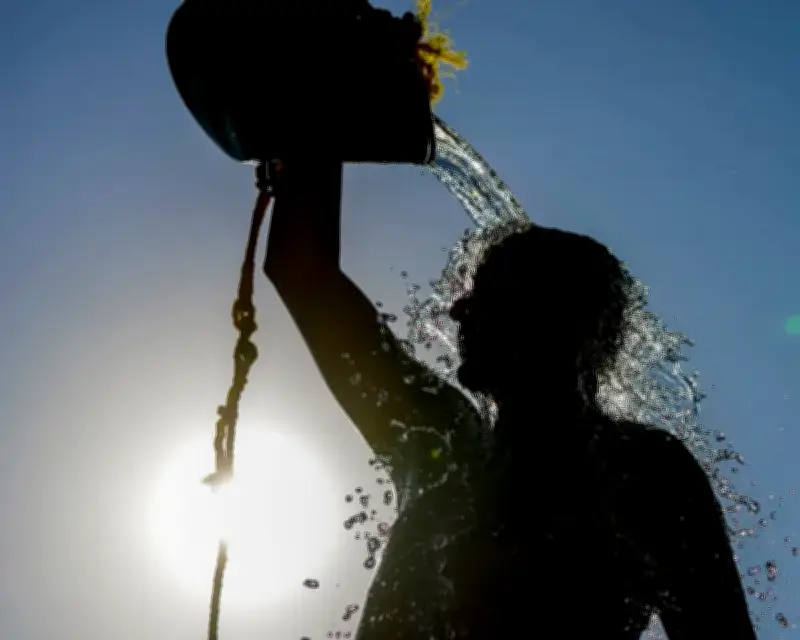
The climate crisis, caused by pollution from fossil fuels, is already supercharging extreme weather and killing people, with the most extreme heatwave ever recorded hitting Europe this summer and leading to at least 35,000 deaths. The El Niño will ratchet up the effects even further, with the scale of the event having been described as “truly mind-blowing” and a “Godzilla-level” event. The rising heat from the El Niño is already having effects, from worsening wildfires in Indonesia to the weakening of vital monsoon rains in India. The effects will spread globally, from greater fire risk in Australia to more intense floods in South America. The World Food Programme said in August that the El Niño was likely to push about 50 million people into acute hunger.
UK preparations and adaptations
In the UK, ministers are prioritising climate resilience after the UK’s hottest summer on record.
A campaign from the Cabinet Office in the coming months will tell households to stock up on tinned food and take steps to ensure they are prepared for national emergencies.

Meanwhile Eagle will oversee farming improvements and a new programme of reservoir building that she says will leave Britain better prepared than it has been for the kind of extreme weather that is likely in future years.
Speaking from Havant Thicket, which is set to be the country’s first new reservoir since 1992, Eagle said the country had not been good enough at preparing for climate-related emergencies in the past and would have to change its farming and water management techniques. “We need to do our own adaptations … and that is what things like these this reservoir is about,” she said. “It’s what the farming transition is about, so we can farm in a more resilient and and sustainable way from an environmental point of view.”