
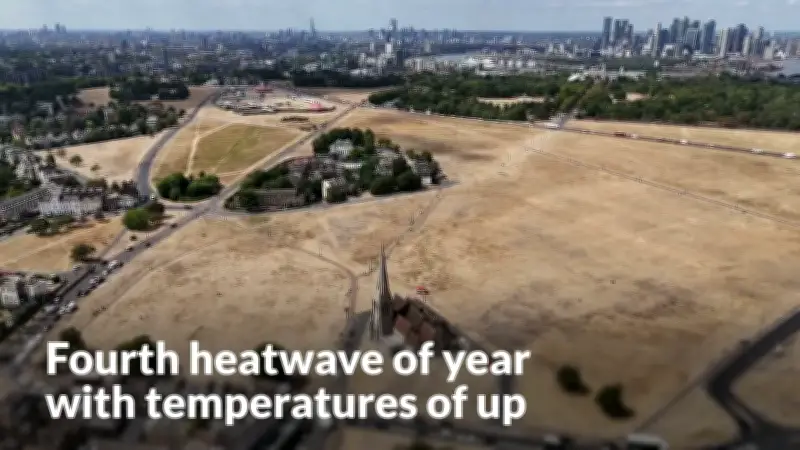
The UK Health Security Agency (UKHSA) reported that the number of excess deaths caused by heatwaves so far this year is already more than double the number for the whole of last year. The Met Office says August is likely to be hotter and drier than usual.
UKHSA's new report estimates there were 2,877 heat-associated deaths during the heatwaves in May and June this year, with an estimated 753 deaths associated with the May heatwave from May 24-27 and another 2,124 deaths in the heatwave between June 21 and 28.
Report author Dr Ross Thompson of UKHSA said: "While the figures are interim, they suggest that, if we experience more periods of hot weather this summer, we could see the highest number of heat-associated deaths on record." He added: "These figures highlight the significant danger that very hot weather can pose to people's health. This is particularly true for those who are more vulnerable including older adults and people with underlying medical conditions."
Drought and wildfire warnings
Drought has now been declared across the whole of Wales, with this month on course to be the driest July in Wales since records began 190 years ago, Natural Resources Wales said.
A major incident was declared after a large wildfire broke out on Dunwich Heath in Suffolk, about the size of 140 football pitches. Homes and 200 caravans were evacuated. Suffolk Fire and Rescue service said Sizewell B nuclear power station was not at risk from the fire due to distance and direction.
Water minister Emma Hardy said: "Our climate is changing, droughts are becoming increasingly common, and we need to be prepared for this new normal. We’re delivering long-term change in the water industry and driving record investments in infrastructure, including nine new reservoirs. We expect water companies to follow their drought plans, to go further and faster to reduce leaks, and to ensure supplies are not disrupted even in the driest of weather."
Impact on health and agriculture
NHS Alliance director Ruth Rankine said there had been a marked increase in GP appointments in June compared with the previous month and they were up by more than 10% from the same time last year. She said: "It's possible this could reflect the impact of sustained high temperatures which can increase health risks for vulnerable people and have unfortunately led to a sharp jump in deaths linked to heat. Great credit is due to GPs and primary care colleagues for the way they are rising to the exceptional challenges of this summer season."
Health Secretary Yvette Cooper said: "My thoughts are with all those who have lost loved ones as a result of the long and intense heatwaves in recent months. And my heartfelt thanks go to the NHS staff, care workers and emergency responders who have worked tirelessly through these exceptionally busy and challenging months to protect and care for people affected by the heat."
The dry, hot conditions have hit river flows and wildlife, as well as affecting crops and livestock. The harvest has come early, cereals are experiencing poorer yields, and livestock farmers are using winter feed due to poor grass growth. Farmers are calling for efforts to make agriculture more resilient to climate change, including making it easier to build on-farm reservoirs and flexible abstraction licences.
Record temperatures and European cooperation
Wednesday was the seventh day of 2026 during which temperatures reached 35C or warmer. Before this year, the record was five days set in 1976 and matched in 2020. Some 23 million customers are under hosepipe bans, and around 1,400 businesses have had to stop abstracting water.
In response to the heatwaves and wildfires hitting much of Europe, the UK and Spain issued a joint statement warning that climate change is "a national security emergency" threatening people's way of life. They stated that addressing the climate crisis was an urgent priority to tackle the cost of living, protect health and wellbeing, and to ensure European economic and energy security.
Dr Thompson added: "These figures highlight the significant danger that very hot weather can pose to people's health. This is particularly true for those who are more vulnerable including older adults and people with underlying medical conditions."




