
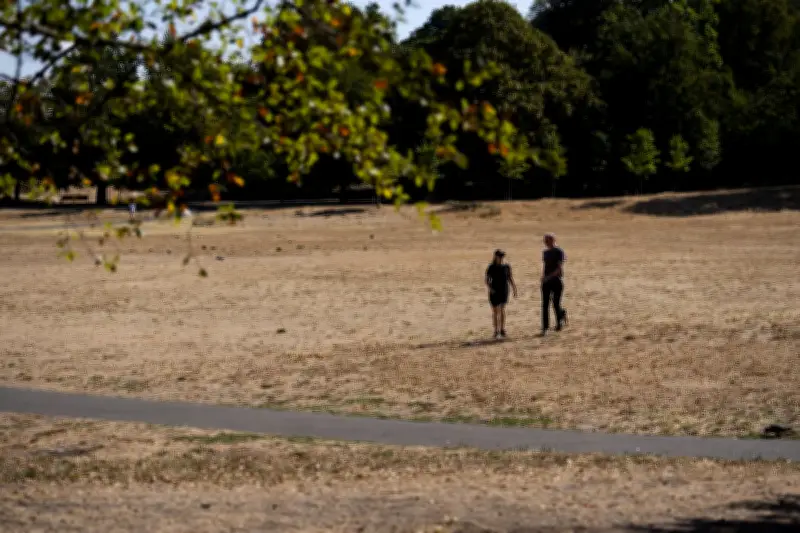
Scorching temperatures of 36C are expected in the UK next week, with heat health alerts in place warning that the hot weather is likely to affect the wellbeing of the population.
Heatwave conditions return
The Met Office said temperatures will climb through the weekend as heatwave conditions return, with the mercury set to reach 36C in parts of East Anglia and south-east England by Thursday.
This summer has seen two record-breaking heatwaves, in May and June, that led to more than 2,800 excess deaths, and two more heatwaves in July which have fuelled drought and wildfires.
The highest temperature of the year was 38C recorded at Lingwood in Norfolk on June 28.
Weekend forecast
Forecasters said the weekend will see a north-south split in the weather with Scotland and Northern Ireland likely to see spells of heavy rain, while England and Wales will remain largely dry, sunny and increasingly warm.
Temperatures could reach 27C on Friday and as high as 30C on Saturday, before climbing into the low 30s in southern and south-east England on Sunday.
Highs of up to 30C are possible across parts of England and Wales on Tuesday, increasing to 32C to 34C on Wednesday.
Peak temperatures expected Thursday
The highest temperatures are currently expected on Thursday when 36C could be seen in parts of East Anglia and south-east England.
Deputy chief forecaster Mike Silverstone said: “Temperatures will climb through the weekend and, more significantly, through much of next week.
“After a brief dip on Monday, high pressure will move across the UK before settling to the east, allowing a southerly flow to develop.
“A fairly widespread heatwave is likely across large parts of England and Wales, with hot conditions developing in places.
“The heat is expected to peak for much of England, Wales, Northern Ireland and Scotland on Wednesday, with up to 34C possible in parts of central and southern England and south-east Wales.
“East Anglia and south-east England, however, could see temperatures even higher on Thursday.
“Humidity levels are also expected to increase through the week, which may make conditions feel more uncomfortable, particularly overnight.”
Health alerts and wildfire concerns
The UK Health Security Agency (UKHSA) has issued yellow heat health alerts for the East Midlands, West Midlands, South East, South West, East of England, Yorkshire and the Humber, and London.
They will come into force at 9am on Saturday and end at 9pm on Tuesday.
Meanwhile, the National Trust is asking people to sign a petition calling on the Government to make tackling climate change a national mission.
It comes after several wildfires have broken out in the UK over recent weeks, with large blazes at Dunwich Heath in Suffolk, Headon Warren on the Isle of Wight, Llanwonno in the Rhondda Valleys, South Wales, and the Cairngorms National Park in Scotland.
The National Trust said these fires have underlined how urgently the UK needs more resilient landscapes, natural solutions that help shield communities and infrastructure, and how Fire and Rescue Services must have the funding and equipment to deal with increasingly frequent and severe wildfires.
National Trust director-general Hilary McGrady said: “The climate crisis long predicted by scientists is happening here and now.
“Ferocious wildfires, unprecedented temperatures and record-breaking droughts are already hitting communities and nature across the UK – they are not a distant threat.
“Tackling this emergency must be a cross-Government priority because it touches every aspect of our lives, our society and our economy. So we’ve launched a petition to demonstrate to ministers the strength of public feeling on this issue.
“Dunwich Heath is just the latest alarm call telling us that things must change. I’ve visited the landscape many times – it’s usually a haze of purple teeming with wildlife.
“The scale of the damage caused by a single blaze is shocking and without the actions of all those who helped, it could have been even worse.”
Record dry July
Last month was the driest July for England and Wales since records began in 1836, according to provisional figures released by the Met Office.
Nineteen counties across England recorded effectively no rainfall – 1mm or less – across the whole of the month, Met Office figures show.
England as a whole had just a 10th of the average rainfall for the month while Wales saw just 9% of the average, with both countries seeing less than half of the rainfall in the previous record dry July in 1911.
The UK, England and Wales have all recorded their sunniest July on record – and for England and Wales it was the sunniest calendar month ever observed, the Met Office said.




