
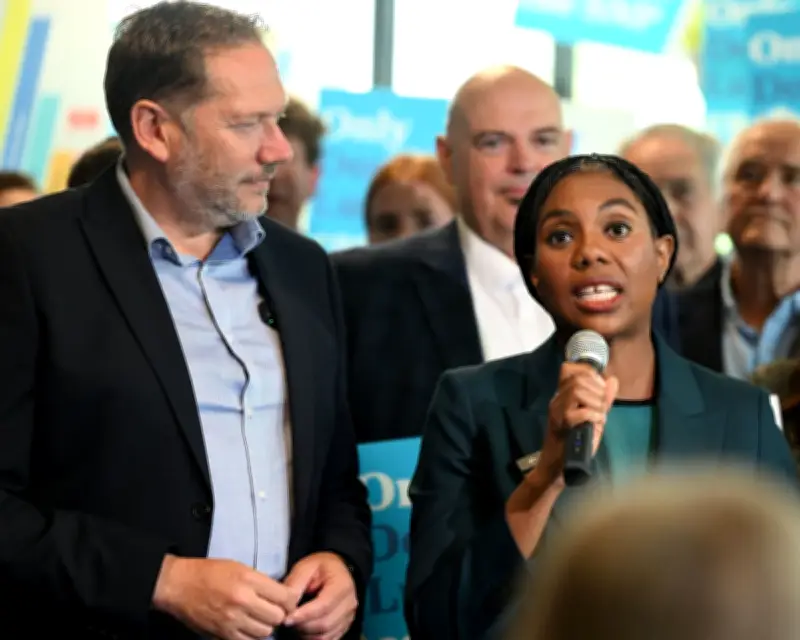
For the first time in 50 years, the Conservatives have won a byelection in Scotland, taking Aberdeen South from the Scottish National party and giving Kemi Badenoch one of her most significant achievements as party leader.
The win for Douglas Lumsden, which was secured with a 15% swing, giving the Tories a majority of 6,050, provides the party leader with an important piece of evidence that her decision to abandon the party's commitment to net zero by 2050 is working.
The question for Badenoch is whether the appeal of her pro-North Sea drilling position will translate in other seats away from the north east of Scotland, which is heavily reliant on the oil and gas industry for tens of thousands of local jobs.
Speaking at a rally on Friday alongside Lumsden, Badenoch said: "What this means is that we have won that referendum on oil and gas. Aberdeen has sent a message to the Labour government and to the SNP that we will not be ignored, Aberdeen will not be ignored, the centre will not be ignored."
The seat was heavily targeted by the Conservatives, both because of its demographic make-up and because of the travails of the SNP. As a semi-rural commuter belt comprising of two-car households and luxury villas based heavily on energy sector jobs, Aberdeen South was always going to provide the Tories with fertile ground.
The Tories took the seat in 2017, albeit against a backdrop of discontent over the former first minister Nicola Sturgeon's attempts to use Brexit as a trigger for a second Scottish independence referendum. The voters were also unhappy at the SNP this time, albeit for different reasons. Shortly after the byelection was called, the party's former chief executive Peter Murrell pleaded guilty to stealing £400,000 in party funds. The scandal hovered over the contest, and was often brought up by voters on the doorstep. But it was the argument over the North Sea which appeared to be decisive.
The basin is in steep decline after decades of drilling, but the Tories argue it should be drilled for as long as economically viable. The SNP has a more nuanced position, arguing new drilling should only take place if it can be shown not to violate the UK's climate change commitments, and that the tax burden on oil companies should be cut. The party has also called, however, for heavy investment in renewables and cutting the UK's carbon emissions. Labour, meanwhile, has pledged to issue no new licences in the North Sea at all – a policy championed by the energy secretary, Ed Miliband.
Lumsden spent much of the campaign highlighting those differences, saying on Friday: "This result sends a clear message to Labour and the SNP: their war on North Sea oil and gas must end." Stephen Flynn, who triggered the byelection when he stood down as MP to take his place in Holyrood instead, called the result "a tough night in Aberdeen that some will need to reflect on, quite heavily".
Badenoch said on Friday morning that the win means "a message has been sent that we do need to drill our own oil in the North Sea, not take oil from Russia or Norway when we have got our own oil right here". She urged the Labour government to approve environmental applications for the Jackdaw and Rosebank mega-fields. The Tory leader has unlikely backers in this position from two of the country's biggest unions: Unite and GMB. Sharon Graham, the general secretary of Unite, which has thousands of members in the energy sector, said: "Until there is a credible plan for jobs the anti-North Sea policies must be consigned to the bin."
If Labour wants to counteract that message nationally, it will need to highlight the effects of North Sea drilling on the UK's climate commitments. Polling shows that voters are heavily in favour of issuing new licences in UK waters, with 48% saying they support such a move and only 21% saying they would oppose it. But they are much less supportive of Badenoch's argument that the UK should ditch the 2050 net zero target. A recent poll by Ipsos for the policy institute at King's College London found 64% of voters believe that goal should be reached at least by 2050, if not earlier.
Badenoch's stance might come into sharper focus in the coming weeks. While the Tory leader was celebrating her victory in northeast Scotland, Andy Burnham was celebrating his own in Makerfield, more than 300 miles to the south. If the outgoing Manchester mayor succeeds Keir Starmer as prime minister in the coming weeks and picks Miliband as his chancellor, as many of his allies want, the Tory attacks on Labour's net zero policies are only likely to intensify.




