
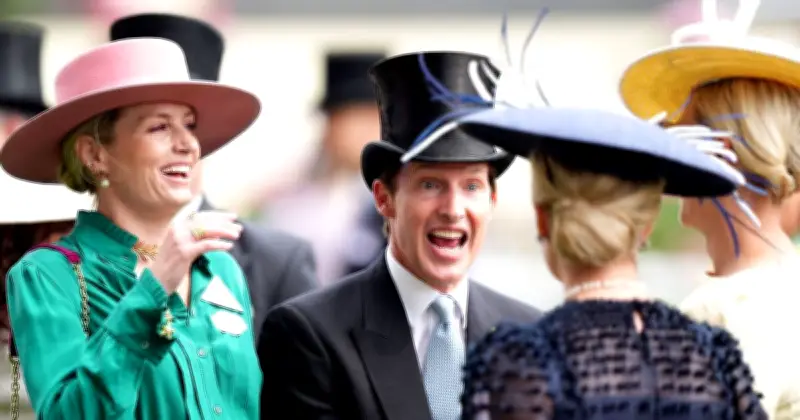
Conor Wilson spent three days at Royal Ascot and came away with a stark realization about the state of Britain. The event, which welcomes hundreds of thousands of people each year including the cream of British high society, laid bare the deep inequalities that plague the nation.
A Tale of Two Tuesdays
Wilson reflects on two vastly different Tuesdays. One week, he was in Belfast on the Shankill Road as a mob torched houses with children inside under a pretext of protecting women and girls. The next week, he was at Royal Ascot, surrounded by a crowd in morning dress and top hats welcoming the Royal Family. The contrast could not be more stark.
Belfast and Ascot are separated by 310 miles and a gulf of £648,000 in average house prices. But the distance is cultural as well as geographical. In Belfast, roads are closed and shops shutter early in anticipation of violence. At Ascot, the day's inconveniences amount to a queue at the bar or a jug of Pimm's that is not quite cold enough.
Class on Display
Despite the differences, Wilson found a link between the two places. Standing beneath the six-storey Ascot grandstand, he felt like a third-class passenger gazing towards the first-class decks of the Titanic—a ship built by the working class of Belfast for the aristocracy. Royal Ascot is one of the few places where Britain's class system is colour-coded, badged, and divided by enclosure. Regional accents and cheap suits walk beside Lords and millionaires.
For some, dressing up is a novelty that breeds excited energy. For others, top hats and morning dress are shields protecting them from being mistaken for anything other than upper-class. The inequality is striking, masked by the modern pretence that class no longer matters.
Inequality Fuels Disorder
Wilson argues that the inequality on display at Ascot is the same fuel behind the disorder in Belfast. According to the Office for National Statistics, the richest fifth in the UK has 5.6 times as much disposable income as the poorest fifth. The wealthiest 10% of households own 41% of Britain's household wealth, and many of them are at Royal Ascot.
Having reported on the asylum crisis, Wilson notes that much anger about the system stems from those working tirelessly while feeling others feed off the state unfairly. These concerns are compounded by misinformation about freebies and undeserved leg-ups.
Deprivation and Resentment
In Belfast, inequality was on full display: shops shut, houses run-down, and earnings no longer stretching as far. None of that excuses violence, but deprivation and the belief that society is rigged against you can create the resentment in which extremism flourishes. Immigration becomes the spark or convenient target.
Wilson concludes that immigration cannot be dealt with in isolation. A country where wealth, opportunity, and security are concentrated on the upper decks cannot be surprised when anger grows below. Inequality and poverty must be addressed if Britain is to put the great back into Great Britain.




