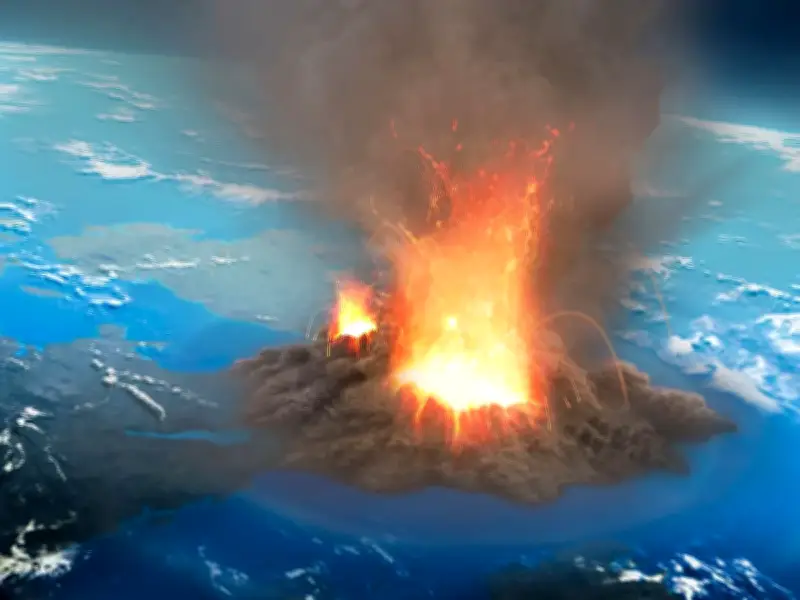
A supervolcano with the explosive force of 'several thousand hydrogen bombs' has been discovered beneath England's east coast, extending into the counties of Norfolk and Lincolnshire. The ancient volcano, named 'The Wash supervolcano', erupted approximately 454 million years ago, making it one of the largest eruptions in Earth's history.
The discovery was made by scientists at the British Geological Survey (BGS) and the University of Oslo, who re-examined tiny zircon crystals extracted more than 80 years ago from boreholes situated 65 kilometres apart in Norfolk and Lincolnshire. The crystals, smaller than the diameter of a human hair, were analysed using new equipment and techniques during the Covid lockdown.
Eruption force and scale
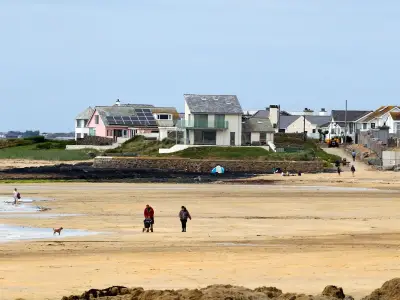
The supervolcano is centred under The Wash, one of England's flattest landscapes, and extends beneath the counties of Lincolnshire and Norfolk. Researchers believe the volcano erupted in a highly explosive 'super-Plinian'-type eruption, with the force of 'several thousand hydrogen bombs', as reported by the BBC.

The findings were detailed in a study published in the Geological Society of America Bulletin, titled 'The Wash Igneous Complex of eastern England: a candidate Avalonian source for Sandbian tephra in Baltoscandia and implications for closure of the Tornquist Sea'. The eruption is believed to have thrown hundreds of cubic kilometres of the Earth's crust into the stratosphere.
Explaining a geological mystery
Experts at BGS believe the discovery finally explains a massive layer of volcanic ash spread across Sweden, Norway, Belarus, Poland, and the Baltic region, a geographical mystery that had puzzled scientists for some time. The ash from The Wash supervolcano's eruption is thought to have blown over to what is now Scandinavia and settled on the sea's floor.
BGS's Dr Tim Pharaoh, principal author of the research paper, described the discovery as a 'fantastic result' that changed 'our understanding of England's deep geological past'. He added: "It's only now that we've got these precise ages we can make these bold statements and assertions. It's extremely satisfying to come up with this very precise result."
What is a supervolcano and will it erupt again?
Supervolcanoes are those that have erupted more than 1,000 cubic km (240 cubic miles) of material. While there isn't an exact known number, approximately 20 such volcanoes are thought to exist, according to the Natural History Museum, including Yellowstone in the United States and Lake Toba in Indonesia.
The last known supervolcano eruption on Earth was the Oruanui eruption of the Taupō volcano in New Zealand, which happened approximately 26,500 years ago and created what exists today as Lake Taupō. The Taupō supervolcano remains active and is believed to be at least 800 years overdue for its next eruption.
Dr Pharaoh explained that The Wash supervolcano will not erupt again: "Unlike faults, which can be seismically reactivated, a volcano can't. Once it's gone extinct, that's it. Nobody needs to worry about the supervolcano erupting again."
The volcano was so eroded it took researchers nearly 30 years to piece together its explosive past and enormous size, according to Live Science. The samples were kept by the BGS at its archives in Keyworth, Nottinghamshire, and fresh analysis revealed that both the Lincolnshire and Norfolk samples were formed at the same time, approximately 454.4 million years ago, from the exact same volcano.
University of Bristol volcanologist Professor Jenni Barclay told the BBC: "This work is an important step forward in piecing together the geological history of the UK, and understanding that subsurface is important for lots of reasons linked to our sustainable use of resources, like water and minerals."