
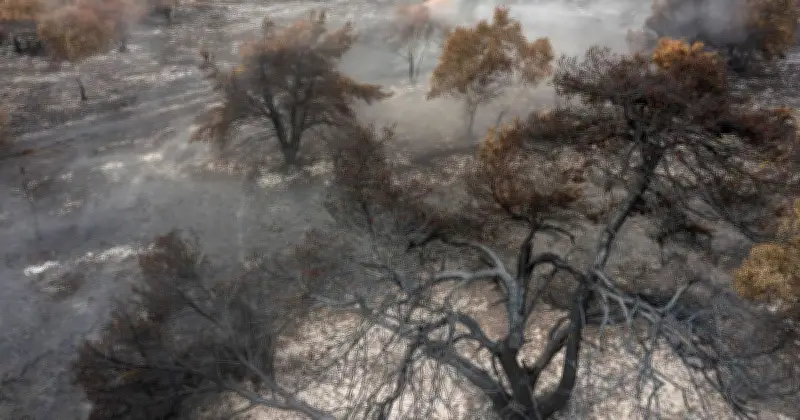
Dunwich Heath in Suffolk has been left "unrecognisable" after a wildfire burned through 370 acres of the National Trust reserve, the equivalent of 210 football pitches. The blaze, which started on July 29, is among the worst wildfires in living memory, following one of Britain's hottest and driest summers on record.
Firefighting effort and devastation
Suffolk Fire and Rescue Service declared a major incident, with 120 firefighters battling the flames at one point. Every one of the county's 35 fire stations sent crews over the last 10 days, with support from other counties, and a firefighting helicopter was deployed. The fire stretched to the Suffolk coastline, leaving black ash and charred vegetation visible for miles.
Matt Wilson, the trust's countryside manager for the area, said the blaze is now under control but warned that smouldering hotspots occasionally flare up. He urged the public to avoid the area. "The ferocity and depth of the fire is unlike any wildfire I've seen before," he said. "The heather heathland has been entirely burnt in places. It's been so hot that we've had complete loss of all the layers of vegetation. It has scorched down to bare earth. It's the worst fire I've had to deal with professionally."
Impact on wildlife and habitat
Dunwich Heath, a coastal heathland south of the village of Dunwich, is normally carpeted in flowering heather. "That iconic purple and pink display of heather would normally be in place at this time of year," Wilson said. "That's the habitat that has been most impacted by this fire." Flames leapt 40m (130ft) high in places, destroying many trees.
While birds like Dartford warblers, nightjars, and stonechats flew to safety, and red deer and muntjacs mostly fled, Wilson fears for slower-moving wildlife. "We have a lot of reptiles on site such as adders, slow worms and common lizards. We get amphibians such as newts, frogs and toads. Voles, mice and field mice just can't move as quickly. Because of the pace and the ferocity of the fire, a lot of those won't be able to escape."
Recovery and appeal
The lingering smell of smoke is noticeable for miles, and roads and public rights of way, including the coastal path, are closed. Wilson is not yet confident about how long recovery will take. Fire breaks, cleared to stop flames spreading, proved ineffective. "But in the face of this fire, those haven't been effective enough," he admitted. "The fire burnt through fire breaks as if they weren't there."
The National Trust has launched an emergency appeal targeting at least £500,000 to restore the habitat. Director-general Hilary McGrady said: "The work will involve everything from making the site safe to active habitat restoration. We'll need to make new visitor routes and facilities and repair damage to buildings, to ensure people can enjoy the special landscape."




