
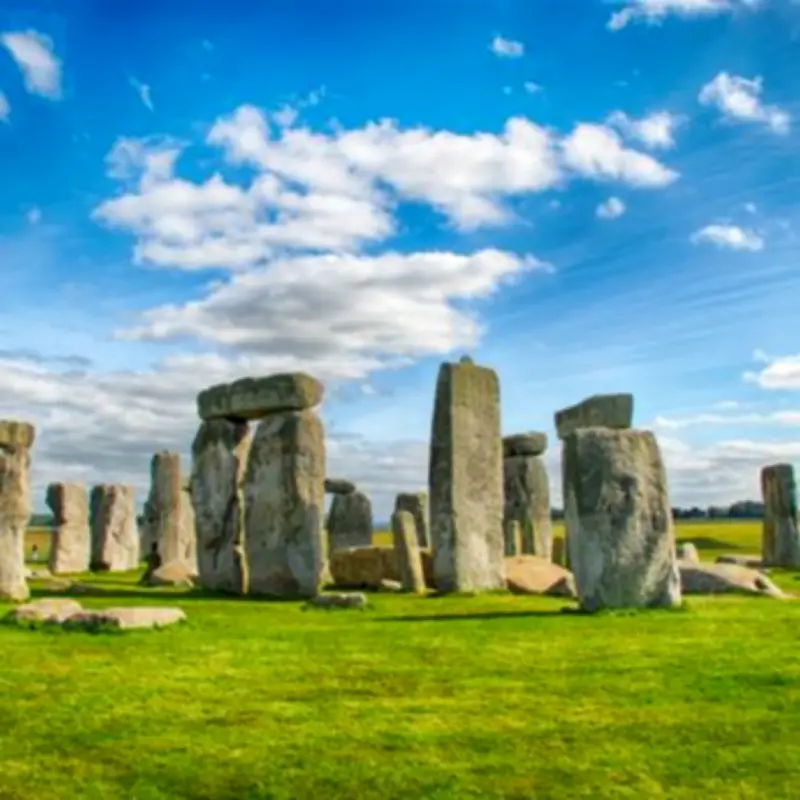
Stonehenge has stood for 5,000 years, yet its exact purpose and construction methods remain enigmatic. A new Channel 5 program, Stonehenge: Secrets of the New Stone, has uncovered compelling new evidence about one of the Wiltshire monument's most perplexing features.
The show, presented by actor Jason Watkins and historian Tracy Borman, reveals that the 'altar stone' at the center of the iconic circle originated from a specific region in Scotland, 500 miles away, and may have played a pivotal role in Midwinter celebrations at the site.
Mysteries of Stonehenge
Over the years, theories about the standing stone circle, dating back to 3100 BC, have ranged from a landing site for alien UFOs to a solar calendar. While some stones weighing up to 20 tonnes were sourced locally or from Wales, the origins of the six-tonne altar stone, lying flat at the heart of the circle, were previously unknown.
The new documentary reveals that geologists have identified the red sandstone slab as coming from the Scottish Highlands near Inverness. However, how any of the stones were transported to Stonehenge remains a mystery, with possibilities including rafts, wooden rollers, or sledges.
The site's purpose is also debated, with theories including a burial ground or a solar calendar. The stones align with the sunrise on the summer solstice and sunset on the winter solstice, and the documentary suggests the altar stone was crucial in solstice rituals.
Other Ancient Stone Mysteries
Carnac Stones, France
Near Carnac in Brittany, France, 3,000 megaliths of varying sizes, some up to 20 feet tall, are arranged in parallel lines spanning over four miles. Erected between 4500 and 3300 BC, their purpose is unknown, with theories including an astronomical observatory or an earthquake warning system. Local legend claims they are Roman soldiers turned to stone by the wizard Merlin.
Stone Spheres of Costa Rica
More than 300 perfectly carved stone orbs, weighing up to 16 tonnes and ranging from a few inches to seven feet in diameter, have been found in Costa Rica. Dating back to 1500–500 BC, they were likely made by the Diquis people using rocks and sand. Theories suggest they marked lines approaching chiefs' houses or represented celestial bodies, but their exact significance remains unclear.
Yonaguni Monument, Japan
Off the coast of Yonaguni, Japan, divers discovered stepped rock formations underwater in 1986, with sharp angles suggesting human construction. Some researchers, like Professor Masaaki Kimura, believe it is a lost civilization built over 3,000 years ago, featuring a pyramid, roads, arches, and a stadium. Others argue the formations are natural, shaped by strong currents.
Moai Statues, Easter Island
The moai statues of Easter Island, weighing up to 80 tonnes, number around 1,000 and were carved by the Rapa Nui people between 1250 and 1500 AD. How they were moved and erected is debated, with some suggesting a zig-zag walking motion using ropes. The statues likely represented spirits of deceased ancestors.
Carisbrook Stone Arrangement, Australia
In Victoria, Australia, the Carisbrook Stone Arrangement consists of boulders forming a 197-foot-long, 16-foot-wide boomerang shape. Thought to be an ancient Aboriginal site of the Djadjawurrung tribe, its purpose is unknown. Theories include a hunting weapon symbol, an astronomical representation, or a place of initiation.
Georgia Guidestones, USA
The Georgia Guidestones, erected in 1980, were 19-foot-tall monuments with ten 'commandments' in eight languages, intended for a post-apocalyptic world. Instructions included keeping the global population below 500 million. Commissioned by a mysterious figure known as RC Christian, they were destroyed in 2022 by unknown assailants.
Stonehenge: Secrets of the New Stone is now streaming on Channel 5.




