
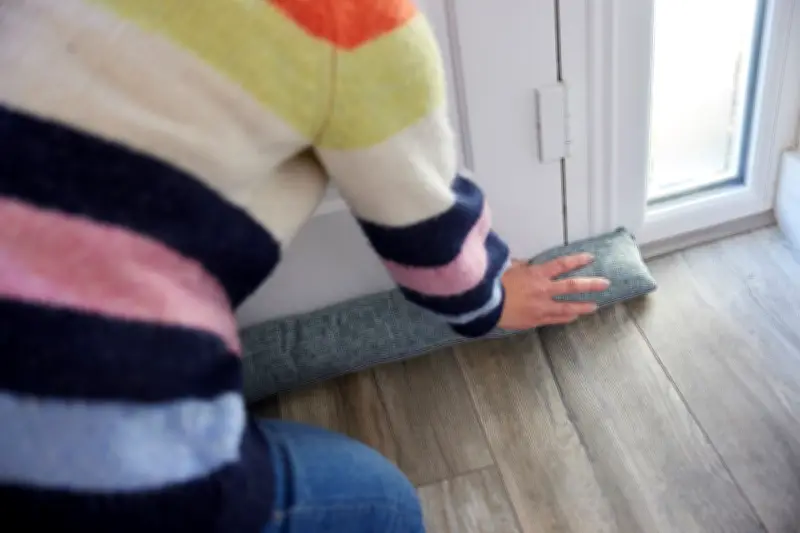
Door snakes, often filled with sand or rice, are cheap to buy or easy to make and help insulate a home. Many Australian houses are ill-fitted for the coldest weeks of the year. But there are plenty of ways to retain warmth – and some heaters are much more efficient than others. Change by degrees offers life hacks and sustainable living tips each Saturday to help reduce your household’s carbon footprint. Got a question or tip for reducing household emissions? Email us at changebydegrees@theguardian.com.
Simple Draught-Proofing and Insulation
It’s no secret that home energy upgrades – rooftop solar, batteries, insulation and efficient appliances – can make a big difference in comfort and energy bills, while cutting emissions. But they also require a significant initial outlay, often in the thousands of dollars. While this can be paid back in future savings, that can take years, and not everyone can afford it. So, with the winter solstice upon us, and the coldest days of the year yet to come, it is worth remembering the analog options that cost comparatively little and still help ward off the chill. They’re worth revisiting as the temperature drops.
Sometimes staying indoors can feel just as cold as being outside. Tim Forcey, a home energy adviser and author of My Efficient Electric Home Handbook, says there is a simple reason for this. “Our houses are leaky and they leak the heat away,” he says. “You can be pretty chilly at home even if you’re trying to run the heater.”
Modern homes must now meet a minimum seven-star energy efficiency rating under the Nationwide House Energy Rating Scheme, making double-glazed windows and insulation commonplace, but many older homes and rentals lack these features. Forcey says the average Australian home has a three-star rating, and many lose heat through windows and doors. Simple tricks can help keep the heat inside, he says, such as sticking bubble wrap to windows to create a double-glazed effect. “Bubble wrap is a really good insulator, you can still get light through it, and it’s a lot cheaper than double-glazed windows. Just spritz it with water and it’ll stick right on.”
Anna Matilda, a permaculture educator and founder of The Urban Nanna, says she chooses small and slow changes to reduce her carbon footprint. “I put up heavy bedspreads or curtains in doorways to stop draughts and minimise heat transfer through the gaps between doors,” Matilda says. She puts nails at the top of the door jamb and uses rubber bands to secure a bedspread or curtains over the nails, for added insulation and draught-proofing. A door snake – a long fabric tube, often filled with sand or rice – is another solution that’s cheap to buy, or easy to make. Placed at the bottom of the door, these keep the cold air out and help prevent heat from escaping.
Adding such draught-proofing measures together can save as much as 25% on home heating, according to the federal government, which recommends sealing gaps around windows and doors, and closing off rooms when they are not being used or heated.
Heat the Person, Not the Space
Forcey says people often start feeling the cold more as they get older, and may need to change their wardrobe to suit. Both he and Matilda recommend natural fibres such as cotton and wool where possible, which provide excellent insulation and breathability in winter. Forcey also turns to wearable blankets and double-layered pants – the latter are a lot warmer than jeans or track pants. Electric throws, blankets, heated ponchos and hot-water bottles are other ways to stay cozy at home. “They call it heating the person, not the space,” Forcey says. Compared to space heating, these items don’t use a lot of energy. “All that adds to dollars saved.”
Warming Habits
Sometimes, a simple change of habits makes a big difference. Matilda says cooking helps heat her home. “Cooking earlier in the evening, before the temperature of the house drops too much, helps keep the house warmer for longer.” Or, she’ll reach for a task that gets her moving. “Something active like changing the sheets or taking out the bins helps the body generate heat on its own.” Spend time in public spaces with heating, such as public libraries, the laundromat, shopping or community centres, just like you would for cooling on extremely hot days.
Choose the Most Efficient Heater
Of course, there may be days when you turn to home heating. The World Health Organization recommends 18C as a minimum indoor temperature, to reduce the risk of cardiovascular and respiratory illness. When that time comes, the most energy efficient and cheapest way to heat the home is using a reverse-cycle air conditioner, Forcey says. Focus on heating the room you’re in, rather than heating the whole house. “It’s a third the cost of using a gas heater, and a fifth the cost of using an electric heater,” he says – a helpful comparison to keep in mind for homes that already have one installed. It’s important to clean the filter of an air conditioner regularly, Forcey says. How often can vary, he says, “depending on how often you’re using it and how dusty the home and environment is – whether you have pets, carpets, those sorts of things”. When it’s dirty, remove the filter and give it a quick vacuum or rinse – a simple DIY job that will make turning on the heater worth your time and money.




