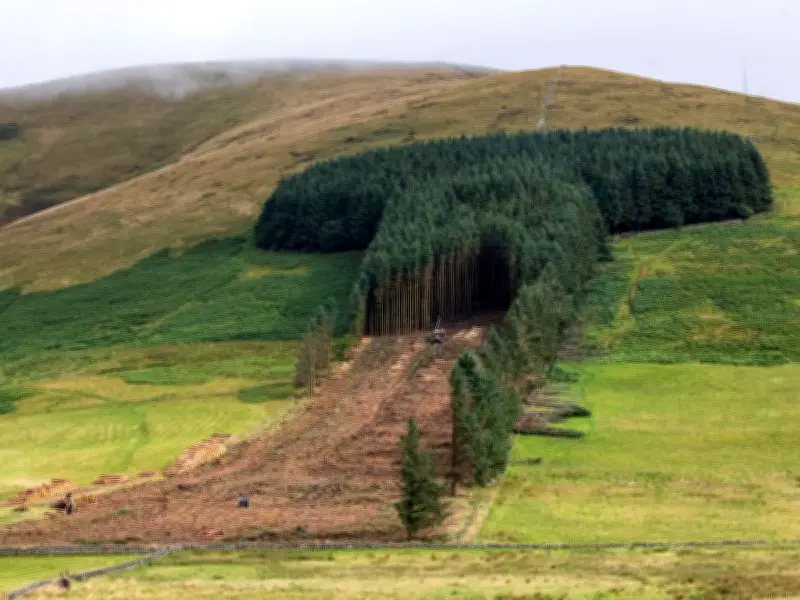
Castle Crawford Woods in South Lanarkshire, affectionately known as "Penis Woods" and dubbed the "Cock of the North," is being felled despite a campaign backed by over 2,700 signatures. The woodland, which has stood for around 200 years, is visible from the northbound carriageway of the M74 and is one of the first sights Scots see when driving back from England.
Historic Landmark Faces the Axe
The forest, known for its distinctive phallic shape, even appears on Apple Maps under humorous nicknames. Plans to remove the woodland, sometimes called the "Treenis," sparked a petition to save it, with locals arguing the trees should be a "protected landmark."
Despite the opposition, Scottish Forestry granted permission for the felling. Pictures taken this week show work is almost complete, with only the tip of the woods remaining.

Reasons for Felling
Scottish Forestry said the wood had reached "the end of its natural lifecycle" and was experiencing "significant windblow," leaving many trees unstable. The site has been felled and replanted several times throughout its history.
The petition starter wrote: "The Penis Woodland is a cultural landmark visible from the M74 in Scotland. This iconic cultivation is going to be felled. It's not just any woodland, it's a penis shaped woodland, visible from the motorway."
The shepherd in charge of the farm's day-to-day running said in a statement: "We feel for the safe-keeping of the wood itself it has to be done sooner rather than later as the damage will get worse and it will look nothing like a 'T' in a few years if we don't. We plan to get it back to its former glory ASAP. This is not for any financial gain, once-replanted and fenced it will probably leave a loss."
Public Reaction and Future Plans
Supporters left comments on the petition, with one writing: "These trees should be a protected landmark, as something of cultural significance." Another added: "This stretch of woodland is not only a memorable and wonderful landmark for those who have seen and visited it but holds so much life within that would otherwise be lost with its destruction."
A spokesman for Scottish Forestry said: "Castle Crawford Wood, which was originally planted in the late 1800s, has reached the end of its natural lifecycle and is experiencing significant windblow, leaving many remaining trees unstable and at risk of further failure. Following assessment and public consultation, Scottish Forestry has approved the felling of the woodland, which is in progress. This forms part of the wood's long-established management, with the site having been felled and replanted several times throughout its history. The area is required to be restocked with an appropriate mix of trees species, helping to ensure a sustainable woodland long-term."