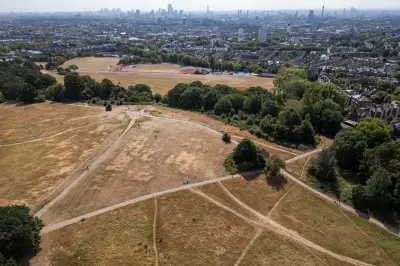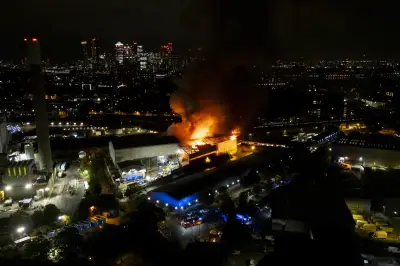
Researchers have warned that unless humanity dramatically alters its trajectory, the collapse of civilisation is now within sight. A duo of scientists believe widespread deforestation and the destruction of Earth's natural resources could bring about the downfall of 10,000 years of civilisation within just decades, with the academics highlighting there's now just a 10 percent chance of civilisation surviving – and that represents the most "optimistic scenario".
Deforestation timeline and forest loss
Research published in the journal Scientific Reports suggests deforestation will wipe out our planet's remaining forests within the next 200 years. However, civilisation's demise would arrive far earlier than this timeline, predict the team from the Alan Turing Institute and the University of Tarapacá.
The paper stated: "Clearly it is unrealistic to imagine that the human society would start to be affected by the deforestation only when the last tree would be cut down." Rather, the academics anticipate the collapse of civilisation as we understand it will happen within decades.

Forest coverage decline and ecological impact
Before humanity's dominance over the planet, Earth boasted 60 million square kilometres of forest coverage. Through deforestation, less than 40 million square kilometres of forest now remains, the research indicates.
Woodlands and trees serve a vital role in maintaining Earth's ecological balance, and with diminishing forests comes fewer oxygen-generating trees, alongside catastrophic impacts at the foundation of the food web – both essential for sustaining human life.
Model predictions and no-return point
The paper went on: "It is highly unlikely to imagine the survival of many species, including ours, on Earth without [forests]. The progressive degradation of the environment due to deforestation would heavily affect human society and consequently the human collapse would start much earlier."
The computer modelling conducted by the researchers demonstrates how population growth is being undermined by forest destruction rates. The study added: "A rapid disastrous collapse in population occurs before eventually reaching a low population steady state or total extinction. We call this point in time the 'no-return point' because if the deforestation rate is not changed before this time the human population will not be able to sustain itself and a disastrous collapse or even extinction will occur."
In conclusion, the paper stated: "Our model shows that a catastrophic collapse in human population, due to resource consumption, is the most likely scenario of the dynamical evolution based on current parameters. We conclude from a statistical point of view that the probability that our civilisation survives itself is less than 10 percent in the most optimistic scenario. Calculations show that, maintaining the actual rate of population growth and resource consumption, in particular forest consumption, we have a few decades left before an irreversible collapse of our civilisation."