The RSPCA New South Wales vice-president has resigned from the animal welfare group, expressing deep regret over the standards applied to RSPCA-certified chicken.
Mark Steele, a senior counsel and former non-executive director of RSPCA Australia until March, announced on LinkedIn his decision to leave the NSW branch permanently at the end of September.
“The RSPCA does much fine work,” he wrote. “But there is one thing I have long been ashamed to be associated with: the use of the RSPCA’s trusted brand, through the RSPCA Certified scheme, to certify the welfare of 97% of Australia meat chicken.”
Chicken consumption and breed concerns
Chicken accounts for nearly half of all meat consumed in Australia, with consumption doubling over the past 30 years. Australians now eat an average of about 55kg of chicken meat per person annually.
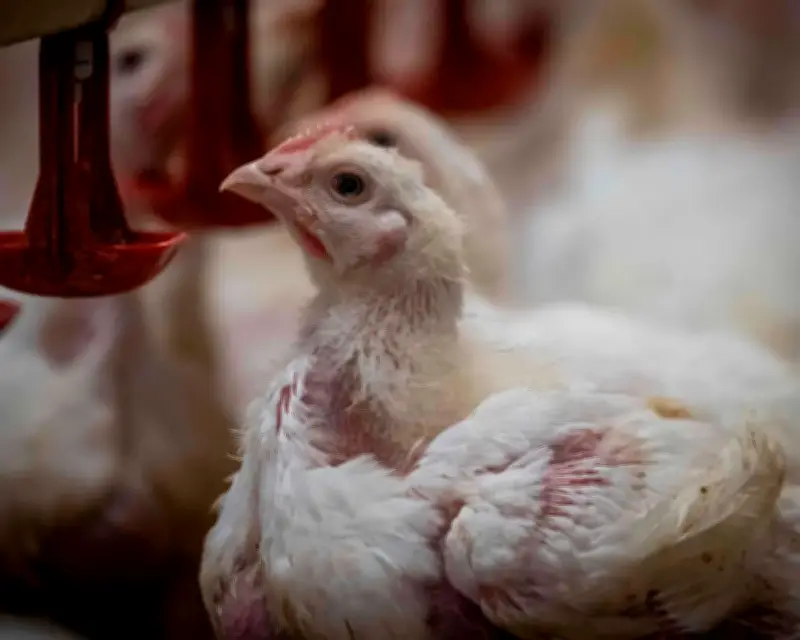
Almost all of the 800 million chickens slaughtered for meat in Australia each year come from one of two fast-growing breeds, reaching slaughter weight at four to six weeks of age. Animal welfare experts say this rapid growth can stress the animals’ bodies.
Most chicken produced in Australia is RSPCA Certified, a badge signalling to consumers that the product meets higher welfare standards.
Criticism of the certification scheme
“In my view, a shopper who sees that RSPCA logo would naturally assume – and ought to be entitled to assume – that the bird lived a good life and died a humane death,” Steele wrote. “In my opinion, a life like that cannot fairly be called good; which is why I don’t buy this chicken.”
Jed Goodfellow, director of policy and government relations at Australian Alliance for Animals, said meat chickens grown quickly can face cardiovascular, skeletal, and dermatological issues “as their biology is pushed to the limits”.
“Healthier slower growing breeds are now being used in many parts of the world, particularly Europe … It may cost slightly more, but as their experience shows, the increase is not prohibitive, as European consumers increasingly opt for the healthier option,” he said.
New standards and future steps
Steele’s post follows the RSPCA’s recent upgrade of its animal welfare standards for chicken meat, which must be enacted by 1 January 2031 for producers to maintain certification. Changes include lower stocking densities, variable light intensity in sheds, and phasing out electrical water bath stunning.
The new standards do not include phasing out fast-growing breeds. Instead, the organisation introduced a voluntary “enhanced” welfare category encouraging producers to switch to slower-growing breeds, though it lacks a consumer label.
Steele called the new standards a “small step forward” but criticised the opt-in approach and the absence of an end date for phasing out fast-growing breeds.
“Until it does, I will remain sincerely ashamed that the name of an organisation I otherwise love and respect appears on this chicken,” he wrote.
Last month, the RSPCA’s senior scientific officer, Melina Tensen, told Guardian Australia the organisation would ultimately like to see slower-growing breeds replace fast-growing ones. “We definitely encourage consumers to be vocal about supporting this transition … because every dollar you spend is a message to the retailer,” she said.