
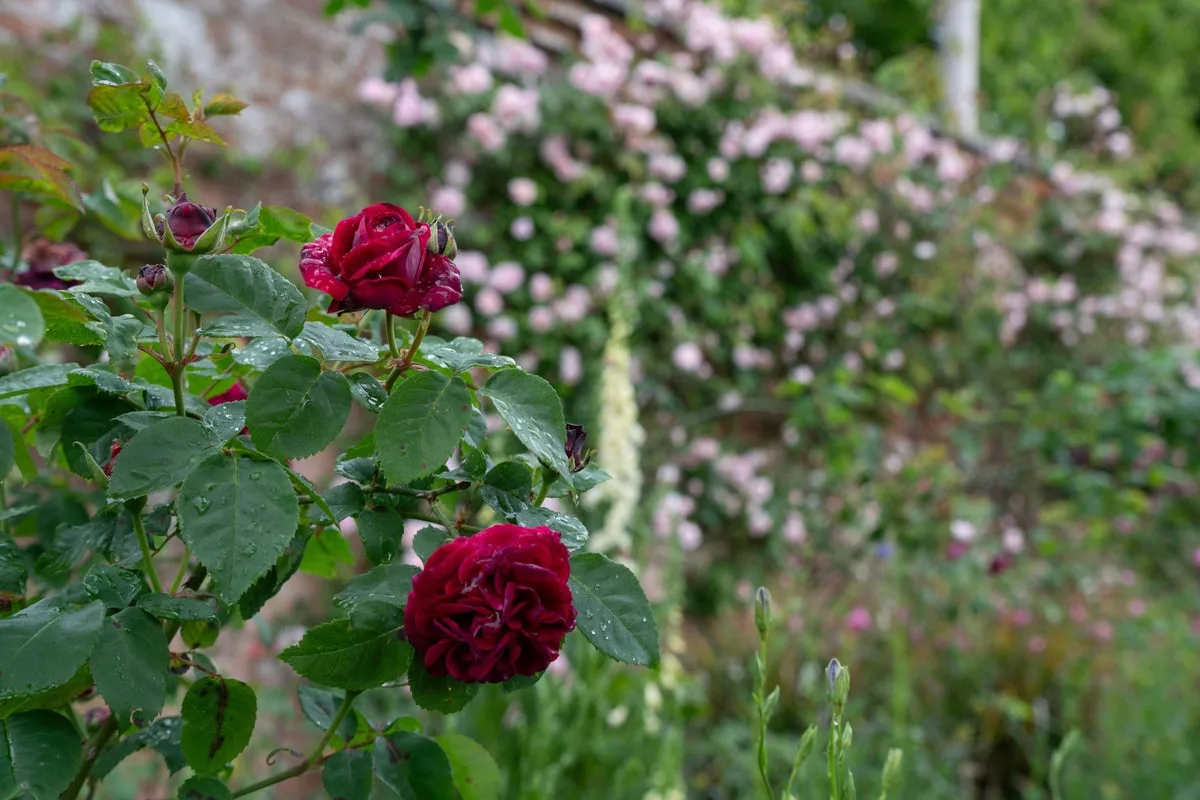
Roses are blooming earlier than ever this year at some of the National Trust’s southern gardens, as climate change drives flowering forward, the charity said.
The famous display in the rose garden at Mottisfont, Hampshire, is expected to peak between the mid and end of May, instead of its traditional June high point, driven by a mild, wet winter and unusually warm spells in spring, the trust said.
But when the rose garden at Mottisfont was officially donated to the National Trust on June 30 1972, it was in peak flower, the charity said – with head gardeners seeing regular changes to flowering patterns since.
The peak blooming of the roses has shifted by the equivalent of one day every two-and-a-half years, as a result of rising temperatures and changing weather patterns, the National Trust said.
It is a similar story at other National Trust gardens in the south of England, such as Anglesey Abbey, Cambridgeshire, Buckland Abbey, Devon and Chartwell in Kent – but more northern properties are seeing more typical flowering, according to the charity.
Mottisfont head gardener Rob Ballard said: “After a very wet, warm winter, including 42 consecutive days of rain at the start of the year, the roses got off to an early start. Then warm spells in April accelerated growth, and this year they’re flowering earlier than we can remember.”




