
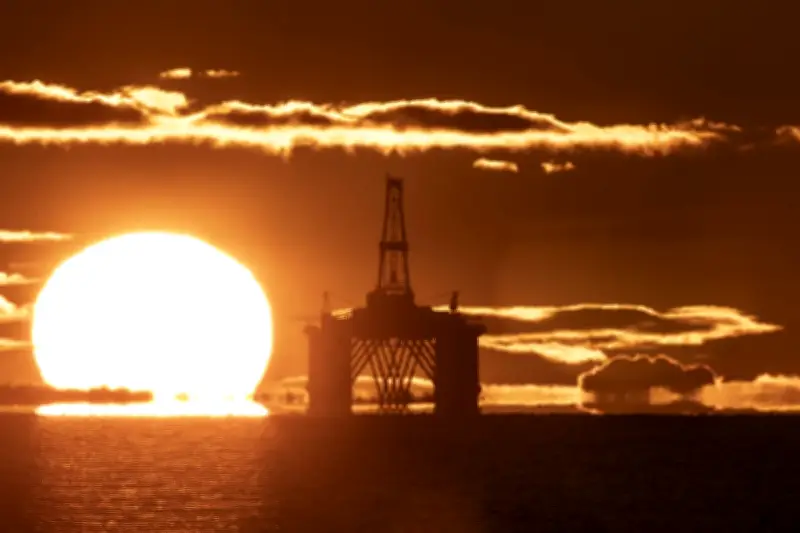
The consultation on the Rosebank oil field has closed, with developers Adura hailing the moment as a “major step” ahead of a final decision from the UK Government on whether the project can go ahead.
Environmental activists fear the impact that extracting fossil fuels from the UK’s largest remaining untapped oil field – which lies about 80 miles west of Shetland – would have on climate change.
Key environmental test for Prime Minister
The decision on whether Rosebank and another planned North Sea development, the Jackdaw gas field off the coast of Aberdeen, can go ahead will be a key environmental test for Prime Minister Andy Burnham. The proposals are both now in the hands of ministers, with the consultation on Jackdaw having closed a week ago.
Bosses at Adura, the company behind both projects, said they would result in £10.8 billion of investment – with more than three quarters of this cash expected to be spent in the UK.
Jobs and production figures
Between them, Rosebank and Jackdaw could support 3,500 jobs at the peak of construction, with 880 people then employed over the lifetime of production.
Adura added that Rosebank alone is projected to produce about 69,000 barrels of oil per day at its peak, with this the equivalent to roughly 10% of the anticipated output from the UK Continental Shelf. The company said Rosebank and Jackdaw together have the potential to make up 10% of domestic natural gas production.
Environmental concerns and reactions
However, environmentalists claim that Rosebank would produce more than 250 million tonnes of CO2 – equivalent to 70% of UK annual emissions. The decision on the two projects comes after a summer which has seen soaring temperatures in both the UK and Europe, as well as wildfires in both Britain and the continent.
Robert Palmer, deputy director at Uplift, which campaigns for a transition away from fossil fuels, said: “While the oil and gas industry does everything in its power to push Burnham into Trump’s drill baby, drill agenda, the nation’s new Prime Minister has watched the UK and Europe burn baby, burn.”
Mr Palmer insisted: “Enough is enough. Burnham needs to look out of the window and acknowledge that this project will make the climate crisis worse and do nothing but rip off Britain. Rosebank must be rejected once and for all.”
Angharad Hopkinson, from Greenpeace UK, said: “In the midst of a devastating drought with the country literally on fire, the Government should look to the obscene profits of oil and gas companies to pay for some of the changes we desperately need to keep families and workers safe.”
Background and next steps
Production at both Rosebank and Jackdaw had been approved by the previous Conservative government, but those decisions were quashed after a legal challenge from Greenpeace, leaving Labour ministers to decide whether or not drilling should go ahead.
Describing Rosebank as being the “largest undeveloped oil field in the UK North Sea”, Adura chief executive Neil McCulloch said Monday’s consultation close was “a major step before a decision on a project that can deliver real economic benefits for the country”.
Both Rosebank and Jackdaw are “nationally significant projects”, he said, adding: “Together, they can provide more domestically produced energy, support high-quality jobs and apprenticeships, generate substantial economic activity and tax revenues, and give the UK’s world-class energy supply chain confidence for the future. We look forward to continuing to work constructively with the regulator as it completes its consideration of these two important projects.”
Speaking to the Press Association in Edinburgh on Monday, Scottish First Minister John Swinney said: “It’s important that individual applications are considered on their merits, looking at the implications and the carbon emissions that will come from individual developments, that has to be assessed alongside the equivalent of importing the oil and gas that could come from either of these developments. Obviously, we’re going to be using oil and gas for some years to come, so if we are going to be importing the oil and gas that could come from either of these developments. So, if we are going to be importing oil and gas, or alternatively developing resources within our own jurisdiction, we have to be satisfied that that activity is compatible with our journey to net zero. We’ve obviously got to be mindful of energy security issues and these are some of the considerations that the UK Government must now wrestle with.”
A spokesperson for the UK Department of Energy Security and Net Zero said: “The North Sea remains a vital national asset, supporting jobs, growth and the UK’s energy security. We are clear that oil and gas will continue to play an important role in our energy system for decades to come, alongside transitioning to clean power to protect jobs and tackle the climate crisis.”




