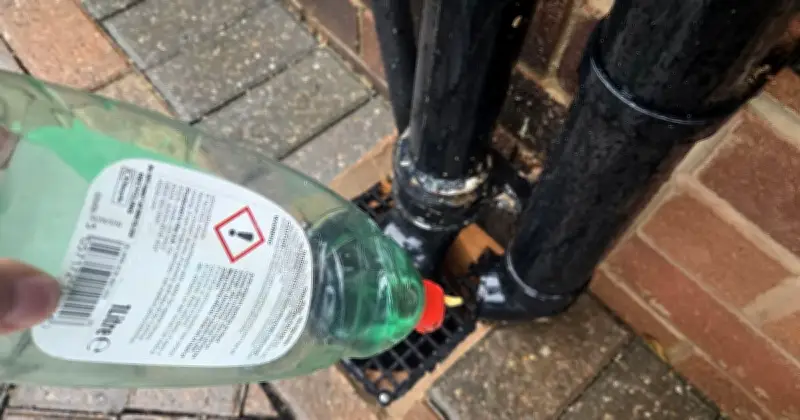
Households are being urged to pour washing up liquid down their outdoor drains this Sunday as a quick and easy way to prevent a common problem. The tip comes as more rain is expected across most of Britain on Saturday and Sunday, with scattered showers also possible on Monday in most of the UK, according to the latest Met Office weather maps.
Why drains clog up
When heavy rain returns, drains on the side of a house can quickly clog up with leaves, twigs and other dirt and dust. Food waste down kitchen drains, including fat, grease, rice and bits of food grime, can also clog up outdoor drains.
According to plumbing and home maintenance firm Maintracts, outdoor drains that are connected to the kitchen sink - and only these - can be unblocked quickly using simple washing up liquid and hot water. The tip is only for drains connected to the kitchen sink; it should not be poured down a drain that is just for rainwater, as chemical-based washing up liquid is bad for watercourses and can kill wildlife. For those drains, a natural drain cleaner such as vinegar and baking soda is recommended.

How to unblock drains
Maintracts says in its online guidance: "Fat, oil and grease (commonly known as FOG) are among the biggest culprits behind blocked gullies and outside drains.
"When hot grease is poured down the sink, it may seem harmless. But as it cools in your foul water drain, it hardens and sticks to the pipe walls. Eventually, this sticky mess collects other debris, such as food scraps, soap scum and dirt, creating a solid, immovable blockage.
"This is especially problematic in outdoor drains, which are more exposed to the elements and can easily become a magnet for garden debris, mud and litter, thereby exacerbating the blockage."
Preventing future blockages
To tackle this, Maintracts advises pouring boiling water mixed with a generous amount of washing-up liquid into the drain. The boiling water helps melt the fat, while the soap breaks it down, making it easier to flush away. The process should be done slowly and repeated several times for optimal results.
For the best chance of reducing impact on the environment, a plant-based washing up liquid which does not contain chemical surfactants is recommended.
To keep drains clear and flowing, Maintracts advises: never pour fat or grease down the sink; wipe plates and pans before washing to reduce residue; use strainers in sinks to catch solid particles; install a grease trap if you cook frequently or deal with large amounts of food waste; and keep gullies and drain covers clear of leaves, litter and other outdoor debris to prevent surface water buildup.