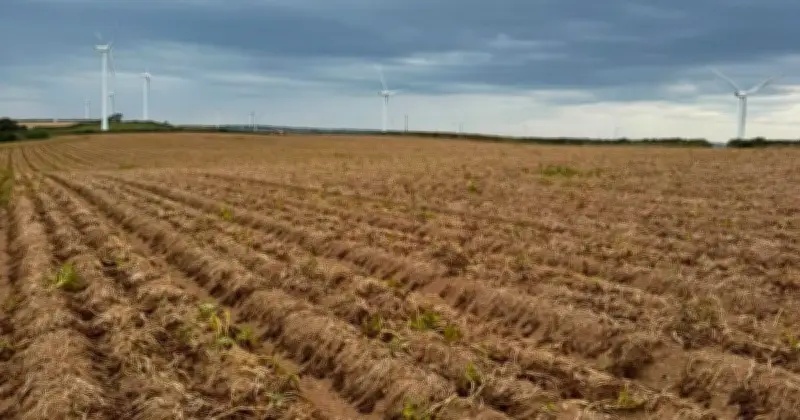
Potatoes could be in short supply this year after a record heatwave and drought left farmers battling tiny spuds and shrinking yields. Chips could become shorter, more expensive and in shorter supply following a summer of scorching heat.
One Cornish farmer, who usually relies on cooler, wetter coastal weather, said he harvested half the expected amount of salad potatoes across 1,200 acres of land, following the hottest June on record in the UK.
Farmers report halved yields
“In 45 years, I've never seen a crop like this,” Philip Pryor told The Express. “The early crops haven't been too bad. They were a little bit below par, probably 10%. However, the stuff we're harvesting now has been more affected with the dry weather. The stuff that's planted late, from May 1 onwards, probably the yield is down 50%. Dress it up which way you like, there just won't be so many potatoes to sell.”

The plants tend to shut down when it reaches 25C, so while they might survive, they won't grow. He expects up to 70% of his late harvest will be classed as small, though they usually account for 35% of the yield. “Quite often we stop salads because they get too big. We haven't had to stop any of them. They just die.”
Baked potatoes and chips under strain
Larger varieties are under particular strain. Baked potatoes are “going to face a very difficult season” and could be in short supply, according to Terry Jones, UK Sales Manager at major seed developer Meijer Potato UK. Fish and chip shops could be impacted, since larger potatoes require less peeling and create less waste, and customers may notice the chips are shorter than usual this year.
Terry said that the crops have fared better in Northern England and Scotland, but they will not make up for the huge losses in England and Wales. “There are some utter disasters out there,” he said. “We're seeing a consistent deficit across the whole of the UK. That's going to create some challenges in terms of availability of the right quality and an impact on price, in all likelihood, as well.”
Hardy varieties and price concerns
The answer may seem obvious: import more to keep the price down. But this year is particularly unusual because the shortage has also affected Northern Europe. Some growers are already fighting back by switching to hardier varieties able to withstand even the blistering heat of Turkey.
“We know that if the potatoes can cope with the summers in the Mediterranean countries, then they should work over here as well. Varieties that can cope with these extremes all of a sudden are now becoming much more interesting to the market,” said Terry. Melody is currently the “biggest and best” baking potato variety, but a newcomer called Drummer is gaining traction because it has “coped fantastically” with the heat. Fish and chip shops prefer the Sagitta, Lady Anna and Agria varieties, but Terry said that Lady Jane potatoes, which are in the early stages of development at Meijer, held up better against the heat than anything else his customers grew this year.
Alongside sturdier crops, Philip believes farmers must build reservoirs to catch rain during wet seasons. Keith Summers, a seed grower based in Somerset, thinks buyers need to pay a fairer price, revealing he made “massive” losses this year after yielding half of his expected crop, and 25% less last year due to hot weather. “This [the weather] is clearly not a one off,” he stressed. Keith believes that supermarkets could make a huge difference by paying a penny more per kilo.

“Everyone's profit margins are tiny. We can't inflate our prices because the next man down the chain can't afford to pay double, because the supermarkets aren't going to pay him double. The obvious solution would be that the price of the product needs to go up. It doesn't need to go up a scary amount to have a significant impact.” Terry worries that if the price does not rise, farmers will stop taking on the risk of planting, which could affect food security. He reflects on last year, when tonne bags were £150-£200, “which wasn't enough, farmers at that level lost an awful lot of money”. Now it is around £300 to £400 a tonne, but he warned that it will still be in the balance, since the yield has effectively halved. “There are growers who are already considering what they're doing for next year because it's a huge investment. If you don't see that you've got a fair chance of a profit in front of you, then where's the incentive to do it?”