
This August, stargazers are in for a rare treat as the Perseid meteor shower reaches its peak on the same day as a solar eclipse. The total solar eclipse on August 12, where the Moon blocks out the Sun, will be visible as a partial eclipse in the UK and Ireland, with the Moon covering 90% of the Sun – the closest to a total eclipse since 1999. The eclipse will be total in Greenland, Iceland, and Spain.
Timings for UK viewers
The two celestial events will occur just hours apart. In the UK, the sky will dim slightly as the partial eclipse peaks. Royal Museums Greenwich has provided timings for various locations. In Liverpool, the Moon first covers the Sun's disc at 6.13pm, reaching maximum eclipse at 7.10pm, and ending at 8.03pm.
Perseid meteor shower details
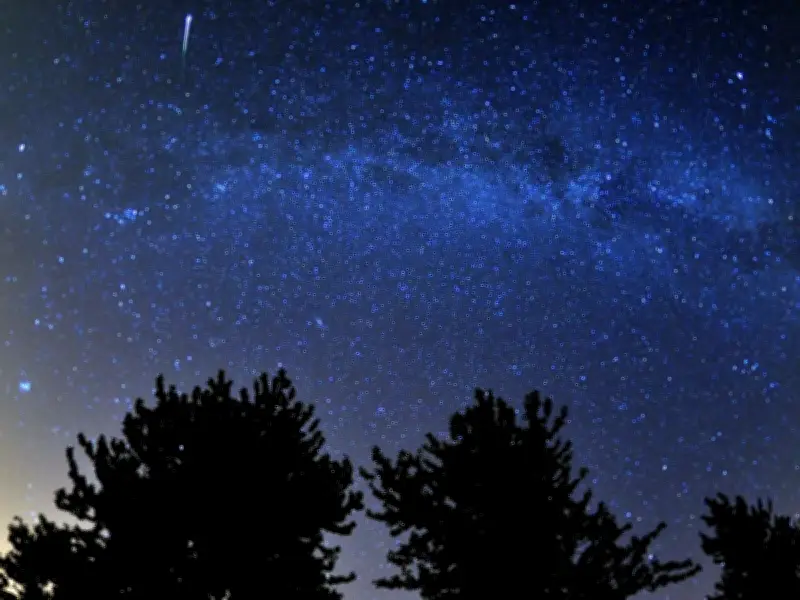
The Perseid meteor shower is active from July 17 to August 24, with the number of meteors increasing nightly until its peak on Wednesday. Observers can expect up to 150 meteors per hour at the peak. The best viewing conditions involve finding dark skies, allowing 20 to 30 minutes for eyes to adjust, and looking up. UK observers may see meteors as soon as the Sun sets.
Royal Museums Greenwich noted: "In 2026 the peak of the Perseid meteor shower fortunately occurs during new Moon, so conditions are ideal for seeing the peak." They added: "The best time to see the Perseids is between midnight and 5.30am. It is always ideal to try to spot meteors when the Moon is below the horizon or when it is in its crescent phase, otherwise it acts as natural light pollution and prevents the fainter meteors from being visible."
What causes the Perseids?
NASA explained that the meteors are debris from comet 109P/Swift-Tuttle, which last visited the solar system in 1992. As Earth orbits the Sun, it passes through the comet's debris trail, and these particles collide with the atmosphere, creating fiery streaks. Scientists estimate about 48.5 tons of meteoritic material falls on Earth daily. Perseids often leave long wakes of light and color.
The Perseids are renowned for fireballs – brighter, longer-lasting explosions caused by larger cometary particles. They are best viewed in the Northern Hemisphere before dawn, though some meteors may be visible as early as 10pm.




