
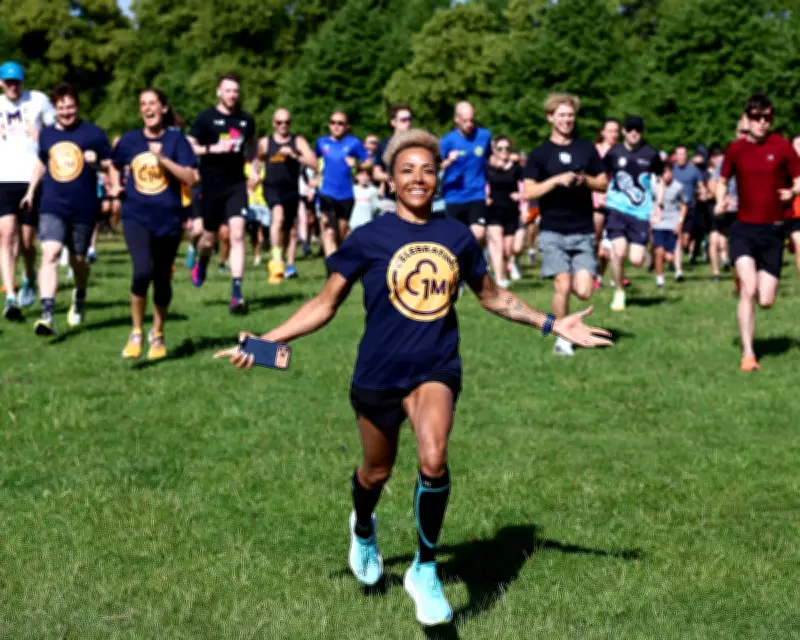
Parkrun reached its millionth event on Saturday, celebrating two decades of free weekly 5k runs that unite communities, improve health, and even operate in prisons.
A Historic Milestone
The millionth parkrun took place on Saturday, serving as a celebration of the community cohesion and public health benefits that the charity has aimed to achieve over the past two decades.
In attendance at Bushy Park in west London were former Olympic champion Dame Kelly Holmes, along with thousands of locals and dedicated parkrun enthusiasts.
Elizabeth Duggan, global chief executive of parkrun, described it as one of those rare successful social movements that have happened organically. She noted that the brand and ethos grew from person to person, without requiring vast amounts of money to expand.
Humble Beginnings
The free weekly 5km event was founded by Paul Sinton-Hewitt in Bushy Park, Teddington, in October 2004. It began with five volunteers and a small group of 13 runners.
Since then, it has grown into a global fixture of weekend life, taking place in parks, fields, seafronts, and even prisons.
Initially a single timed run, the event now operates at 2,800 locations worldwide, with more than 12 million people registered to participate.
A Community Gathering
Every Saturday morning, tens of thousands of runners and walkers gather to jog, push prams, or complete the course at their own pace.
These events, entirely volunteer-run at the local level, have seen bridal showers in matching headdresses, milestone birthday parties, and even engagements at the finish line.
Duggan argues that one of the greatest successes of parkrun is its ability to bring people together from across neighborhoods and into shared green spaces.
She highlighted the beautiful spectrum of participants, from young to old, fast to slow, including children and octogenarians, all doing something together.
Whether volunteering or running, many have found a sense of purpose through their local parkrun. Duggan noted that people are always looking to be part of something bigger than themselves, and the charity is proud to continue providing that space.
She likened it to a spiritual home for some, comparable to a church, where people go to connect, calm down, and feel part of a community they are keen to support and protect.
Health and Inclusivity
The appeal of parkrun lies less in competition than in routine. Finish times vary widely, and organizers say the average is now the slowest in parkrun's history, reflecting a growing number of beginners and walkers participating for health rather than speed.
This shift is evident in the demographics it attracts. About one in five participants describe themselves as inactive when they first sign up, while almost a third come from lower socioeconomic groups, indicating the weekly run reaches people who might not otherwise engage in organized sport.
However, there is still space for performance. The fastest recorded times stand at 13 minutes 44 seconds for men and 15 minutes 13 seconds for women, both set in Belfast. But for most participants, the focus is simply on finishing.
Public Health Impact
The movement has become part of public health policy. More than 2,100 GP surgeries in the UK now prescribe parkrun to patients as part of social prescribing schemes, encouraging activity to support physical and mental health.
Sport England research has linked participation to reductions in conditions such as depression and diabetes, as well as fewer GP and hospital visits.
At the community level, parkruns have given groups the space to share their history and cultures with others. For example, Burgess Park parkrun hosted a celebration of Ugandan independence day in 2022.
It also connects people with their natural environment, which Duggan says has double the benefit of exercising indoors.
Reaching Beyond Parks
Its reach extends far beyond parks. About 25 prisons and young offender institutions now host parkruns, involving more than 12,000 people in custody, in programs designed to support rehabilitation.
Duggan described a case of a grandmother who was incarcerated and would run the parkrun in prison while her grandson ran it in his local park. When they spoke on the phone, they would discuss their parkruns and compare stories, uniting them even when they could not be together.
Looking Ahead
The charity is optimistic about growing and reaching even more people. Over the years, it has drawn in everyone from Olympic champions to politicians, including Alistair Brownlee, Ed Miliband, and the late Keith Flint of the Prodigy, alongside thousands of first-timers.
Holmes, who participated in the millionth parkrun, expressed her love for the social interaction and shared how many people have told her that parkrun saved their life.
Moving forward, parkrun aims to get even more people from diverse communities, especially those from lower socioeconomic backgrounds, participating in physical exercise. Duggan noted that lower socioeconomic groups and ethnic minorities are statistically more likely to be inactive, so targeting them will have a bigger impact on the nation's health.




