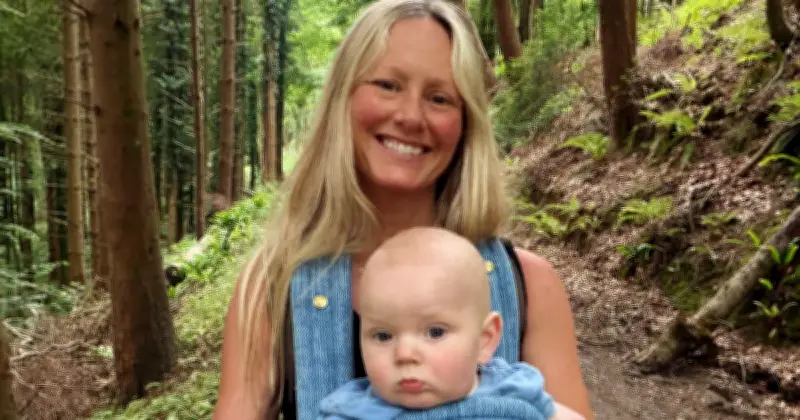
Lisa Oxenham, a 50-year-old mother from Stroud, Gloucestershire, has thrown away all the plastic toys she kept for her second child, Wolfgang, aged one, and replaced them with glass bottles and medical-grade silicone teething aids. She is part of a growing movement of parents concerned about the effects of plastic on infants.
Lisa, who had her first child, a daughter, 10 years ago, said: “I had my first baby, my daughter, 10 years ago. I kept her toys in the attic because I knew that I was going to have another. I got them out and they’re all plastic. I've thrown it all away – I just can't believe I gave her those plastic toys.”
Campaign group highlights risks
Lisa recently attended an event in Parliament with the campaign group Plastic Free Babies, which claims infants are exposed to materials that can leach chemicals and release microplastics during their first 1,000 days. The group’s scientific advisors include Professor Anthony Costello, former director of the WHO’s department of maternal, child and adolescent health, and Dr Leonardo Trasande, a US paediatrician.

An invitation to the group’s “emergency briefing”, hosted by Baroness Rosie Boycott, warned that chemicals in everyday products were “causing measurable harm to our children during the most vulnerable period of their development”. It added: “The science is no longer in question.”
Lisa said she was shocked and angry to hear the statistics presented. “As a parent, I know how much trust we place in the products we buy for our babies and I feel like we've lost that trust. I'm trying not to panic but I am definitely looking for alternatives. The shelves are absolutely covered in plastic. Alternatives are also generally more expensive, so they're not accessible to everybody.”
Experts divided on evidence
Professor Cressida Bowyer, director of the Revolution Plastics Institute at the University of Portsmouth, said more than 16,000 chemicals are available to be added to plastics, with more than 4,000 known to be hazardous. “These include known carcinogens and endocrine disruptors. Of course, that still leaves the vast majority of plastic-associated chemicals as being untested.”
However, Professor Oliver Jones, an expert in analytical chemistry at Australia’s RMIT University, warned against scaremongering. “There is no evidence anywhere that plastic has ever caused any health effect related to endocrine disruption,” he said, adding that studies on rats fed high amounts of plastic-related chemicals do not translate to human exposure.
Dr Ria Devereux, an environmental researcher at the University of East London and a mother of a two-year-old, said the risks of microplastics have been “overhyped” but agreed more research is needed. “The truth is we don't actually know that much in terms of the health impacts. There needs to be a lot more research into this and a decision on limits – how much is too much? – and what we can do about it.”
Plastic Free Babies, launched by the environmental group A Plastic Planet, wants the government to launch a call for evidence on infant exposure to microplastics and endocrine-disrupting chemicals. Lisa, who spent £40,000 on IVF for her second child, added: “No parent should need a chemistry degree to know what toys to give your baby.”