
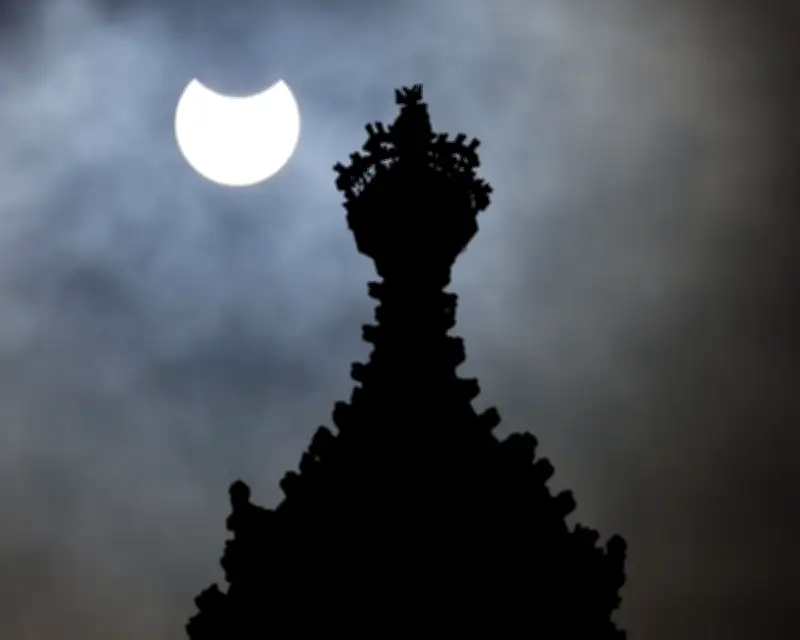
Octopus Energy, Great Britain's biggest household energy supplier, is calling on customers to use less electricity this week during the deepest solar eclipse in almost 30 years. The company has urged customers to avoid running washing machines and dishwashers between 6pm and 8pm on Wednesday, as the moon is expected to block up to 95% of the sun over parts of Britain.
Impact on solar power and demand
The eclipse is expected to knock out the last of Great Britain's solar power generation for the day, at the same time as the country's fifth heatwave of the year is likely to increase demand for electricity to run air conditioning, fans, and refrigeration systems.
In return for avoiding unnecessary electricity use during the eclipse, the supplier is offering customers who are signed up to its rewards programme a free hour of electricity to use the next weekend. The offer is open to Octopus customers who are signed up to take part in the supplier's "saving sessions," when households can earn rewards for using more electricity at times when renewables are abundant or less electricity when wind and solar power are scarce.
Potential to reduce gas power
Octopus believes that if enough households delay using electricity for a short time during the eclipse, it could reduce the need for Great Britain's electricity system operator to fire up extra gas-fired stations to replace the lost solar power.
"Household flexibility is one of Britain's biggest untapped energy resources," the supplier said. "Octopus estimates homes could provide a whopping 13 gigawatts of flexible capacity to support the electricity system – particularly through smart appliances, EVs and home batteries – yet only a fraction of this potential is currently being used."
Grid operator preparations
The National Energy System Operator (Neso), which is responsible for running Great Britain's electricity system, said it had been "planning for over a year" to manage the effects of the eclipse, "one of the most unusual evenings our control room will manage this year." In addition to a major fluctuation in solar power generation, Neso expects the daily early evening peak in electricity demand to occur later than usual as millions head outdoors to watch the eclipse before returning home to cook, clean, and watch TV.
The heatwave forced Neso to issue its first warning notice for electricity supplies during a summer period in late June. Soaring temperatures lifted demand while disrupting electricity supplies owing to low wind speeds and power plant outages across Europe.
Europe-wide impact
In total, the solar eclipse is expected to wipe out 9.7GW of power production across Europe between 7.15pm and 9.30pm during its strongest point. In the UK this could mean losing between 700 megawatts and 1.3GW of solar generation, while in Spain, solar power could be reduced by up to 5GW, according to the country's system operator.
This would "pile pressure" on Europe's already "tight" power system, according to analysts at RBC Capital Markets. The heatwaves have forced nuclear and coal plants to lower their output or shut down entirely across Europe because of reduced river water levels needed for cooling. The drought has also affected hydropower reservoirs in Norway, a leading exporter of electricity to continental Europe, which have reached their lowest levels in 30 years.
"Europe's electricity supply is already tight amid the heatwave, with power plants forced to shut down or reduce production as high temperatures have reduced hydro levels as well as the need to cool nuclear and coal plants," the analysts said.
Customer incentives and grid scrutiny
Rebecca Dibb-Simkin, the Octopus chief customer officer, said: "Many of us will be looking up at the sky on Wednesday evening to experience this once-in-a-generation event. But as the sun disappears, so will some of Britain's solar generation, just as demand peaks."
"By shifting everyday tasks like the washing machine or dishwasher until later, households can help reduce the need for gas power stations – and earn rewards for doing their bit."
Neso is also facing scrutiny over its management of the grid after control room whistleblowers accused senior executives of covering up instability in the energy system for political reasons. In late June it was forced to abruptly cut planned exports of electricity to the Netherlands via the high voltage BritNed power interconnector, and call in emergency imports from a large power cable to France, after the grid's frequency fell to the edge of its operating limits.




