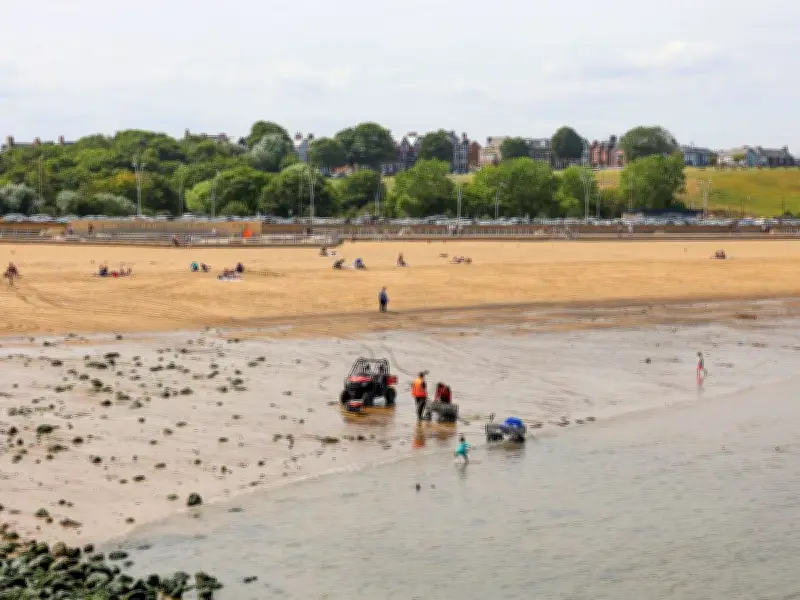
Volunteers who have devoted thousands of hours to clearing plastic pellets from the North East's beaches after July's nurdle spill are furious after it emerged that official clean-up teams have been scaled back.
A collision between vessel Wind Orca and berthed container ship BG Orange at the Port of Tyne in July resulted in 17 tonnes of small plastic pellets pouring into the river, in what has been labelled an environmental disaster. More than a billion nurdles are thought to be littering the river and coastline, with the pellets now known to have washed up as far south as Hartlepool and Marske-by-the-Sea.
While there are fears that the impact of the huge pollution incident could be felt for years to come, it has emerged that some workers brought in to assist with the clean-up have already been axed. Senior sources told the Local Democracy Reporting Service that Solis Marine, the company appointed by shipping insurers to organise the official clean-up, has stood down a number of casual workers.

Volunteers outraged at scaling back
The scaling back of the recovery work has sparked fury among residents who have given thousands of hours of their own time combing local beaches for nurdles, with concern that the recovery drive is now at risk of losing momentum despite the pollution spreading further and further.
Nurdle volunteer Helen Charlton, an academic from Cramlington, said: “The North East isn’t afraid of rolling its sleeves up and getting a job done, and our generosity as a community is infamous. That’s evident in the incredible contribution volunteers have made to the clean up efforts, in time but also physical resources repurposed to the efforts – the countless kitchen utensils, garden tools and more.
“Sadly, the recent scaling back of the commercial activity has increased volunteer’s concerns that resourcing may be reducing in part because our community continues to provide thousands of hours of unpaid labour, a figure significantly underestimated by the community’s efforts to make this visible through recording these hours. It’s reasonable to fear this ongoing discretionary support could create a situation in which voluntary efforts inadvertently undermine justification for official resources, and risks the community feeling increasingly exploited.”
Mayor demands answers
On Tuesday, North East mayor Kim McGuinness wrote to Solis Marine to demand an explanation for the decision to stand down casual workers, dozens of whom are thought to have been brought in to support specialist contractor Briggs Marine. While Briggs are understood to still have a team of clean-up workers operating in the North East, sources told the Local Democracy Reporting Service that additional casual workers were stood down last week.
The mayor warned that it was “far too soon” to scale back the recovery operation and demanded to know how many staff remained on the clean-up job. Ms McGuinness said: “Now is not the time to cut the number of people paid to be out there on our beaches cleaning up nurdles.
“My team has contacted Solis Marine, the company organising the clean-up on behalf of the shipping insurers, to ask them to explain why casual workers have been stood down, and to get a commitment from them that they will respond immediately as new nurdle deposits wash up or are uncovered in the sand. I’ve always said the polluter must pay and that means the insurer for the container ship BG Orange.
“They should not be allowed to decide on their own what a proper clean-up looks like. Our local volunteers have given up their time and worn themselves out combing beaches. They will be dismayed and I am standing up for them to demand answers.”
Ms McGuinness also called for a clear answer of how many nurdles had been collected so far, something that volunteers are also pushing authorities to confirm.

Volunteer effort under strain
Clean-up volunteer Emily O'Regan, who has been cleaning up nurdles for the past two weeks with Northumberland Inshore Fisheries and Conservation Authority (NIFCA), said the highest concentration of nurdles are being uncovered in sheltered corners of the river. She warned that the operation is diverting resources away from NIFCA's statutory responsibilities, including the monitoring and compliance of fish and shellfish catches across the district, adding: “Maintaining our regular work is equally important for protecting the marine ecosystem. At this stage, we are uncertain how much longer we can sustain the clean-up effort at its current pace.”
Solis Marine was contacted for a response. The Port of Tyne said that its own, separate, clean-up efforts had not been reduced. A spokesperson said: "The Port of Tyne's response to the nurdle incident has not been scaled back at all. We continue to maintain the same level of on-water resource as throughout the clean-up operation and, during the recent high tide period, temporarily increased the number of boats and operatives deployed. Our response continues to be guided by advice from Ambipar, who are globally recognised experts in environmental spill response."