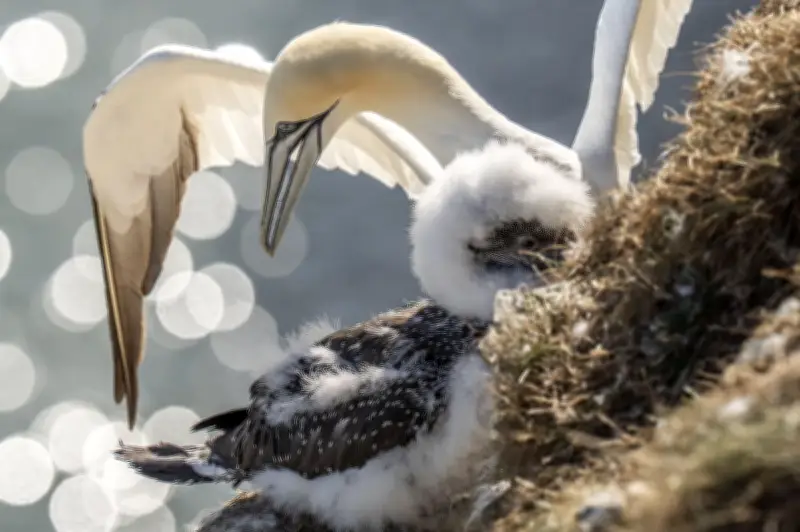
There are renewed calls for the Scottish Government to end the annual guga hunt on a remote island, following fresh animal welfare concerns raised by a new report from two leading animal welfare organisations.
Report Highlights Welfare Risks
According to the report by OneKind and the League Against Cruel Sports Scotland, the hunt on Sula Sgeir cannot be considered humane. It also risks disturbing other vulnerable seabird species, including the highly protected Leach's storm petrel. The organisations have called on the new Scottish Parliament to end the tradition.
The hunt has been an annual tradition in Ness, north Lewis, since the 15th century. Ten men set out for the rocky island of Sula Sgeir, located 40 miles away. Young gannets, known as guga, are taken from open cliffs using a pole and noose, before being gutted, salted, and preserved in brine.
Welfare Concerns and Legislative Gaps
Jason Rose, chief executive of OneKind, said: “This report is about the birds, what they experience during capture, during killing, and in the disturbance caused to the wider colony and other vulnerable species on the island. The welfare risks we have identified are real and under current conditions they simply cannot be adequately monitored or mitigated. The Scottish Parliament, government and NatureScot all have a role in addressing the legislative gaps our report identifies and we hope [the report] contributes to that conversation.”
NatureScot is currently considering a fresh licence application for the 2026 hunt. The topic is also due to be considered by the Scottish Parliament as it prepares to scrutinise a petition against the hunt that has attracted more than 100,000 signatures.
Lack of Oversight and Conservation Concerns
Although NatureScot imposes a licence condition that the guga must be killed “immediately and in a humane manner”, the OneKind report highlighted that humane is not defined in legislation. In practice, the report concluded there is “no independent oversight or monitoring of the guga hunt, hampering any effort to undertake an animal welfare impact assessment”.
The report’s findings sit alongside serious conservation concerns raised in a recent report by the Scottish Seabird Centre, which recommended that licensing of the hunt be permanently ended.
Robbie Marsland, director of the League Against Cruel Sports in Scotland and Northern Ireland, said: “Together, these reports make a compelling, evidence-based case why the guga hunt should come to an end. This analysis sets out clearly why the hunt cannot currently be considered humane and we hope it contributes to an honest, measured and constructive conversation about why this tradition can no longer be responsibly licensed. While we recognise the cultural significance of the hunt to the Ness community, the welfare of the birds matters too.”
Government Response
The Scottish Government’s nature agency said: “We understand there are strong feelings about the guga hunt and that some people will disagree with it taking place. In 2025, we received our first licence application from the Men of Ness since 2021. After reviewing the survey data, collected in 2024 following bird flu outbreaks, we reduced the maximum number of birds that can be taken from 2,000 to 500 and a licence was granted on the condition that all birds must be killed humanely. This ensures the gannet population on Sula Sgeir remains stable for the future.”
NatureScot said it will consider the 2026 guga hunt licence “as required by the relevant legal frameworks and using the most recent scientific evidence”.