At least 12 people have been killed and dozens are missing after flash floods struck parts of Nepal and Tibet, triggered by a glacial lake outburst in the Himalayas, according to officials and local media.
What happened
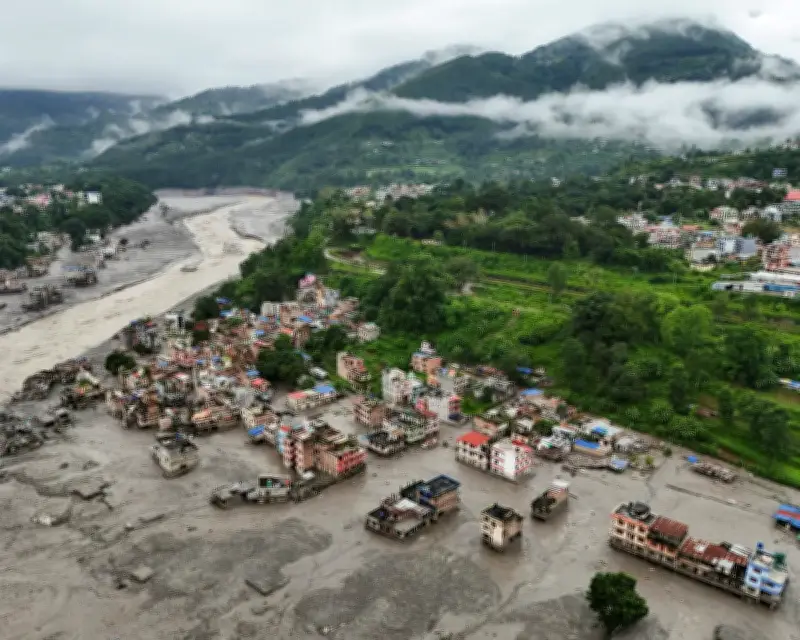
The flooding began on Wednesday after a glacial lake, believed to be in Tibet, burst its banks, sending a torrent of water and debris downstream into Nepal’s Karnali province. The surge swept through the Seti River valley, affecting several villages in the districts of Humla, Mugu, and Bajura.
Nepal’s National Disaster Risk Reduction and Management Authority reported that at least 12 bodies had been recovered, while more than 40 people remained unaccounted for. The true scale of the disaster is still unclear, as many remote settlements have been cut off by damaged roads and bridges.

Impact and response
The floods destroyed homes, washed away livestock, and damaged farmland along the riverbanks. In Tibet, authorities reported that the outburst also affected the town of Nyalam, where several buildings were damaged and a number of people were injured.
Nepali security forces have been deployed to assist with search and rescue operations, and helicopters have been used to reach stranded communities. The government has opened temporary shelters for displaced families and is distributing food and clean water. Officials have warned that further rainfall could trigger additional flooding and landslides in the coming days.
Scientists have long warned that glacial lakes in the Himalayas are expanding due to climate change, increasing the risk of such outbursts. This event is one of the deadliest glacial lake floods in Nepal in recent years, highlighting the growing threat to mountain communities.