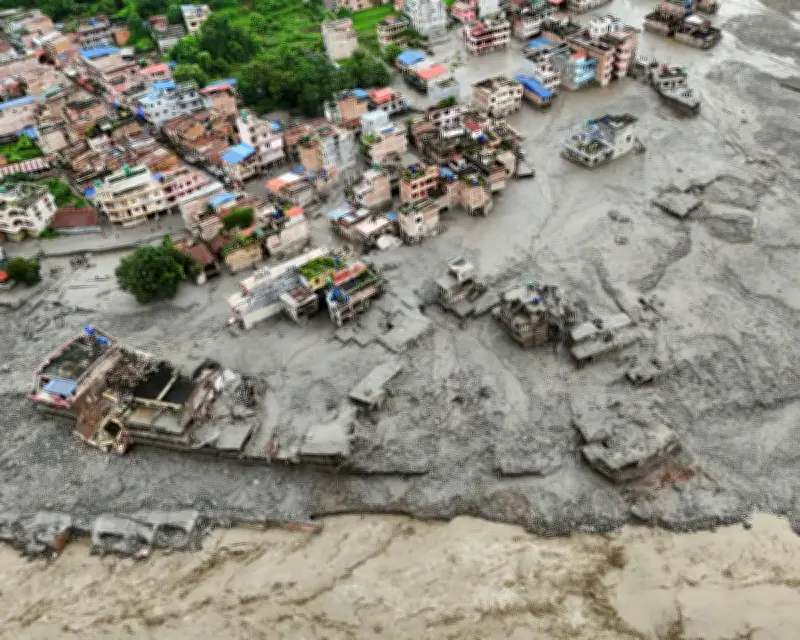
A flash flood in Nepal that swept through a valley near the Tibet border was caused by a glacial collapse, experts have said. The disaster struck on August 27, 2026, catching many residents off guard as water and debris rushed downstream.
Glacial collapse triggers torrent
The flood originated from a high-altitude glacial lake that breached after a mass of ice broke away. This sent a wall of water and sediment crashing into the Bhote Koshi river, which flows through the region. The sudden surge destroyed houses, bridges, and roads along its path, leaving villages isolated.
Local authorities confirmed that at least 14 people were killed, with dozens more missing. Rescue teams were deployed to search for survivors, but difficult terrain and damaged infrastructure hampered their efforts. The flood also damaged a hydropower project, raising concerns about power supply in the area.

Experts point to climate factors
Glaciologists studying satellite images and on-the-ground data attributed the collapse to long-term warming trends in the Himalayas. They noted that the region has seen repeated glacial lake outburst floods in recent years, a pattern linked to rising global temperatures. However, they stopped short of directly linking this single event to a specific climate model.
The Nepalese government has faced criticism for inadequate early warning systems in remote valleys. In response, officials announced plans to install new monitoring equipment and improve evacuation procedures. Meanwhile, affected communities are receiving temporary shelter and food supplies as they begin the slow process of recovery.