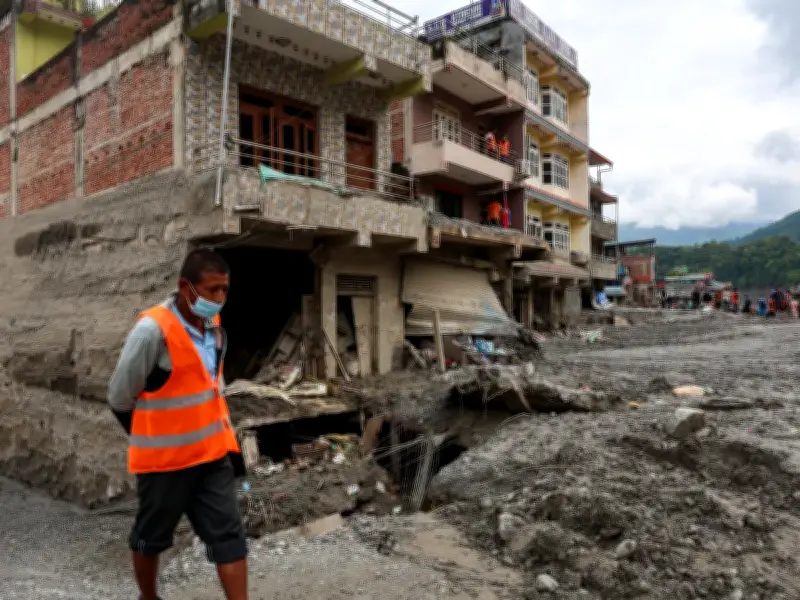
Over 1,000 people have died following devastating floods in Nepal and China, with thousands more still missing across Himalayan communities. Rescue teams with search dogs combed through mud, rocks and debris on Tuesday (September 1) in a desperate effort to find survivors.
Death toll and missing persons
According to Nepal's disaster agency, 987 deaths have been counted in the country, with 3,916 people missing, including 583 foreigners. Chinese authorities, in their latest update on Sunday (August 30), reported 16 deaths and 546 people still missing, including 261 foreigners.
The disaster's scale has made rescue efforts difficult in both regions. Search teams are navigating through landslides, destroyed roads and widespread damage that has cut off remote areas, raising fears the death toll will rise.

Rescue operations and trapped workers
Rescuers in Nepal are racing to reach hundreds of workers believed to be trapped inside tunnels at hydropower projects damaged by the floods. Nepalese authorities report about 900 workers are missing from 12 projects, with roughly 500 believed to be trapped in tunnels.
Raja Ram Basnet, Nepal's army spokesman, said teams assisted by foreign experts were working on several hydropower projects. The army is battling with mud, water and rocks as they search for signs of life.
China response and survivor accounts
In China, rescue crews scoured areas hit by mudslides, particularly around the Gyirong Port border crossing, which was destroyed. A major road leading to the port, which would facilitate the delivery of equipment, personnel and supplies to the disaster zone, has been reopened through the use of heavy machinery.
At least 11,814 people have been rescued so far, according to Nepalese authorities. Helicopters are being used to reach stranded communities in areas where roads and bridges have been destroyed, with efforts stepped up to provide assistance to survivors.
Bimal Sharma, a helicopter pilot who has been flying rescue and relief missions since the disaster began, said he was shocked to see the devastation in Timure, a border town close to Tibet that he has known for years. “It felt like I was flying over an entirely different landscape,” he said. Mr Sharma noted that he has had little opportunity to speak to the people he rescued, but he said that he can see 'pain in their eyes'.
Cause of the disaster
The disaster began on August 26, when a glacial collapse sent large amounts of rock, ice and meltwater into valleys below, triggering powerful floods downstream. The collapse appears to have involved the failure of bedrock beneath a glacier in the Himalayan region. With the rockfall registering as a magnitude 5.2 seismic event, the resulting surge of water and debris entered rivers that flow through valleys in Tibet.