
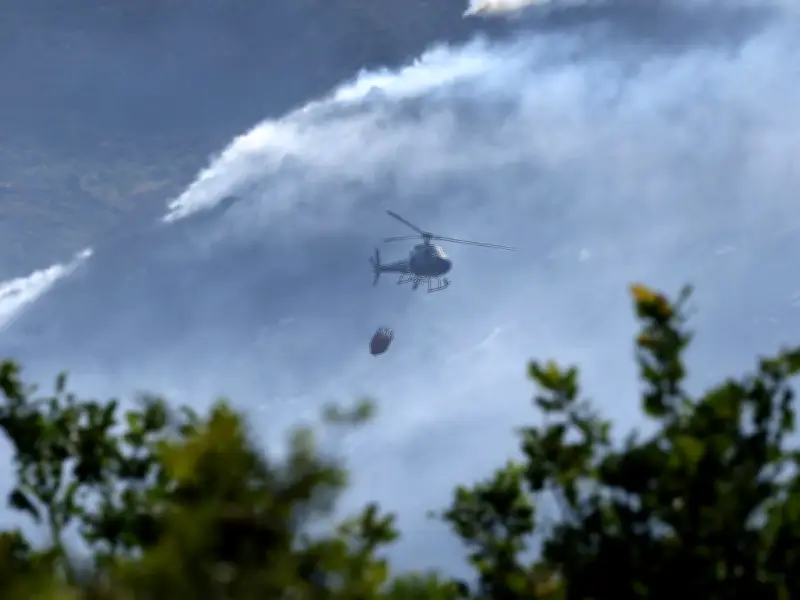
Moorland fires raging above Dovestone Reservoir in Oldham and on Tintwistle Moor near Glossop have resulted in what experts describe as a "mass fatality" and a "state of ecological emergency." The fires, which have scorched vast areas of peatland, have devastated wildlife, including ground-nesting birds, invertebrates, and mammals. A 20-year-old woman, Shania Care-Slede, has been charged with arson and dangerous driving in connection with the fire near Dovestone Reservoir. She appeared at Manchester Magistrates' Court on July 14 and has been remanded in custody. More arrests have been made.
Impact on Wildlife
The moors are home to a rich variety of bird species, including meadow pipits, blackcaps, buzzards, skylarks, and the rare ring ouzel. The Wildlife Trust for Lancashire, Manchester & North Merseyside stated: "The fires will have affected a lot of wildlife, not just in the immediate burning area, but also the smoke... will have also had a huge effect on smaller animals with much more delicate lungs than ours." Species such as curlews, lapwings, golden plovers, hen harriers, short-eared owls, and ravens are believed to have been affected. Invertebrates like butterflies and dragonflies, as well as lizards, snakes, and mammals such as hares, have also perished. The trust added: "Weeks of hard work raising chicks will have been gone in a second. Whole families wiped out."
RSPB Response
Gemma Howarth, RSPB Area Manager, confirmed that the RSPB Dove Stone reserve has been affected by two major fires, one starting on June 24 and another on July 11. She expressed gratitude to fire services and partners for their efforts. All car parks and footpaths at the reserve are closed, and visitors are urged to stay away. Howarth noted: "Both fires continue to burn, and the recent warm weather has made conditions challenging." She emphasized that many bird species are raising their young, making them especially vulnerable. "Given the severity of the fire, we know that vital habitat which wildlife relies on will have been lost at scale." Michael Copleston, RSPB England Director, reminded visitors that even a glass bottle or discarded cigarette can start a fire, especially in dry conditions.
Long-Term Restoration Efforts
Moors for the Future Partnership, which works to restore degraded blanket bogs, is assessing the damage. Ted Talbot, Conservation Programme Manager, said: "The two Moorland fires currently burning in the High Peak area... will undoubtedly be devastating for wildlife." He noted that species like red grouse, lapwing, curlew, golden plovers, merlin, short-eared owls, and hen harriers are affected. The fires have reignited due to strong winds, burning into peat soils. Talbot described the post-fire scene as a "blackened and charred moonscape" with exposed vole tunnels and charred bodies. He highlighted that 80 percent of peatlands in England are dry and degraded, but restoration work, including rewetting and planting sphagnum moss, can help. "Healthy, active, upland blanket bogs are wet all year round, even in hot weather. When it comes to resilience to fire, wetter is better." Over £50 million has been spent on restoration across 250 square km, with positive impacts seen at Kinder Scout.
The fires have reignited memories of the 2018 Saddleworth Moor fire, which burned for three weeks. As the current fires continue, experts warn that recovery will take years.




