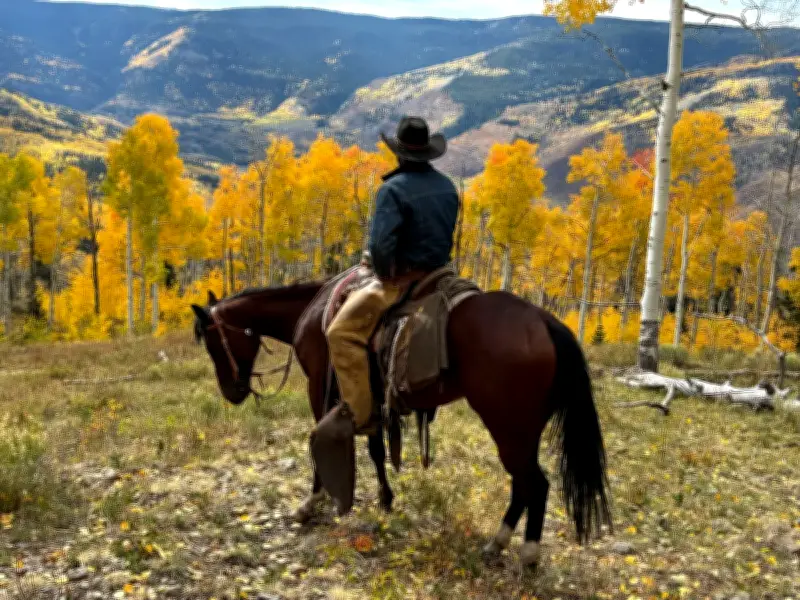
Modern cowboys are saddling up in the US West with a new mission: helping livestock and predators like wolves and grizzlies coexist in shared landscapes. Over the past 15 years, a new kind of range rider has emerged in states like Montana, Idaho, Oregon, Wyoming, Washington, Arizona and Colorado.
These riders may be cattle producers on horseback, wildlife technicians setting trail cameras, or ranch hands on ATVs. They help with day-to-day livestock work, set up electric fences, handle carcasses, and report back to producers on environmental threats and signs of conflict.
Return of predators
Predators like gray wolves, Mexican wolves and grizzly bears, once on the brink of extinction, have rebounded through reintroduction and recovery efforts. This has brought celebration among conservationists and tribes, but also fear and uncertainty for some ranching communities where one dead calf can mean thousands of dollars in losses.

Eric Graham, a former range rider, monitored 15 wolf packs across 1.5 million acres in Montana’s Blackfoot watershed. He described nightmares of being spread thin across several ranches, fearing losses on one while working on another.
Finding middle ground
Malou Anderson, who grew up ranching near Yellowstone National Park, now sees grizzlies daily in Montana’s Tom Miner Basin. With her sister-in-law Hilary Anderson, she founded the Tom Miner Basin Association, the first modern range riding program in the US.
Anderson uses regenerative grazing and low-stress livestock handling to make cattle less vulnerable. She says good range riders need keen observation and humility: “To us, range riders understand the unfolding story that happens in wild places … they’re a part of that story, but aren’t dominating or dictating it.”
Challenges and scaling
Range riding has skeptics. The work is labor-intensive, funding is piecemeal, and training a rider can take up to two years, says Rae Nickerson, wolf damage and conflict minimization manager with Colorado Parks and Wildlife. Measuring success is nearly impossible, notes Matt Barnes, rancher and rangeland scientist: “You’re talking about something that could have happened, but didn’t.”
In 2025, Colorado launched one of the few state-run range rider programs in partnership with Colorado Parks and Wildlife and the Colorado Department of Agriculture. Nickerson, also a PhD candidate at Utah State University, is evaluating the effectiveness of range riding across 15 ranches in five states.
Nickerson emphasizes the holistic benefit: “When you have wolves, your whole life can change overnight. … Range riding is a more holistic approach … you’re able to give [a producer] some space and time back that wolves have taken away to be with their family more, sleep more, and get other things done.”