
Few things beat breakfast in the bush, but for birdwatchers, a rare sighting can take priority. In the Mallee forest near Lake Gilles, about five hours north-west of Adelaide, a group delayed their morning coffee and cornflakes after hearing a repetitive whistling call in the distance.
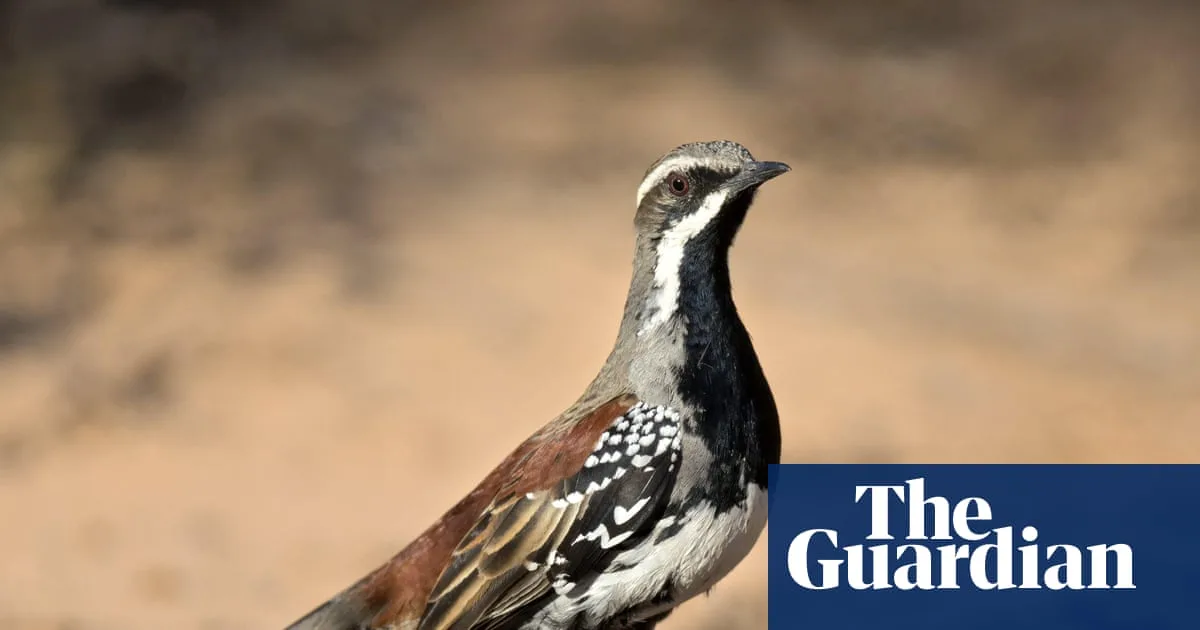
Guided by Steve Potter, they headed quickly but quietly into the forest, stopping to listen. The call seemed to come from head height, very close by. Then a large, plump bird materialised beneath a bush, walking purposefully towards them: a copperback quail-thrush.
Endemic to South and Western Australia, this species was recently separated from the chestnut quail-thrush, which the group saw the following day. Despite its name, the quail-thrush is neither a quail nor a thrush; the family is found only in New Guinea and Australia.
The bird's snow-white eyebrow, moustache and belly contrasted with a smart black throat and a radiant, copper-coloured back, which gives it its English name. Its scientific name, Cinclosoma clarum, translates as 'luminous tail-wagging thrush'.
Unlike most songbirds, quail-thrushes are mainly terrestrial, walking unobtrusively across the forest floor and rarely flying. Of all the charismatic birds seen on a whistlestop tour of South Australia, this was the most memorable, and well worth delaying breakfast for.




