A bitter rural feud over a proposed 'green cemetery' has exploded into allegations of intimidation, drones and gunfire as one Minnesota landowner claims his quiet community has turned against him over plans to create an environmentally-friendly burial ground.
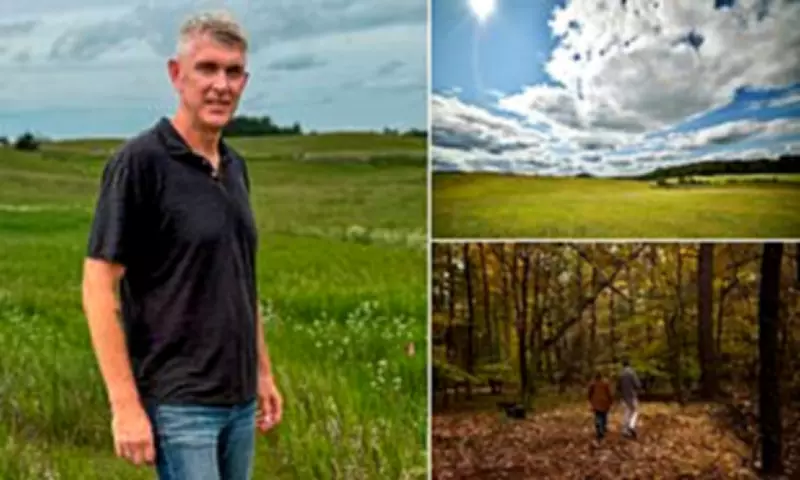
What began as a proposal to transform a 20-acre hayfield into a peaceful natural cemetery has instead plunged Blackhoof Township into a deeply emotional battle over death, property rights and fear of the unknown. Landowner Matt Connell says he wanted to create a sanctuary where families could bury loved ones beneath wildflowers, berry bushes and trees rather than rows of granite headstones.
The planned cemetery, called Loving Earth Memorial Gardens, would specialize in 'green burials,' which avoid chemical embalming and metal caskets in favor of biodegradable materials and natural decomposition. Connell told CNN that as word spread about the project, hostility in the community quickly intensified. He claimed drones repeatedly hovered over the property while nearby gunfire echoed through the area.

'A lot of what I think Americans know about cemeteries comes from Scooby Doo,' Connell said. 'It comes from Hollywood freaking people out with the rows of headstones. In a lot of ways, we treat it like a toxic waste site. It's not always a place that's viewed as loving and a sanctuary for healing, but I'm trying to change that.'
Residents opposing the cemetery have raised concerns about groundwater contamination, wildlife disturbing graves and falling property values. Connell said a neighbor approached him shortly after learning about the project and warned he would 'shut us down.'
Blackhoof resident Barbara Nichols became one of the few locals to publicly support the cemetery after speaking with Connell directly. 'We had a long discussion about what he was trying to do,' Nichols said. She later attended township meetings on Connell's behalf because he feared the hostility in the room. 'I read the statement and people were so upset with me. The room pulsated with anger.'
Connell said the intimidation escalated further when someone allegedly rode a dirt bike onto the property and 'tore the place up pretty good.' He also accused another neighbor of harassing him with drones.
The dispute eventually spread far beyond Blackhoof Township. In 2023, Minnesota lawmakers imposed a two-year moratorium on new green cemeteries while conducting a statewide environmental study on natural burials. The findings, released earlier this year, concluded that properly managed green burials pose little environmental risk and can even enrich soil. The report recommended that bodies be buried at least 50 feet from water wells and roughly 3.5 to 4 feet deep to maximize decomposition while preventing contamination.
Even after the study, opposition continued mounting. As the state moratorium approached its expiration, Carlton County enacted its own one-year ban on new natural burial sites, prompting Connell and Bixby to file a federal lawsuit accusing county officials of unlawfully blocking the project and violating their rights. In March, however, a judge dismissed the lawsuit, ruling the pair failed to state a valid legal claim. Connell said they plan to appeal.
'They are using new arbitrarily made green burial guidelines simply to find a way to stop us,' he said, pointing to complaints that the property's sandy soil and slight slope make it unsuitable for burials.
The battle unfolding in Minnesota mirrors a broader national debate over changing burial practices in America. According to the National Funeral Directors Association, more than 60 percent of Americans over 40 are interested in natural burial options. More than 500 cemeteries across the US and Canada now offer green burial services, up sharply from just over 100 in 2015.
Similar battles are erupting across the country as Americans increasingly turn toward environmentally focused burial practices. In rural Michigan, Peter Quakenbush and his partner Anni became embroiled in their own legal war after proposing a woodland burial forest near Manistee National Forest. The couple said the idea was born from personal tragedy after they lost their first child during pregnancy while living in the Philippines and later held a small memorial ceremony in a forest after bringing the baby's remains home.

'The two of us held a little ceremony in the forest and laid our hopes and dreams for our first baby to rest,' Quakenbush said to CNN. But like the conflict unfolding in Minnesota, the project triggered fierce local backlash over fears of groundwater contamination and increased traffic, eventually leading to lawsuits and zoning battles.
Tanya Marsh, a funeral and cemetery law expert at Wake Forest University, said skepticism toward green burials is common because many Americans have become disconnected from deathcare practices. 'We've outsourced death so completely to a professional industry that when people encounter it in a more natural form, it can trigger panic rather than recognition. And that panic often leads to misinformation, fear, and stigma.'
Supporters argue many cemetery regulations were designed for traditional burial grounds with paved roads and large infrastructure, not meadows and forests meant to preserve nature. Modern regulations can create major barriers for families seeking more hands-on burial traditions. For now, Loving Earth Memorial Gardens remains trapped in legal limbo while the conflict continues dividing the rural Minnesota community.