
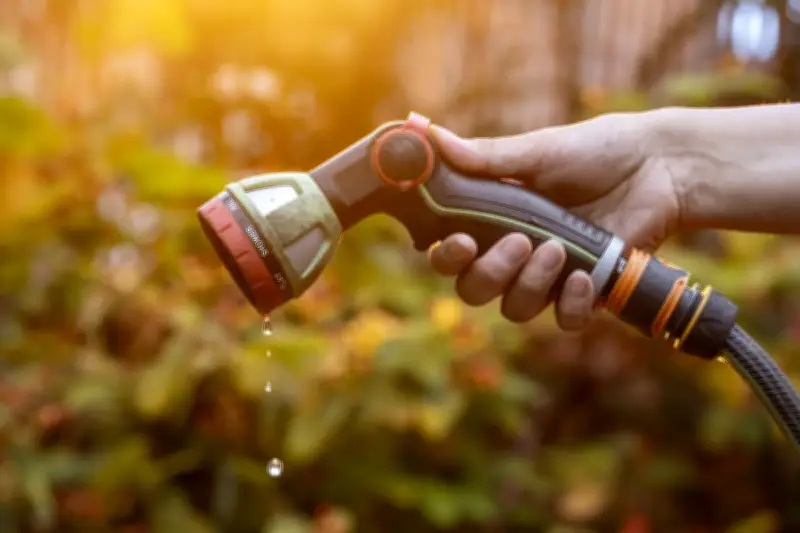
Millions more people in the UK will be banned from using hosepipes as officials warn that drought conditions are increasingly likely while the nation endures another prolonged heatwave. The UK recorded its eighth day at or above 34°C in a calendar year on Thursday, breaking the previous record of seven days set in 1976 and 2020.
Drought Risk and Water Company Measures
Officials said the risk of drought for some parts of the country in the coming weeks is growing as the UK faces its third heatwave in three months following a record warm spring. Water minister Emma Hardy met with water company bosses last week to discuss their preparedness for a hot summer as strain on supplies intensifies.
Authorities are closely monitoring East Anglia, Devon and Cornwall, Hampshire, and the Isle of Wight, while water companies scramble to manage increasingly tight resources. Hosepipe bans have now been announced for the East of England, Cambridge, Hampshire, the Isle of Wight, areas of Kent, and parts of Bedfordshire, Berkshire, Buckinghamshire, Essex, Hertfordshire, Surrey, and London.
Record Temperatures and Climate Change
Scientists say these record-breaking weather events are becoming more intense and more frequent because of climate change, largely driven by the burning of fossil fuels. The UK faces growing pressure on its water system as human-driven climate change disrupts rainfall patterns and drives more extreme weather events. This has been compounded by population increases and years of underinvestment in infrastructure, including no new reservoirs being built in 30 years and leaking pipes.
Specific Bans and Customer Impact
On Friday afternoon, Affinity Water announced it will introduce a hosepipe ban across its central region from July 17. Customers across Bedfordshire, Berkshire, Buckinghamshire, Essex, Hertfordshire, Surrey, and parts of London must not use a hosepipe for activities such as watering gardens, washing cars, patios, paths, and driveways, cleaning windows, or filling swimming and paddling pools. The utility said the region has seen a continued pattern of hot, dry weather while water demand is up 20% on average.
Anglian Water announced a hosepipe ban for its more than five million customers in the East of England, coming into force from 1am on Saturday. Cambridge Water announced a temporary hosepipe ban for its 350,000 customers, the first time in three decades it has introduced such a restriction. South East Water introduced a ban on July 3 for areas of Kent, including Ashford, Canterbury, Faversham, Maidstone, Sevenoaks, Snodland, Tenterden, and Tunbridge Wells. Hosepipe restrictions are also set to come into force for about one million Southern Water customers across Hampshire and the Isle of Wight on Friday.
Voluntary Measures and Government Response
Thames Water has asked customers to limit their hosepipe use, although it has not introduced a formal ban. Severn Trent, Essex and Suffolk Water, Wessex Water, and Portsmouth Water are also urging customers to use water wisely amid the heatwave. As part of its response to growing pressure on water resources, the Government has announced a slew of reforms, including plans for nine new reservoirs. More than £104 billion in private investment has been committed to cutting leaking pipes, building reservoirs, and other measures to secure supplies. Ministers are also preparing to respond to a consultation on proposals to change building rules so new homes are fitted with water-efficient appliances.
An Environment Department (Defra) spokesperson said: “Customers deserve a reliable supply, which is why we’re investing in record infrastructure and nine new reservoirs, while our Water White Paper sets out long-term reforms for the sector to ensure assets are maintained and problems identified before they cause shortages. Hosepipe bans are a matter for water companies, but they can save water when supplies are stretched from peaks in demand.”
Police Urge Non-Emergency Call Restraint
Separately, the Met Police urged people to avoid getting in touch for non-emergencies amid a surge in 999 calls during the hot weather and World Cup. Deputy Metropolitan Police commissioner Matt Jukes called on the public to “hold back” on non-emergency calls. Speaking on LBC Radio on Friday ahead of a weekend when England plays again in the Fifa World Cup and temperatures are expected to remain high, he said: “We’re going to see more calls. We’re going to see more drinking. I hope we’re going to see more great goals for England, and we’re going to see success.” He added: “Call us on the things we need to. Please hold back on the calls we don’t need to take. Officers out there are melting in the heat but they will be there to come to you if you need us.” In a post on X, the London police force said people should only call 999 if there is “an immediate danger to life, someone is using or threatening violence, or a crime is happening right now.”




