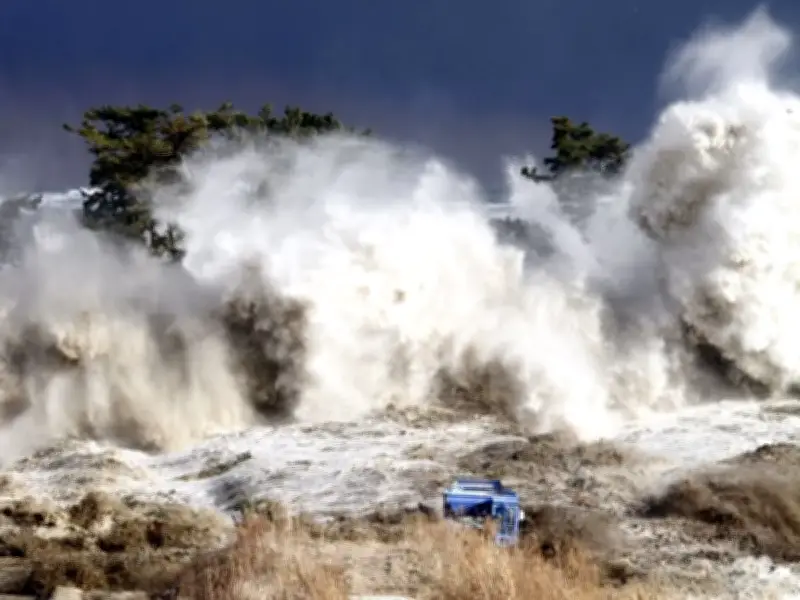
A crumbling volcanic island could unleash a megatsunami capable of wiping out entire coastlines in an apocalypse-style disaster, leaving holiday hotspots and densely populated cities with just hours to flee, according to volcanologist Bill McGuire.
Writing for BBC Science Focus Magazine, Professor McGuire warned that decaying, unstable volcanoes across the globe could give way at any moment, producing waves far deadlier than typical tsunamis triggered by undersea earthquakes. He stressed that killer waves do not even require an eruption to strike.
Cumbre Vieja singled out as a 'ticking time bomb'
The expert identified the Cumbre Vieja volcano on the Canary Island of La Palma as a particular concern. A large section of its western flank has been slowly moving toward the ocean since the 1940s.
If that flank were to plunge into the sea, the consequences could be catastrophic. Computer models suggest a worst-case collapse could generate an initial dome of water nearly a kilometre high, racing across the Atlantic and potentially striking Florida with towering 20-metre waves within nine hours. Even conservative forecasts warn of ten-metre-high waves battering the American coastline.
Historic collapses show deadly precedent
Professor McGuire said: "I have no doubt this will be a cataclysmic event, but have no idea when it will happen – it could easily be centuries or even millennia down the line." He added: "Based on extensive studies, I expect this part of the flank will eventually crash into the North Atlantic, launching a megatsunami in the process."
The threat extends beyond the Atlantic. A collapse across Hawaii's volcanic ridge is also considered a matter of time, with ancient ocean-floor landslides showing that past collapses hurled 70-metre waves at California in five hours flat.
Past volcanic tsunamis have killed thousands
Over the past three centuries, coastal and island volcanoes have unleashed at least nine deadly tsunamis, killing more than 55,000 people. The 1883 Krakatoa explosion tore the island apart and spawned 45-metre waves that wiped out more than 30,000 people. More recently, in 2018, Anak Krakatau dropped half its cone into the sea, blasting tsunami waves that killed over 400 people with virtually zero warning.
Unlike regular earthquake-induced tsunamis, volcanic waves travel faster and hit closer together, battering shores in rapid-fire succession with no respite for people trying to escape inland. While satellite technology can now spot restless peaks before they crack, McGuire warned that hundreds of island volcanoes around developing nations remain completely unmonitored.
Summing up the looming menace, the scientist said: "Major flank collapse is a normal part of the lifecycles of large island volcanoes, and is certainly not going to stop happening just because we are around."