More than 2,500 British and French troops have completed a major military exercise in Germany, preparing to defend NATO territory against an enemy using drones and electronic warfare. The seven-week Exercise RHINO TITAN at Sennelager Training Centre involved hundreds of paratroopers parachuting from RAF aircraft in one of the largest British airborne operations in a generation.
Hundreds Take to the Skies
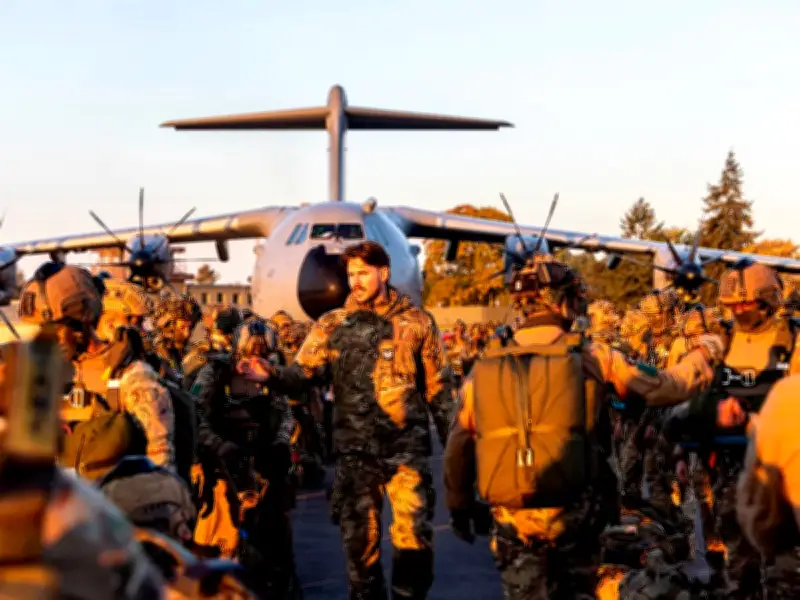
Around 600 British and French paratroopers jumped from four RAF A400M Atlas transport aircraft during a single battlefield exercise. They made low-altitude jumps in several waves, testing how troops could reach the ground in large numbers.
The exercise tested the capabilities of 16 Air Assault Brigade working alongside French troops, with Germany providing on-the-ground support as forces practiced defending NATO territory.
More Than a Parachute Jump
Landing is only the start. Soldiers also need supplies and specialist equipment to begin their work on the ground. For the first time on this scale, the exercise brought those deliveries together with the troops, equipping them to operate straight away.
The drill evaluated whether they could land with the necessary supplies and specialised equipment required to begin operations immediately.
An Enemy Armed with Drones
The enemy was simulated, but the challenge reflected threats soldiers could face in combat. Drones and electronic warfare formed part of the test of the brigade's ability to defend NATO territory.
Brigadier Ed Cartwright, Commander of 16 Air Assault Brigade, said: "We have been given a realistic challenge to defend NATO territory and pitted against an enemy using drones and electronic warfare, which is what we would face on the modern battlefield."
Getting Troops Where They Are Needed
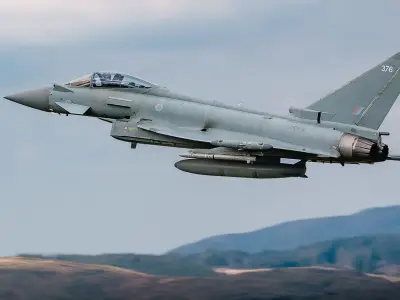
RAF crews played a crucial part in delivering soldiers and their equipment. The exercise tested how the air force and Army could carry out a large operation together.
Group Captain Jim Rycroft, Deputy Air Mobility Force Commander, said: "Exercise RHINO TITAN demonstrates how the Royal Air Force and British Army combine to generate and deliver combat power at speed, at range and at scale. By bringing together the Air Mobility Force and 16 Air Assault Brigade, we are proving the UK's ability to respond rapidly to emerging challenges while strengthening our interoperability with NATO allies and partners."
The exercise tested more than individual soldiers' skills. British and French troops had to work together, while the brigade relied on its partnership with the RAF to move forces by air.
Years in the Making
The operation followed years of training and trials. Low-level parachute jumps from the A400M were already established, but delivering troops alongside their supplies and specialist equipment on this scale took that work further.
The brigade serves as the UK military's Global Response Force. Its work forms part of the Joint Airborne Task Force, which brings the Army and RAF together to send troops over long distances at short notice.
Preparing for Real Threats
Defence Secretary Wes Streeting MP said: "The threats we face in the 21st Century require an updated, modern approach to warfare - and our adaptable Armed Forces are preparing accordingly. Alongside our French and German allies, this large-scale training exercise shows we can deliver rapid, large-scale airborne power anywhere it's needed to defend NATO territory. This combination of troops and specialised equipment is what is required to deter our adversaries and keep Britain and our allies safe."