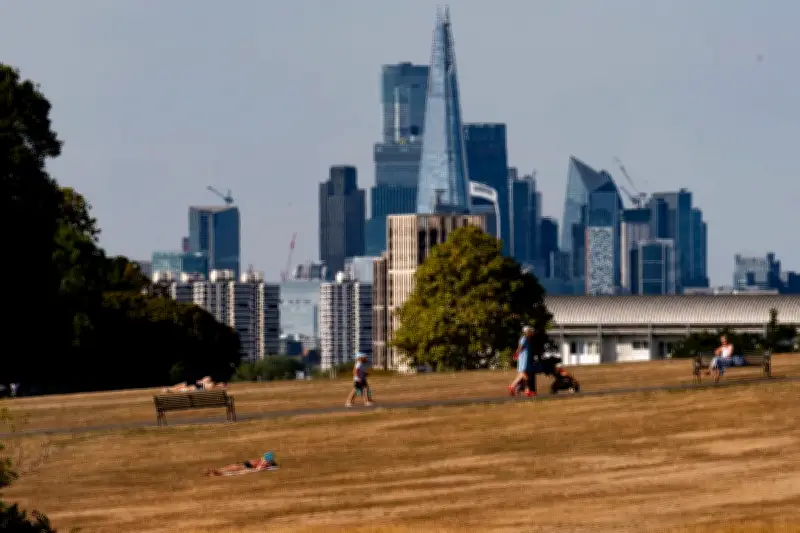
Londoners are more at risk of dying during extreme heat and freezing weather than residents of any other region in England, according to new analysis from the Office of National Statistics (ONS).
Across England, more than 40,000 extra people died on the hottest days between 1988 and 2025 than would be expected in normal weather. An estimated 0.36% of all deaths in London from 1988 to 2025 were associated with days that saw the most sweltering temperatures, a higher proportion than any other region.
Socioeconomic factors behind higher London toll
The ONS said this might reflect “certain socioeconomic factors that influence vulnerability to heat” that are more prevalent in the city, such as living costs and household overcrowding, which “may limit the capacity to adapt to high temperatures”.

The lowest figure was for north-west England, where heat-related deaths accounted for 0.15% of the total for the period. Tory MPs said lack of air conditioning in London homes and limited shaded areas in the city’s streets was contributing to the higher number of fatalities.
The capital also saw the most deaths related to freezing weather, with regional variations for cold-related mortality from 1988 to 2025 ranging from 0.88% of all deaths in London to 0.52% in north-east England.
Recent heatwaves and rising death toll
The figures do not include the numbers of people who died during the capital’s most recent scorching heatwaves this year, where temperatures hit a record 38C. But London’s ambulance service dealt with 25,000 more calls this summer than last, surpassing the record number set during the peak of the Covid-19 pandemic.
The UK Health Security Agency last month estimated 2,877 people in the country had died in the May and June heatwaves, almost double the figure recorded across the whole of summer 2025. The death toll in London in the two heatwaves early this year was 1,000 people.
Calls to cut red tape on air conditioning and trees
Ruislip, Northwood and Pinner MP David Simmonds said: “Londoners are dying because of hairshirt anti-air conditioning rules.
“Confusing regulations for planting trees alongside streets is leading to less greenery across the city, exposing more residents to the full harm of these heat waves.
“This is not only hurting people’s productivity and their day-to-today health, but is now killing Londoners at a disproportionate rate as our climate gets warmer.
“We must cut the red tape holding back air conditioning for new homes and planting trees by roads, and save lives across the capital.”
Max Anderson, from the Conservative Environment Network, added: “The ONS report is a reality check; Londoners are dying because of heat waves and climate change, at a higher rate than any other city.
“Whilst Labour continue to allow red tape to get in the way of air conditioning and greening up London, they are putting Londoners’ lives at risk.
“Without air conditioning, London homes are turning into ovens that are threatening everyone from new-borns to pensioners.
“The government should take swift action to simplify the laws, and unbind councils so they can protect Londoners.”
Commenting on the findings, James Tucker of the ONS said: “As our climate changes, including more frequent and prolonged periods of very hot weather, it is important to understand how both heat and cold affect mortality over time.
“Our results show that the gap between heat and cold-related deaths has narrowed in recent years as the proportion of heat-related deaths has increased.
“Identifying which groups are most vulnerable can help inform climate adaptation planning and public health interventions.”